
Customer service: 00971581607579 📞


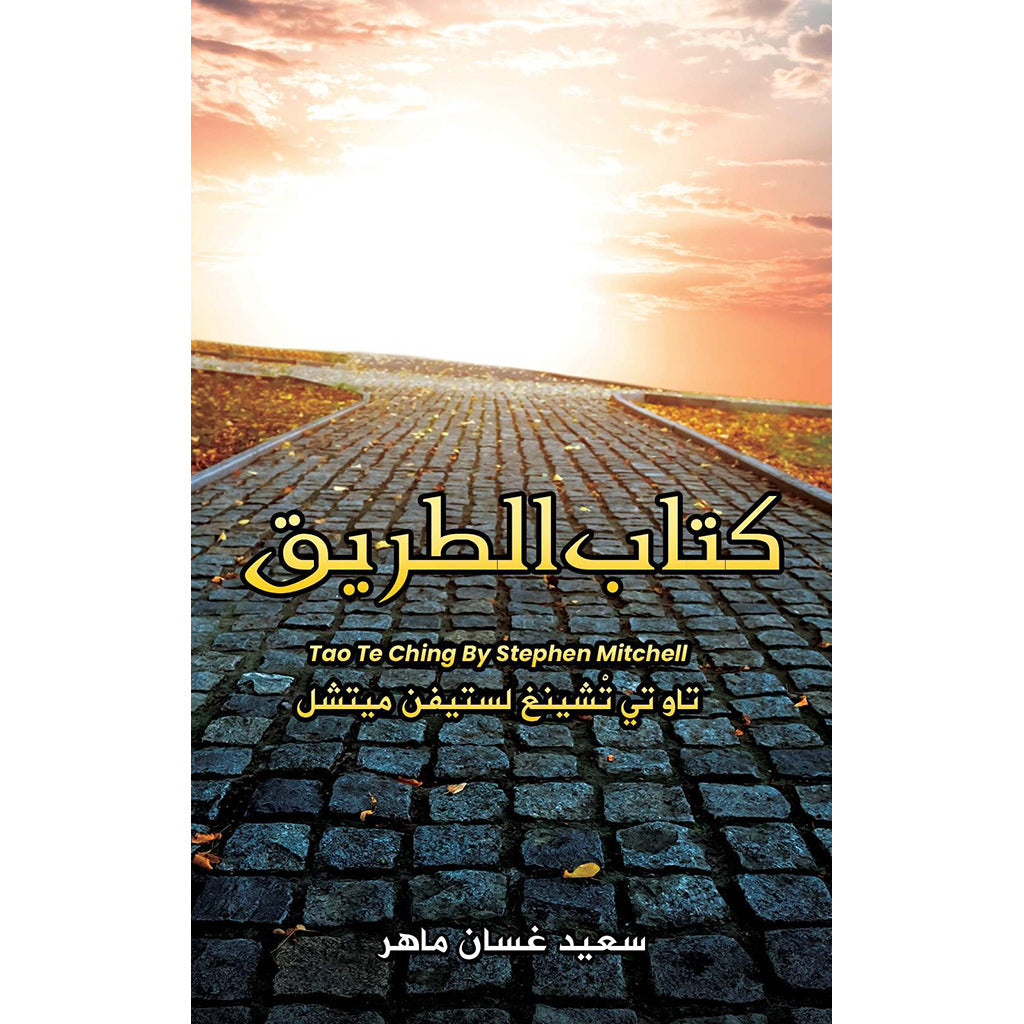
The Road Book
Author's name: Saeed Ghassan Maher
Lao Tzu delved deeply into the facts of life through his experiences and discovered that contradiction exists only on the surface, and that the more united we become, the more content and loving we become. The less attached we are to what we love, the more love is present in our hearts. The more our insight yearns for what transcends good and evil, the more good is embodied in us.
Lao Tzu's wisdom is based on the philosophy of "doing not-doing," which has been mistakenly understood as a negative, defeatist philosophy that does not aspire to seriousness and hope. However, this belief is far from truth and reason.
How many professional athletes have entered a state of awareness of their bodies, recognizing that performing the appropriate movement or landing the winning shot comes automatically, effortlessly, without any deliberate conscious intervention of thought? This is a living example of the theory of non-action, where the highest levels of action occur, where the game itself plays out, where the poem organizes its rhymes, where you cannot separate the dancer from her dances, and where “when you do nothing, nothing remains incomplete, but then the action is completed.”
Do nothing because the doer is completely absorbed in the action, just as fuel turns into a blazing flame. This “nothing” is in fact everything. It happens when we trust the Universal Mind of the Great Universe, in the same way that an athlete or dancer trusts the higher consciousness of their healthy body. This explains Lao Tzu’s emphasis on softness. Anyone who has seen a professional in “Aikido” or “T’ai Chi” do non-action will realize how powerful this gentle ability is.
The teachings of this book are moral teachings in every sense of the word, free from the idea of sin, whether great or small. Lao Tzu does not see evil as a force to be resisted, but rather as simply ambiguity and a state of selfishness that is inconsistent with the natural course of the world. This is the same with dusty glass, which does not allow sunlight or moonlight to enter. This freedom from the confines of morality allows him a great deal of compassion and sympathy for sinners and evildoers.

Best Selling
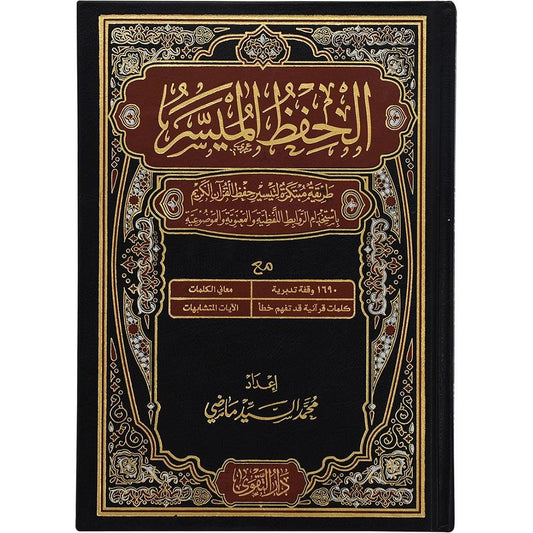

Easy Memorization Quran
Easy Memorization Quran
An innovative method to facilitate memorization of the Holy Quran using verbal and conceptual links.
Mohamed Elsayed Madi, Ahmed Issa Elmasrawi
- from Dhs. 45.00
- from Dhs. 45.00
- Unit price
- per


Tajweed Holy Quran, 30 parts, with an Arabic leather bag, size 17 x 24 cm
Tajweed Quran, 30 parts, with leather case - Arabic Size 24*17 cm This deluxe Tajweed Quran is a paperback divided into thirty separate parts, all presented in a beautiful, sturdy black leather case, perfectly designed to protect the parts from loss or damage. It...
- Dhs. 94.00
- Dhs. 94.00
- Unit price
- per


Taysir Al-Karim Al-Rahman in interpreting the words of Al-Mannan, Al-Saadi’s interpretation
Taysir al-Karim al-Rahman fi Tafsir Kalam al-Mannan (The Facilitation of the Most Gracious, Most Merciful in the Interpretation of the Words of the Beneficent) - Tafsir al-Sa'di Author's name: Sheikh Abdul Rahman bin Nasser Al-Saadi Al-Sa'di's interpretation is one that focuses on clarifying the...
- Dhs. 73.00
- Dhs. 73.00
- Unit price
- per
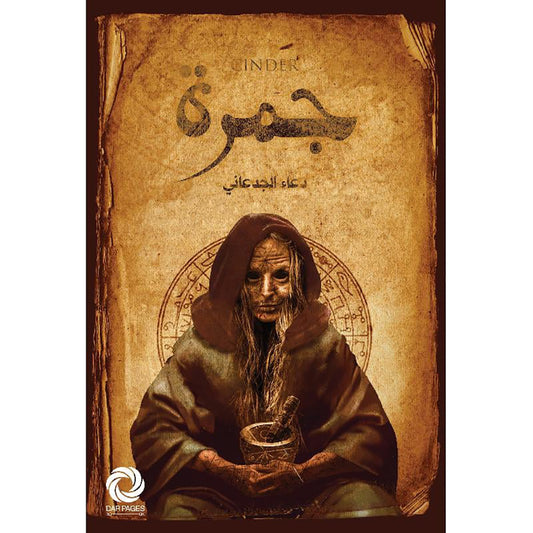

Ember - Duaa Al-Jadaani
cinder
Author's name: Duaa Al-Jadaani
They are cowards, cowards who are good at creating illusions.
- Dhs. 72.00
- Dhs. 72.00
- Unit price
- per


Take your belief from the Qur’an and the authentic Sunnah
Take your belief from the Qur’an and the authentic Sunnah Author's name: Muhammad ibn Jamil Zeno A message from Sheikh Muhammad Jamil Zeno in which he explains the doctrine of the Sunnis and the community on various doctrinal issues: monotheism, polytheism, tyranny, following the...
- Dhs. 15.00
- Dhs. 15.00
- Unit price
- per

Granada Trilogy
Granada Trilogy Author: Radwa Ashour The Granada Trilogy is a series of three novels by the Egyptian author Radwa Ashour, consisting of Granada Mariam Departure The events take place in the Kingdom of Granada after the fall of all Islamic kingdoms in Al-Andalus. The...
- Dhs. 55.00
- Dhs. 55.00
- Unit price
- per


The Qiyam Mushaf with thematic division of the verses of the Holy Quran, white paper, size 24 x 17 cm
The Qiyam Quran with thematic division of the verses of the Holy Quran, white paper, size 24 x 17 cm With Q barcode This Quran is distinguished by having a code on each of its pages. When reading the code using a barcode reader...
- Dhs. 35.00
- Dhs. 35.00
- Unit price
- per

I loved him, so everything loved me back.
I loved him so everything loved me Author's name: Raghad Al Saleh A profound, beautiful book with diverse presentations, ideas, and titles full of benefit and stories taken from the righteous predecessors and their hidden worship and how we get closer to God. I...
- Dhs. 49.00
- Dhs. 49.00
- Unit price
- per
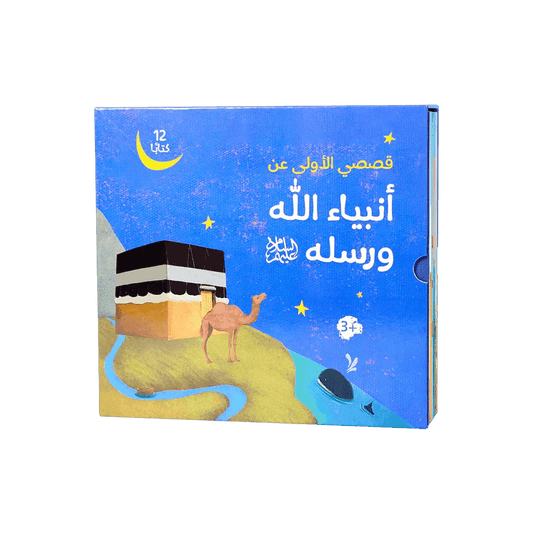

My first stories about God's prophets and messengers
My first stories about God's prophets and messengers A series of stories for children in early childhood education, featuring the prophets and messengers of God Almighty in a simple, enjoyable, and engaging style. The aim is to present lessons and morals drawn from their...
- Dhs. 165.00
Dhs. 185.00- Dhs. 165.00
- Unit price
- per
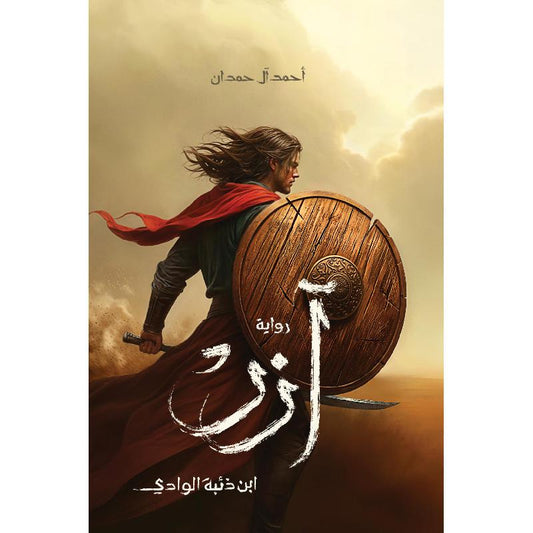

Azar, son of the Wolf of the Valley
AZAR
Son of the Valley She-wolf
Author: Ahmed Al Hamdan
I dreamt that I gave birth to a moon ascending to the sky, illuminating the Arabian Peninsula with its light.
- Dhs. 79.00
- Dhs. 79.00
- Unit price
- per
- Choosing a selection results in a full page refresh.