
Customer service: 00971581607579 📞


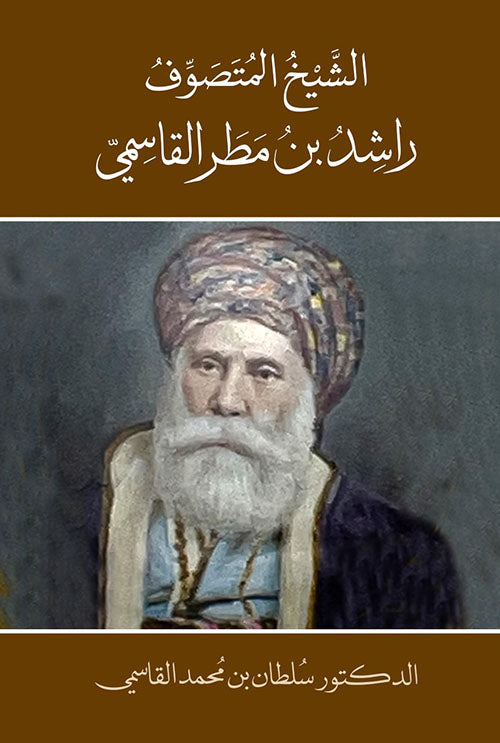


The Sufi Sheikh Rashid bin Mattar Al Qasimi
In the book, His Highness traces the incident of the demolition of Sheikh Hassan Al Madani's shrine in Ras Al Khaimah in 1782, and the reactions of its ruler at the time, Sheikh Rashid bin Mattar bin Kaid Al Qasimi, in a smooth and eloquent style, documented with sources and references, as His Highness has accustomed us to in all his writings.
The town of Ras Al Khaimah was quiet on a morning in January 1782. Sheikh Rashid bin Mattar bin Kaid Al Qasimi had entrusted the affairs of governance in Ras Al Khaimah to his son, Sheikh Saqr bin Rashid bin Mattar Al Qasimi.
Sheikh Rashid bin Mattar bin Kaid Al Qasimi was old after ruling Ras Al Khaimah for twenty-two years. While he was sitting in his council that morning in Ras Al Khaimah Fort, a number of men appeared at the fort's gate, trying to reach his council, shouting loudly and with anger evident in their actions, exclaiming: "The shrine of Sheikh Hassan Al Madani and other shrines have been demolished."
Sheikh Rashid bin Mattar bin Kaid Al Qasimi rushed towards the cemetery, located south of Ras Al Khaimah Fort, between Ras Al Khaimah Fort and the palm grove on the seashore. When he arrived at the cemetery, he found the shrine of Sheikh Hassan Al Madani razed to the ground, as well as the tomb of the saint Zain Al Abidin bin Abdullah Al Haddad, and his nephew Ahmed bin Al Hussein bin Abdullah Al Haddad, friends of Sheikh Rashid bin Mattar bin Kaid Al Qasimi and his brother Sheikh Kaid bin Mattar bin Kaid Al Qasimi, the former ruler of Ras Al Khaimah. Saint Zain Al Abidin bin Abdullah Al Haddad and his nephew Ahmed bin Al Hussein bin Abdullah Al Haddad had many miracles, and the last days of their lives were in Ras Al Khaimah, where religious sciences were taught in Ras Al Khaimah, founded by Sheikh Hassan Al Madani in Ras Al Khaimah, using Sufi methods.
Sheikh Rashid bin Mattar Al Qasimi ordered that these shrines be restored to their original state.
Sheikh Hassan Al Madani was one of the Husseini Sayyids. He was Sheikh Hassan Al Madani bin Al Sayyid Mohammed bin Al Sayyid Abdul Hamid Al Shinawi bin Al Sayyid Mohammed bin Al Sayyid Hassan bin Al Sayyid Ibrahim bin Al Sayyid Suleiman bin Al Sayyid Mahmoud bin Al Sayyid Abdul Rahman bin Al Sayyid Omar bin Al Sayyid Badr Al Din Al Mu'adili bin Al Sayyid Ahmed Al Maharsi bin Al Sayyid Safi Al Din bin Al Sayyid Yahya bin Al Sayyid Abdul Latif bin Al Sayyid Al Qasim bin Musa Al Kadhim bin Jaafar bin Mohammed bin Ali bin Al Hussein bin Ali bin Abi Talib, may Allah be pleased with all of them.
Sheikh Hassan Al Madani was one of the scholars of Sharia. He spent a period of his life secluded in the Prophet's Mosque in Medina, for worship and asceticism.
Sheikh Hassan Al Madani's ancestors were in Baghdad, where he received his religious education and followed the Suhrawardiyya order, named after Abu Hafs Omar Al Suhrawardi (died 632 AH / 1234 AD), a Shafi'i jurist and one of the great Sufis, who was known as Sheikh of Sheikhs.
Sheikh Hassan Al Madani moved with his grandfather and father to Medina, where he studied for a period of time, then left in 1087 AH / 1676 AD or 1088 AH / 1677 AD, emigrating with his family members and some of his followers until he reached Julfar (Ras Al Khaimah) and settled there. Then Sheikh Hassan Al Madani moved to Lengeh, which was founded by the Qawasim there, and he guided people and taught them the path.
His method involved uttering "La ilaha illa Allah" (There is no god but Allah), glorifying Allah, and sending blessings upon the Prophet (peace be upon him) a thousand times in each of the dawn and evening prayers, so many people gathered around him to benefit from his knowledge.
Sheikh Hassan Al Madani returned to Ras Al Khaimah during the reign of Sheikh Kaid bin Qudayb bin Kaid Al Qasimi, the grandfather of both Sheikh Kaid bin Mattar bin Kaid Al Qasimi and Sheikh Rashid bin Mattar bin Kaid Al Qasimi. Sheikh Hassan Al Madani fell ill and died in Ras Al Khaimah in 1105 AH / 1693 AD and was buried in the aforementioned cemetery, south of Ras Al Khaimah Fort.
Sheikh Hassan Al Madani had three sons: 1- Sheikh Mustafa bin Hassan Al Madani: After completing his studies, he went to Muscat in Oman, settled in the Barka area, and died there, where he was buried. He was one of the Sufis who secluded themselves in mosques.
2- Sheikh Ahmed bin Hassan Al Madani, who lived in the cities of the Persian coast, and many followers from the people of those areas gathered around him.
3- Sheikh Rashid bin Hassan Al Madani: Sheikh Rashid had settled in the town of Shinaz near Lengeh in his later life, and he had eased the method of his father, Sheikh Hassan Al Madani.
The news of the demolition of Sheikh Hassan Al Madani's shrine spread among the followers of the scholars and sheikhs who followed Sheikh Hassan Al Madani's method, namely: 1- Sheikh Mohammed bin Saleh: a resident of Sha'am, whose grave is in the Khasab region of Kumzar, and whose son's followers are in Khorfakkan.
2- Sheikh Ali bin Ibrahim Al Omani: a resident of Lengeh on the Persian coast, whose grave is in the Lengeh cemetery.
3- Sheikh Salem bin Hassan Al Obeidli: one of the Abadleh who live on the Persian coast.
4- Sheikh Mohammed Al Maghrabi: one of the scholars of Qeshm, whose grave is in the Ba Sa'eedah cemetery.
5- Sheikh Abdul Rahim Al Abbasi bin Hassan Al Bastaki and his brothers Sheikh Abdul Qadir, Sheikh Abdul Rahman, and Mulla Ismail Al Bastaki, who are the sheikhs of Bastak, which is one hundred and fifty kilometers from Lengeh on the Lengeh/Shiraz road.
In Ras Al Khaimah, accusations hovered around the people of Al Rams, a town north of Ras Al Khaimah, who are the Al Tunaij tribe, as well as the people of Al Jazirat Al Hamra, south of Ras Al Khaimah, who are the Za'ab tribe. Both tribes were owners of merchant ships, and most of their voyages were between India and Al Hasa, transporting Indian goods to Al Ahsa, and from there transporting Arabian horses to India.
In 1780, the Salafi movement had spread in the Al Ahsa region, and a group of ship owners from Al Rams and Al Jazirat Al Hamra, the Tunaij and Za'ab, frequented Al Ahsa for their trade, and some of them began to embrace the Salafi movement.
When the people of Al Rams and Al Jazirat Al Hamra returned to their lands, they began to oppose the sect of the Qawasim and their followers, which was the Shafi'i sect. One of its manifestations was that worshippers, after the dawn prayer, would utter "La ilaha illa Allah" in one voice, extending beyond the mosque to distant houses. The Salafi movement group in Al Rams and Al Jazirat Al Hamra also abolished the Shafi'i sect and replaced it with the Hanbali sect, and removed all manifestations of Sufism in Al Rams and Al Jazirat Al Hamra.
Sheikh Rashid bin Mattar bin Kaid Al Qasimi returned to Ras Al Khaimah Fort, accompanied by his nephew Mohammed bin Kaid bin Mattar Al Qasimi, who was claiming the rule of Ras Al Khaimah. He began to instigate his uncle, claiming that the people of Al Rams and Al Jazirat Al Hamra were responsible for the demolition of the shrines, and that the negligence and indulgence of Sheikh Saqr bin Rashid bin Mattar Al Qasimi had driven them to that action.
Sheikh Saqr bin Rashid bin Mattar Al Qasimi attended his father's council, where he was asked to punish the Al Tunaij tribe in Al Rams and the Al Za'ab tribe in Al Jazirat Al Hamra.
Sheikh Saqr bin Rashid bin Mattar Al Qasimi refused his father's request, claiming that there was no proof to his father's accusation against the Tunaij tribe in Al Rams and the Za'ab tribe in Al Jazirat Al Hamra.
Sheikh Saqr bin Rashid bin Mattar Al Qasimi became convinced of the conspiracy being woven by his cousin Mohammed bin Kaid bin Mattar Al Qasimi to depose him from the succession in Ras Al Khaimah. So he gathered his forces around him and stripped his father of any forces, until a kind of siege was formed around Ras Al Khaimah Fort.
Sheikh Rashid bin Mattar bin Kaid Al Qasimi demanded that his son punish the people of Al Rams and Al Jazirat Al Hamra, and declared that he would leave the country and go to Lengeh on the Persian coast unless the people of Al Rams and Al Jazirat Al Hamra were punished.
Sheikh Saqr bin Rashid bin Mattar Al Qasimi prepared his father's Baghlah ship, and informed his father, Sheikh Rashid bin Mattar bin Kaid Al Qasimi, of this. So Sheikh Rashid bin Mattar bin Kaid Al Qasimi boarded the Baghlah ship, and took Mohammed bin Kaid bin Mattar Al Qasimi with his uncle, and the Baghlah took them to Lengeh on the Persian coast. As for Ras Al Khaimah, the Salafi movement group from Tunaij and Za'ab rallied around Sheikh Saqr bin Rashid bin Mattar Al Qasimi.
Sheikh Rashid bin Mattar bin Kaid Al Qasimi arrived in Lengeh with his nephew, Mohammed bin Kaid bin Mattar Al Qasimi. The ruler of Lengeh was Sheikh Qudayb bin Saeed bin Kaid Al Qasimi, who was Sheikh Rashid bin Mattar bin Kaid Al Qasimi's cousin and who had protected him at the beginning of his rule from an attack by the ruler of Lar.
Sheikh Rashid bin Mattar Al Qasimi took a house for himself in Lengeh, where scholars and sheikhs who followed the method of Sheikh Hassan Al Madani, who were disturbed by the assault on Sheikh Hassan Al Madani's tomb in Ras Al Khaimah, visited him.
Among those who visited Sheikh Rashid bin Mattar bin Kaid Al Qasimi was Sheikh Hassan bin Ismail bin Sheikh Hassan Al Bastaki, who was the commander of the infantry in the forces of Sheikh Mohammed Khan Al Bastaki, the ruler of Bastak. His father, Sheikh Ismail bin Hassan Al Bastaki, had provided much assistance to the ruler of Bastak, Mohammed Khan, when he wanted to expel the Wahhabis who had seized Bandar Abbas and the islands.
Sheikh Hassan bin Ismail Al Bastaki offered Sheikh Rashid bin Mattar bin Kaid Al Qasimi assistance with money and soldiers to expel the Wahhabis from Ras Al Khaimah and to install Mohammed bin Kaid bin Mattar Al Qasimi in place of Sheikh Saqr bin Rashid bin Mattar Al Qasimi.
While preparations and arrangements were underway in 1197 AH / 1783 AD by Sheikh Hassan bin Ismail Al Bastaki and the ruler of Bastak on one side, and the British on the other side through the agent of the East India Company in Bushehr, Joseph Ilya Edward, a friend of Sheikh Rashid bin Mattar bin Kaid Al Qasimi, the Sheikh of Bushehr, Sheikh Nasser Al Matroushi, asked Sheikh Rashid bin Mattar bin Kaid Al Qasimi to mediate between him and the Sheikh of Al Utub, who resided in Zubarah in Qatar, after he had attacked Bahrain and killed some of its inhabitants.
Sheikh Rashid bin Mattar bin Kaid Al Qasimi sent his nephew Mohammed bin Kaid bin Mattar Al Qasimi to Al Utub in Zubarah. When he reached the shore of Zubarah, Al Utub attacked Mohammed bin Kaid bin Mattar Al Qasimi's ship, killing Mohammed bin Kaid bin Mattar Al Qasimi and those with him, and Al Utub seized their ship.
All of Sheikh Rashid bin Mattar bin Kaid Al Qasimi's hopes of removing the Salafi movement from Ras Al Khaimah and establishing the Shafi'i sect with the Suhrawardiyya call according to the method of Sheikh Hassan Al Madani, the approach of his father and ancestors, were lost. So Sheikh Rashid bin Mattar bin Kaid Al Qasimi clung to that call and became one of Sheikh Hassan Al Madani's disciples.
Visit
In 1787, Joseph Ilya, the agent of the East India Company in Bushehr, visited Sheikh Rashid bin Mattar bin Kaid Al Qasimi to inform him of the nearing end of his work in the East India Company agency in Bushehr. He had brought a painter from India to paint Sheikh Rashid bin Mattar bin Kaid Al Qasimi, so that Joseph Ilya could keep that portrait.
Only a few months passed before Joseph Ilya arrived in Lengeh to present his friend Sheikh Rashid bin Mattar bin Kaid Al Qasimi with a golden pocket watch. On one side, a portrait of Sheikh Rashid bin Mattar bin Kaid Al Qasimi was engraved, and on the opposite side, a portrait of Joseph Ilya was engraved in enamel and natural colors. On one side of the watch, the following inscription was written: "To Haj Rashid Al Qasimi from his beloved Joseph Ilya Edward, a sign of sincerity in the year 1202 AH."
Joseph Ilya arrived at Sheikh Rashid bin Mattar bin Kaid Al Qasimi's residence in Lengeh, only to find the house closed and the streets around it empty of passersby, shrouded in silence. Joseph Ilya inquired about Sheikh Rashid bin Mattar bin Kaid Al Qasimi, and he was told: "He passed away yesterday."

Best Selling
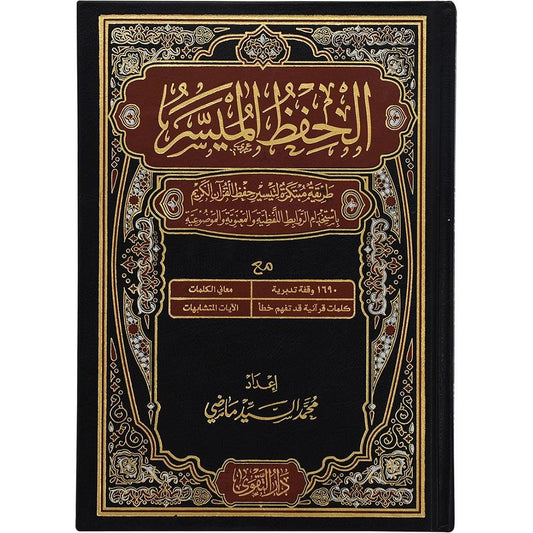

Easy Memorization Quran
Easy Memorization Quran
An innovative method to facilitate memorization of the Holy Quran using verbal and conceptual links.
Mohamed Elsayed Madi, Ahmed Issa Elmasrawi
- from Dhs. 45.00
- from Dhs. 45.00
- Unit price
- per


Taysir Al-Karim Al-Rahman in interpreting the words of Al-Mannan, Al-Saadi’s interpretation
Taysir al-Karim al-Rahman fi Tafsir Kalam al-Mannan (The Facilitation of the Most Gracious, Most Merciful in the Interpretation of the Words of the Beneficent) - Tafsir al-Sa'di Author's name: Sheikh Abdul Rahman bin Nasser Al-Saadi Al-Sa'di's interpretation is one that focuses on clarifying the...
- Dhs. 73.00
- Dhs. 73.00
- Unit price
- per
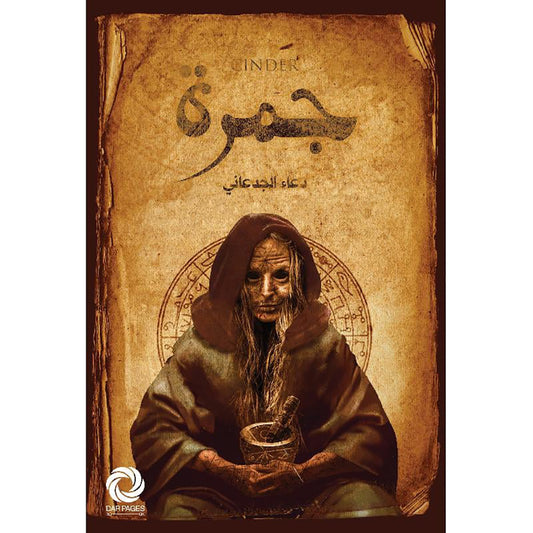

Ember - Duaa Al-Jadaani
cinder
Author's name: Duaa Al-Jadaani
They are cowards, cowards who are good at creating illusions.
- Dhs. 72.00
- Dhs. 72.00
- Unit price
- per


Take your belief from the Qur’an and the authentic Sunnah
Take your belief from the Qur’an and the authentic Sunnah Author's name: Muhammad ibn Jamil Zeno A message from Sheikh Muhammad Jamil Zeno in which he explains the doctrine of the Sunnis and the community on various doctrinal issues: monotheism, polytheism, tyranny, following the...
- Dhs. 15.00
- Dhs. 15.00
- Unit price
- per

Granada Trilogy
Granada Trilogy Author: Radwa Ashour The Granada Trilogy is a series of three novels by the Egyptian author Radwa Ashour, consisting of Granada Mariam Departure The events take place in the Kingdom of Granada after the fall of all Islamic kingdoms in Al-Andalus. The...
- Dhs. 55.00
- Dhs. 55.00
- Unit price
- per

I loved him, so everything loved me back.
I loved him so everything loved me Author's name: Raghad Al Saleh A profound, beautiful book with diverse presentations, ideas, and titles full of benefit and stories taken from the righteous predecessors and their hidden worship and how we get closer to God. I...
- Dhs. 49.00
- Dhs. 49.00
- Unit price
- per
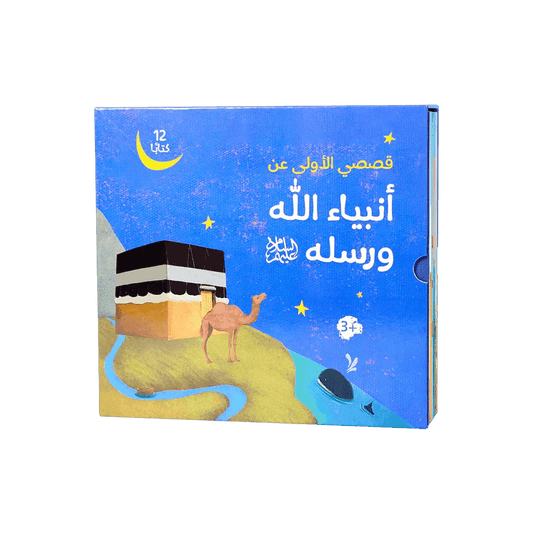

My first stories about God's prophets and messengers
My first stories about God's prophets and messengers A series of stories for children in early childhood education, featuring the prophets and messengers of God Almighty in a simple, enjoyable, and engaging style. The aim is to present lessons and morals drawn from their...
- Dhs. 165.00
Dhs. 185.00- Dhs. 165.00
- Unit price
- per
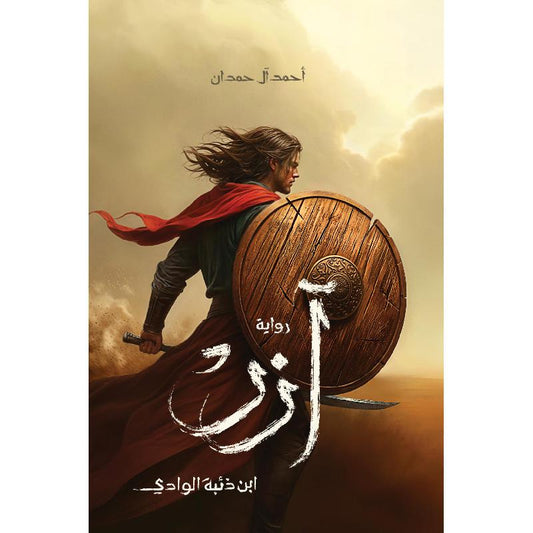

Azar, son of the Wolf of the Valley
AZAR
Son of the Valley She-wolf
Author: Ahmed Al Hamdan
I dreamt that I gave birth to a moon ascending to the sky, illuminating the Arabian Peninsula with its light.
- Dhs. 79.00
- Dhs. 79.00
- Unit price
- per
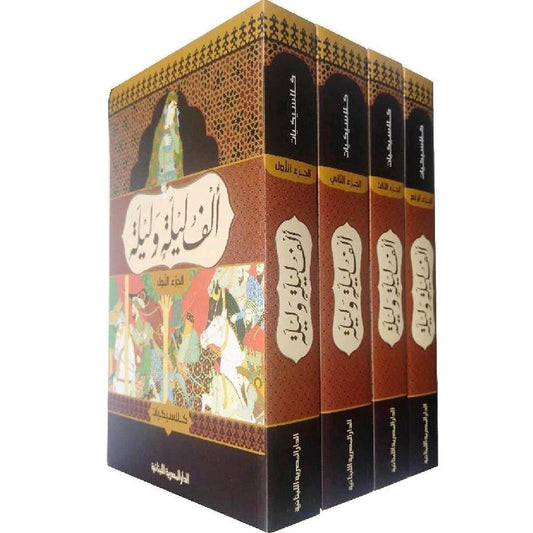

One Thousand and One Nights 4 parts
One Thousand and One Nights - 4 Parts Author Name: Abdullah Ibn al-Muqaffa One Thousand and One Nights is a collection of stories from West and South Asia, along with folk tales that were compiled and translated into Arabic during the Islamic...
- Dhs. 110.00
Dhs. 135.00- Dhs. 110.00
- Unit price
- per

Explanation of the Three Fundamentals, followed by an explanation of the Four Rules, by Sheikh Saleh Al-Fawzan
Explanation of the Three Principles Followed by an explanation of the four rules. Author's name: Imam Muhammad ibn Abd al-Wahhab Dr. Saleh bin Fawzan bin Abdullah Al-Fawzan Edited and printed by: Dr. Salman Jaber Othman Al-Mujalham Al-Suwailem The book Explanation of the Three Fundamentals,...
- Dhs. 65.00
- Dhs. 65.00
- Unit price
- per
- Choosing a selection results in a full page refresh.