
Customer service: 00971581607579 📞




The Sufi Sheikh Rashid bin Mattar Al Qasimi
Braille Method
In the book, His Highness traces the incident of the demolition of the shrine of Sheikh Hassan Al-Madani in Ras Al Khaimah in 1782, and the reactions of its ruler at the time, Sheikh Rashid bin Mattar bin Kaid Al Qasimi, in a smooth and eloquent style documented with sources and references, as His Highness has accustomed us to in all his writings.
The town of Ras Al Khaimah was calm on a morning in January 1782. Sheikh Rashid bin Mattar bin Kaid Al Qasimi had entrusted his son, Sheikh Saqr bin Rashid bin Mattar Al Qasimi, with the affairs of governance in Ras Al Khaimah.
Sheikh Rashid bin Mattar bin Kaid Al Qasimi was old after ruling Ras Al Khaimah for twenty-two years. As he sat in his majlis that morning in the Ras Al Khaimah fort, a number of men appeared at the fort's gate, trying to reach his majlis, shouting loudly and with anger evident in their actions, proclaiming: "The shrine of Sheikh Hassan Al-Madani has been demolished, and other shrines too."
Sheikh Rashid bin Mattar bin Kaid Al Qasimi rushed towards the cemetery, located south of Ras Al Khaimah fort, between the fort and a palm grove on the seashore. When he arrived at the cemetery, he found that the shrine of Sheikh Hassan Al-Madani had been razed to the ground, as well as the tomb of the saint Zain al-Abidin bin Abdullah Al-Haddad, and his nephew Ahmed bin Al-Hussein bin Abdullah Al-Haddad, friends of Sheikh Rashid bin Mattar bin Kaid Al Qasimi and his brother Sheikh Kaid bin Mattar bin Kaid Al Qasimi, the former ruler of Ras Al Khaimah. Saint Zain al-Abidin bin Abdullah Al-Haddad and his nephew Ahmed bin Al-Hussein bin Abdullah Al-Haddad had many miracles, and the last days of their lives were in Ras Al Khaimah, where religious sciences were taught in Ras Al Khaimah, established by Sheikh Hassan Al-Madani in Ras Al Khaimah, using Sufi methods.
Sheikh Rashid bin Mattar Al Qasimi ordered that these shrines be restored to their former state.
Sheikh Hassan Al-Madani was one of the Hasani Sayyids. He was Sheikh Hassan Al-Madani bin Sayyid Muhammad bin Sayyid Abdul Hamid Al-Shinawi bin Sayyid Muhammad bin Sayyid Hassan bin Sayyid Ibrahim bin Sayyid Sulaiman bin Sayyid Mahmoud bin Sayyid Abdul Rahman bin Sayyid Omar bin Sayyid Badr al-Din Al-Mu'adili bin Sayyid Ahmed Al-Mahrisi bin Sayyid Safi al-Din bin Sayyid Yahya bin Sayyid Abdul Latif bin Sayyid Al-Qasim bin Musa Al-Kazim bin Jaafar bin Muhammad bin Ali bin Al-Hussein bin Ali bin Abi Talib, may Allah be pleased with them all.
Sheikh Hassan Al-Madani was a scholar of Sharia law. He spent a period of his life in seclusion in the Prophet's Mosque in Medina, for worship and asceticism.
Sheikh Hassan Al-Madani's ancestors were in Baghdad, where he received his religious education and followed the Suhrawardi tariqa, attributed to Abu Hafs Omar Al-Suhrawardi (died 632 AH / 1234 AD), a Shafi'i jurist and a prominent Sufi, known as the "Sheikh of Sheikhs."
Sheikh Hassan Al-Madani moved with his grandfather and father to Medina, where he studied for a period, then left in 1087 AH / 1676 AD or 1088 AH / 1677 AD, migrating with his family members and some of his followers until he reached Julfar (Ras Al Khaimah) and settled there. Then Sheikh Hassan Al-Madani moved to Lingeh, which the Qawasim founded there, where he guided people and taught them the tariqa.
His method involved Dhikr (remembrance of Allah), Tasbeeh (glorification of Allah), and praying upon the Prophet (peace be upon him) a thousand times in both the morning and evening prayers. Many people gathered around him to benefit from his knowledge.
Sheikh Hassan Al-Madani returned to Ras Al Khaimah during the reign of Sheikh Kaid bin Qadhib bin Kaid Al Qasimi, the grandfather of both Sheikh Kaid bin Mattar bin Kaid Al Qasimi and Sheikh Rashid bin Mattar bin Kaid Al Qasimi. Sheikh Hassan Al-Madani fell ill and died in Ras Al Khaimah in 1105 AH / 1693 AD and was buried in the aforementioned cemetery, south of Ras Al Khaimah fort.
Sheikh Hassan Al-Madani was survived by three sons: 1- Sheikh Mustafa bin Hassan Al-Madani: After completing his studies, he went to Muscat in Oman, settled in the Barka region, and died and was buried there, as he was one of the Sufis who secluded themselves in mosques.
2- Sheikh Ahmed bin Hassan Al-Madani, who lived in the cities of the Persian Gulf coast, and many followers from the people of those areas gathered around him.
3- Sheikh Rashid bin Hassan Al-Madani: Sheikh Rashid had lived in his later years in the town of Shinaz, near Lingeh, and had softened his father Sheikh Hassan Al-Madani's method.
The news of the demolition of Sheikh Hassan Al-Madani's shrine spread among the followers of the scholars and sheikhs who had adopted Sheikh Hassan Al-Madani's method, who were: 1- Sheikh Muhammad bin Salih: From the residents of Sha'am, his grave is in Khasab's Kimsar area, and his son's followers are in Khor Fakkan.
2- Sheikh Ali bin Ibrahim Al-Omani: From the residents of Lingeh on the Persian coast, and his grave is in Lingeh cemetery.
3- Sheikh Salim bin Hassan Al-Ubaidli: From the Ubaidli tribe who reside on the Persian coast.
4- Sheikh Muhammad Al-Maghrabi: A scholar from Qeshm, and his grave is in Basaydouh cemetery.
5- Sheikh Abdul Rahim Al-Abbasi bin Hassan Al-Bastaki and his brothers Sheikh Abdul Qadir, Sheikh Abdul Rahman, and Mulla Ismail Al-Bastaki, who are the sheikhs of Bastak, which is 150 kilometers from Lingeh on the Lingeh/Shiraz road.
In Ras Al Khaimah, accusations were swirling around the people of Al Rams, a town north of Ras Al Khaimah, who are the Al Tunaij tribe, as well as the people of Al Hamra Island, south of Ras Al Khaimah, who are the Al Zaab tribe. Both tribes were owners of merchant ships, and most of their voyages were between India and Al Hasa, transporting Indian goods to Al Ahsa, and from there transporting Arabian horses to India.
In 1780, the Salafi call had spread in the Al Ahsa region, and a group of ship owners from Al Rams and Al Hamra Island, namely Tunaij and Zaab, frequented Al Ahsa for their trade, and some of them began to embrace the Salafi call.
When the people of Al Rams and Al Hamra Island returned to their lands, they began to oppose the sect of the Qawasim and their followers, which was the Shafi'i school of thought. One of its manifestations was that after the dawn prayer, the worshipers would chant "La ilaha illa Allah" in unison, reaching distant houses from the mosque. The Salafi Dawah group in Al Rams and Al Hamra Island also abolished the Shafi'i school and replaced it with the Hanbali school, and removed all manifestations of Sufism in Al Rams and Al Hamra Island.
Sheikh Rashid bin Mattar bin Kaid Al Qasimi returned to the Ras Al Khaimah fort, accompanied by his nephew Muhammad bin Kaid bin Mattar Al Qasimi, who was demanding the rule of Ras Al Khaimah. He began to instigate his uncle, claiming that the people of Al Rams and Al Hamra Island were responsible for demolishing the shrines, and that the neglect and indulgence of Sheikh Saqr bin Rashid bin Mattar Al Qasimi had led them to this action.
Sheikh Saqr bin Rashid bin Mattar Al Qasimi came to his father's majlis, where his father asked him to punish the Tunaij tribe in Al Rams and the Zaab tribe in Al Hamra Island.
Sheikh Saqr bin Rashid bin Mattar Al Qasimi rejected his father's request, claiming that there was no evidence to support his father's accusation against the Tunaij tribe in Al Rams and the Zaab tribe in Al Hamra Island.
Sheikh Saqr bin Rashid bin Mattar Al Qasimi realized the conspiracy being woven by his cousin Muhammad bin Kaid bin Mattar Al Qasimi to depose him from the succession in Ras Al Khaimah. He gathered his forces around him and stripped his father of any forces, creating what resembled a siege around the Ras Al Khaimah fort.
Sheikh Rashid bin Mattar bin Kaid Al Qasimi demanded his son punish the people of Al Rams and Al Hamra Island, stating that he would leave the country and move to Lingeh on the Persian coast unless the people of Al Rams and Al Hamra Island were punished.
Sheikh Saqr bin Rashid bin Mattar Al Qasimi prepared his father's baghlah ship and informed his father Sheikh Rashid bin Mattar bin Kaid Al Qasimi about it. Sheikh Rashid bin Mattar bin Kaid Al Qasimi boarded the baghlah ship, and Muhammad bin Kaid bin Mattar Al Qasimi boarded with his uncle, and the baghlah sailed with them to Lingeh on the Persian coast. In Ras Al Khaimah, the Salafi Dawah group from Tunaij and Zaab rallied around Sheikh Saqr bin Rashid bin Mattar Al Qasimi.
Sheikh Rashid bin Mattar bin Kaid Al Qasimi arrived in Lingeh with his nephew, Muhammad bin Kaid bin Mattar Al Qasimi. The ruler of Lingeh was Sheikh Qadhib bin Saeed bin Kaid Al Qasimi, who was Sheikh Rashid bin Mattar bin Kaid Al Qasimi's cousin and had protected him at the beginning of his rule from an attack by the ruler of Lar.
Sheikh Rashid bin Mattar Al Qasimi took a house for himself in Lingeh, where scholars and sheikhs from the Tariqa (the method of Sheikh Hassan Al-Madani), who were disturbed by the attack on Sheikh Hassan Al-Madani's grave in Ras Al Khaimah, came to visit him.
Among those who visited Sheikh Rashid bin Mattar bin Kaid Al Qasimi was Sheikh Hassan bin Ismail bin Sheikh Hassan Al-Bastaki, who was a leader of the infantry in the forces of Sheikh Muhammad Khan Al-Bastaki, the ruler of Bastak. His father, Sheikh Ismail bin Hassan Al-Bastaki, had provided considerable aid to the ruler of Bastak, Muhammad Khan, when he sought to expel the Wahhabis who had controlled Bandar Abbas and the islands.
Sheikh Hassan bin Ismail Al-Bastaki offered Sheikh Rashid bin Mattar bin Kaid Al Qasimi assistance with money and soldiers to expel the Wahhabis from Ras Al Khaimah and install Muhammad bin Kaid bin Mattar Al Qasimi in place of Sheikh Saqr bin Rashid bin Mattar Al Qasimi.
While preparations and arrangements were underway in 1197 AH / 1783 AD by Sheikh Hassan bin Ismail Al-Bastaki and the ruler of Bastak on one side, and the British on the other side through the East India Company's agent in Bushehr, Joseph Ilya Edward, a friend of Sheikh Rashid bin Mattar bin Kaid Al Qasimi, the Sheikh of Bushehr, Sheikh Nasser Al-Matroushi, asked Sheikh Rashid bin Mattar bin Kaid Al Qasimi to mediate between him and the Sheikh of Al-Utub, residing in Zubarah in Qatar, after he had attacked Bahrain and killed some of its inhabitants.
Sheikh Rashid bin Mattar bin Kaid Al Qasimi sent his nephew Muhammad bin Kaid bin Mattar Al Qasimi to Al-Utub in Zubarah. Upon reaching the coast of Zubarah, Al-Utub attacked Muhammad bin Kaid bin Mattar Al Qasimi's ship, killing Muhammad bin Kaid bin Mattar Al Qasimi and those with him, and seizing their ship.
All of Sheikh Rashid bin Mattar bin Kaid Al Qasimi's hopes of removing the Salafi call from Ras Al Khaimah and establishing the Shafi'i school with the Suhrawardi method of Sheikh Hassan Al-Madani, the approach of his father and ancestors, were lost. Sheikh Rashid bin Mattar bin Kaid Al Qasimi became attached to that call and became one of Sheikh Hassan Al-Madani's disciples.
Visit
In 1787, Joseph Ilya, the East India Company's agent in Bushehr, visited Sheikh Rashid bin Mattar bin Kaid Al Qasimi to inform him of the nearing end of his work as an agent for the East India Company in Bushehr. He brought a painter from India to paint Sheikh Rashid bin Mattar bin Kaid Al Qasimi, so that Joseph Ilya could keep the portrait.
Only a few months later, Joseph Ilya arrived in Lingeh to present his friend Sheikh Rashid bin Mattar bin Kaid Al Qasimi with a golden pocket watch. On one side of it was engraved a portrait of Sheikh Rashid bin Mattar bin Kaid Al Qasimi, and on the opposite side was a portrait of Joseph Ilya engraved in enamel with natural colors. On one side of the watch, the following inscription was written: "To Haj Rashid Al Qasimi from his beloved Joseph Ilya Edward, a token of sincerity in the year 1202 AH."
Joseph Ilya arrived at Sheikh Rashid bin Mattar bin Kaid Al Qasimi's residence in Lingeh, and found the house closed and the surrounding streets devoid of passersby, shrouded in silence. Joseph Ilya inquired about Sheikh Rashid bin Mattar bin Kaid Al Qasimi and was told: "He passed away yesterday."

Best Selling
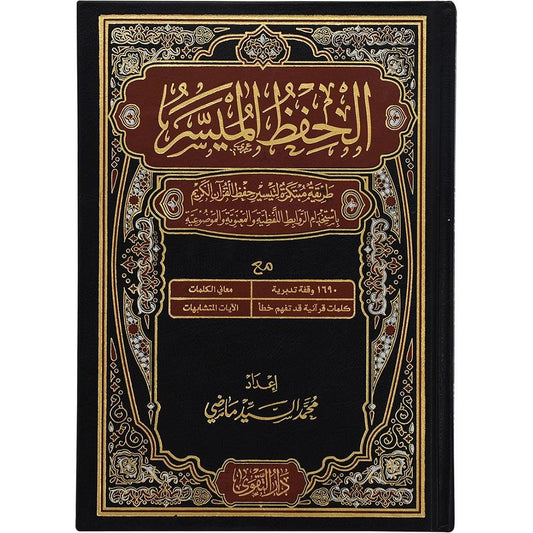

Easy Memorization Quran
Easy Memorization Quran
An innovative method to facilitate memorization of the Holy Quran using verbal and conceptual links.
Mohamed Elsayed Madi, Ahmed Issa Elmasrawi
- from Dhs. 45.00
- from Dhs. 45.00
- Unit price
- per


Take your belief from the Qur’an and the authentic Sunnah
Take your belief from the Qur’an and the authentic Sunnah Author's name: Muhammad ibn Jamil Zeno A message from Sheikh Muhammad Jamil Zeno in which he explains the doctrine of the Sunnis and the community on various doctrinal issues: monotheism, polytheism, tyranny, following the...
- Dhs. 15.00
- Dhs. 15.00
- Unit price
- per

Explanation of the Three Fundamentals, followed by an explanation of the Four Rules, by Sheikh Saleh Al-Fawzan
Explanation of the Three Principles Followed by an explanation of the four rules. Author's name: Imam Muhammad ibn Abd al-Wahhab Dr. Saleh bin Fawzan bin Abdullah Al-Fawzan Edited and printed by: Dr. Salman Jaber Othman Al-Mujalham Al-Suwailem The book Explanation of the Three Fundamentals,...
- Dhs. 65.00
- Dhs. 65.00
- Unit price
- per

The Power of Your Subconscious Mind Dr. Joseph Murphy
The power of your subconscious mind By Dr. Joseph Murphy This book is one of the best-selling self-help books of all time. This edition explains mental focus techniques that can remove subconscious obstacles that prevent us from achieving the success we desire, in a...
- Dhs. 62.00
Dhs. 73.00- Dhs. 62.00
- Unit price
- per

Because You are Allah: A Journey to the Seventh Heaven - Part One
Because You Are God: A Journey to the Seventh Heaven - Part One Author's name: Ali Jaber Al-Fifi The writer was able to take us through his creations on a deep journey to learn something about some of His names, such that no name...
- Dhs. 33.00
- Dhs. 33.00
- Unit price
- per

The courage to be unloved
The courage to be unpopular Author's Name: Ichiro Kishimi - Fumitake Koga "It is not what we are given at birth that matters, but how we use that provision." "Your suffering in life cannot be attributed to your past or your environment. Nor is...
- Dhs. 57.00
- Dhs. 57.00
- Unit price
- per

رسائل أيقظت رجلا
رسائل أيقظت رجلاً للكاتبة الإماراتية منيرة النعيمي في أبوظبي، يعيش سيف بين مسؤوليات الأبوة وذكريات لا تفارقه، محاولًا أن يصنع لأطفاله حياةً آمنة بعد أن غيّب الموت شريكة عمره. أربعة أطفال هم عالمه، وبيتٌ امتلأ يومًا بالحب، ثم تعلّم كيف يتعايش مع غياب من...
- Dhs. 65.00
- Dhs. 65.00
- Unit price
- per


One-Page Marketing Plan
The 1-Page Marketing Plan Author: Allan Dib To build a successful business, you must stop random marketing activities and start following a reliable plan for rapid growth. Creating a practical marketing plan used to be difficult and time-consuming, which is why it often...
- Dhs. 79.00
- Dhs. 79.00
- Unit price
- per

Icadoli
Icadoli Author's name: Hanan Lashin Palm fronds shaded the horizon in the distance like green clouds. A strange cry deafened his ears, then he suddenly felt talons grabbing his shoulders. He looked up and saw a giant bird spreading its wings, shadowing him over...
- Dhs. 48.00
- Dhs. 48.00
- Unit price
- per

The Frozen River
The Frozen River
Author: Arbuthnot Lauson
A translated historical novel set in the late 18th century in the state of Maine, USA, blending mystery, investigation, and social and historical aspects.
- Dhs. 68.00
- Dhs. 68.00
- Unit price
- per
- Choosing a selection results in a full page refresh.