
Customer service: 00971581607579 📞


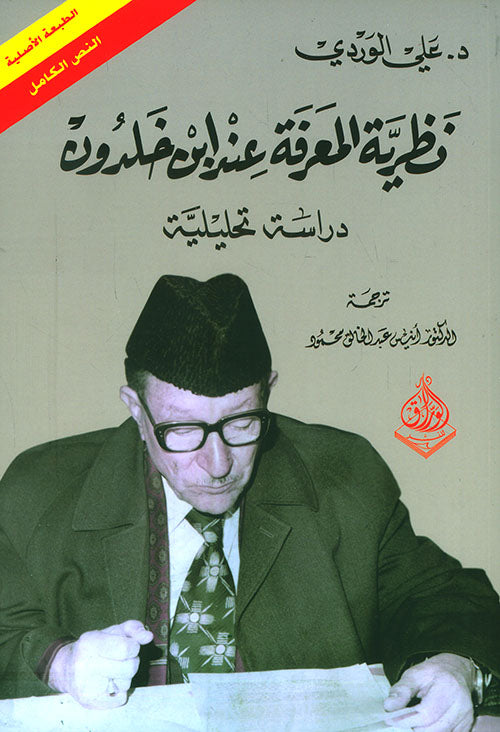
Ibn Khaldun's theory of knowledge
Author's name: Ali Al-Wardi
The Arab thinker Taha Hussein and the French translator of Ibn Khaldun's Muqaddimah, de Slane, complain about the ambiguity and contradictions in Ibn Khaldun's writings. In fact, Ibn Khaldun is far from being appreciated by them, as his writings are remarkably clear compared to other writers of his time and culture. The ambiguity of Ibn Khaldun, of which de Slane complains, can be attributed to the fact that de Slane studied Ibn Khaldun from a "static" perspective, while Ibn Khaldun viewed social phenomena from a "dynamic" perspective. Ibn Khaldun believed that the same thing could be viewed as good and bad, beneficial and harmful. This is a shockingly contradictory view for those who view things through Aristotle's logic. Ibn Khaldun lived in a culture completely different from ours, and in fact, he attacked most of the intellectual trends and attitudes of his time. However, we cannot understand his point of view unless we first examine the trends and values he attacked. To understand the true meaning of Ibn Khaldun's theory, it is necessary to put ourselves in his shoes and view the world through his eyes. One of the main goals of this study is to refute this notion, which I believe is scientifically invalid. Ibn Khaldun, like every thinker, was a product of his time. Despite the highly creative appearance of his social theory, it is the final product of a long series of Islamic intellectual movements. It is no exaggeration to say that his theory was a kind of synthesis of conflicting ideologies and sectarian beliefs within Islam. It is not unusual to find such a theory emerging in Islamic society, but it is somewhat strange to find it emerging so late. The present dissertation addresses four themes that constitute the most important axes around which Ibn Khaldun's theory revolves. We will present these themes from the perspective of dualities—one point versus another. We will make extensive use of Weber's concept of the "ideal type" in discussing these dualities.

Best Selling
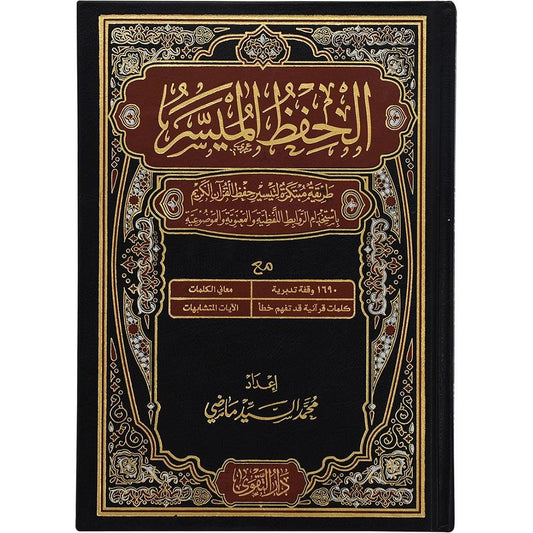

Easy Memorization Quran
Easy Memorization Quran
An innovative method to facilitate memorization of the Holy Quran using verbal and conceptual links.
Mohamed Elsayed Madi, Ahmed Issa Elmasrawi
- from Dhs. 45.00
- from Dhs. 45.00
- Unit price
- per


Tajweed Holy Quran, 30 parts, with an Arabic leather bag, size 17 x 24 cm
Tajweed Quran, 30 parts, with leather case - Arabic Size 24*17 cm This deluxe Tajweed Quran is a paperback divided into thirty separate parts, all presented in a beautiful, sturdy black leather case, perfectly designed to protect the parts from loss or damage. It...
- Dhs. 94.00
- Dhs. 94.00
- Unit price
- per


Taysir Al-Karim Al-Rahman in interpreting the words of Al-Mannan, Al-Saadi’s interpretation
Taysir al-Karim al-Rahman fi Tafsir Kalam al-Mannan (The Facilitation of the Most Gracious, Most Merciful in the Interpretation of the Words of the Beneficent) - Tafsir al-Sa'di Author's name: Sheikh Abdul Rahman bin Nasser Al-Saadi Al-Sa'di's interpretation is one that focuses on clarifying the...
- Dhs. 73.00
- Dhs. 73.00
- Unit price
- per
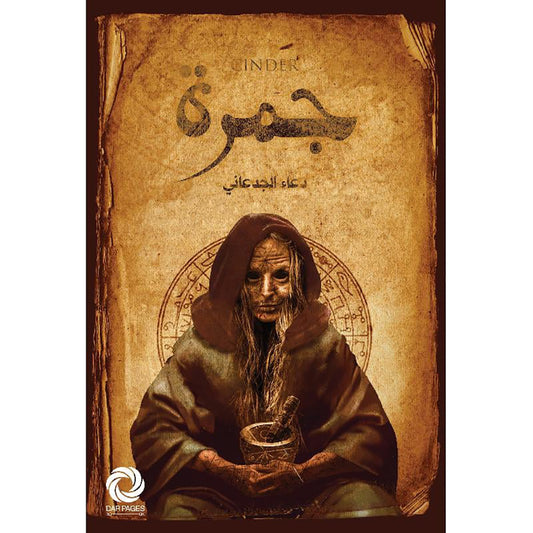

Ember - Duaa Al-Jadaani
cinder
Author's name: Duaa Al-Jadaani
They are cowards, cowards who are good at creating illusions.
- Dhs. 72.00
- Dhs. 72.00
- Unit price
- per


Take your belief from the Qur’an and the authentic Sunnah
Take your belief from the Qur’an and the authentic Sunnah Author's name: Muhammad ibn Jamil Zeno A message from Sheikh Muhammad Jamil Zeno in which he explains the doctrine of the Sunnis and the community on various doctrinal issues: monotheism, polytheism, tyranny, following the...
- Dhs. 15.00
- Dhs. 15.00
- Unit price
- per

Granada Trilogy
Granada Trilogy Author: Radwa Ashour The Granada Trilogy is a series of three novels by the Egyptian author Radwa Ashour, consisting of Granada Mariam Departure The events take place in the Kingdom of Granada after the fall of all Islamic kingdoms in Al-Andalus. The...
- Dhs. 55.00
- Dhs. 55.00
- Unit price
- per


The Qiyam Mushaf with thematic division of the verses of the Holy Quran, white paper, size 24 x 17 cm
The Qiyam Quran with thematic division of the verses of the Holy Quran, white paper, size 24 x 17 cm With Q barcode This Quran is distinguished by having a code on each of its pages. When reading the code using a barcode reader...
- Dhs. 35.00
- Dhs. 35.00
- Unit price
- per

I loved him, so everything loved me back.
I loved him so everything loved me Author's name: Raghad Al Saleh A profound, beautiful book with diverse presentations, ideas, and titles full of benefit and stories taken from the righteous predecessors and their hidden worship and how we get closer to God. I...
- Dhs. 49.00
- Dhs. 49.00
- Unit price
- per
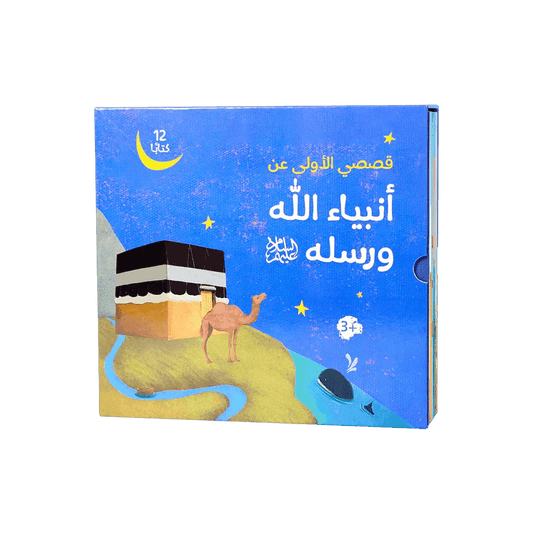

My first stories about God's prophets and messengers
My first stories about God's prophets and messengers A series of stories for children in early childhood education, featuring the prophets and messengers of God Almighty in a simple, enjoyable, and engaging style. The aim is to present lessons and morals drawn from their...
- Dhs. 165.00
Dhs. 185.00- Dhs. 165.00
- Unit price
- per
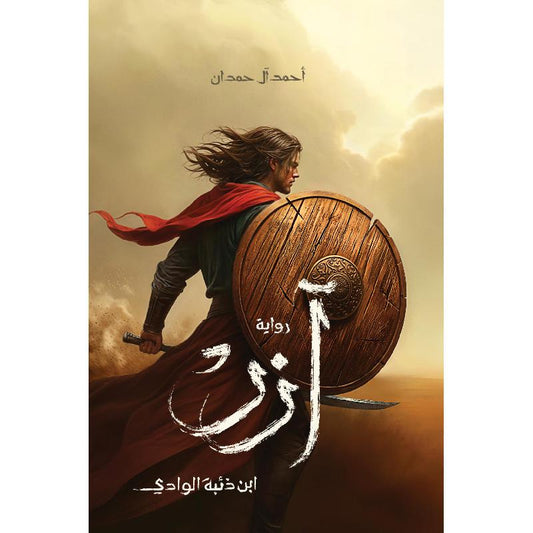

Azar, son of the Wolf of the Valley
AZAR
Son of the Valley She-wolf
Author: Ahmed Al Hamdan
I dreamt that I gave birth to a moon ascending to the sky, illuminating the Arabian Peninsula with its light.
- Dhs. 79.00
- Dhs. 79.00
- Unit price
- per
- Choosing a selection results in a full page refresh.