
Customer service: 00971581607579 📞


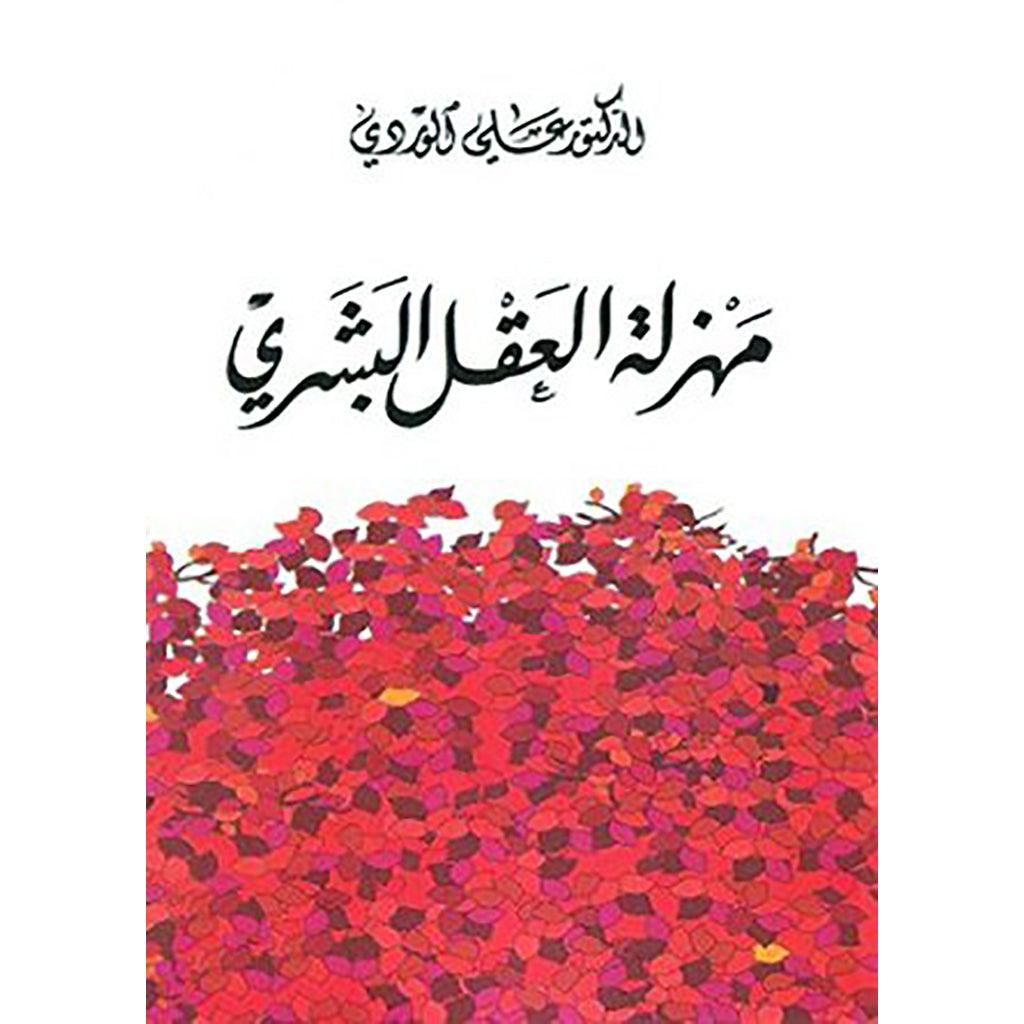
Farce of the human mind
Author's name: Ali Al-Wardi
Dr. Ali Al-Wardi wrote this book in separate chapters at various times after the publication of his book “Preachers of Sultans.” These chapters do not deal with a single topic, and they were combined because they were written under the influence of the uproar that arose around his aforementioned book, which may please some people and anger others. Dr. Al-Wardi starts in his articles from a principle that says that the new concepts that modern logic believes in are the concept of movement and evolution. Everything in this universe evolves from one state to another, and there is no turning back on its evolution. He says that it has become the duty of preachers to study the laws of this evolution before they bombard people with a torrent of their resonant sermons.
He does not, therefore, see this book as a glorification of Western civilization or a call for it. Rather, his intention is to say that what is inevitable must be done. The modern concepts brought by Western civilization are undoubtedly coming. He says that it is time to understand the truth before it is too late, as the Islamic world is leading people through a harsh transitional phase, suffering pains similar to labor pains. For about half a century, the world was living in the Middle Ages, then suddenly the new civilization came and began to sweep away most of what was familiar. Therefore, in every Muslim home, there is a fight and argument between the old generation and the new generation. One looks at life from the perspective of the tenth century, and the other wants to look at it from the perspective of the twentieth century. He adds that he was expecting thinkers, clerics and others, to help their people through this labor crisis, but they were, on the contrary, trying to stand in the way of reform. In light of this, it can be said that writing is an attempt to enact a new reading in an Islamic society that lives, as the researcher sees it, with the mentality of the past, the era of development that requires a religious vision and concepts that are in line with this lived reality.

Best Selling
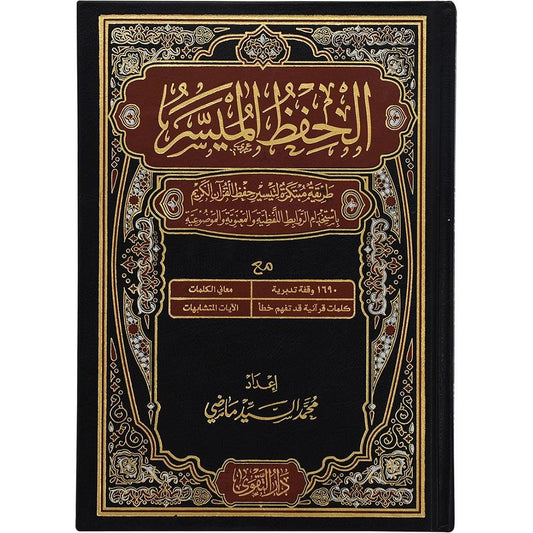

Easy Memorization Quran
Easy Memorization Quran
An innovative method to facilitate memorization of the Holy Quran using verbal and conceptual links.
Mohamed Elsayed Madi, Ahmed Issa Elmasrawi
- from Dhs. 45.00
- from Dhs. 45.00
- Unit price
- per


Taysir Al-Karim Al-Rahman in interpreting the words of Al-Mannan, Al-Saadi’s interpretation
Taysir al-Karim al-Rahman fi Tafsir Kalam al-Mannan (The Facilitation of the Most Gracious, Most Merciful in the Interpretation of the Words of the Beneficent) - Tafsir al-Sa'di Author's name: Sheikh Abdul Rahman bin Nasser Al-Saadi Al-Sa'di's interpretation is one that focuses on clarifying the...
- Dhs. 73.00
- Dhs. 73.00
- Unit price
- per
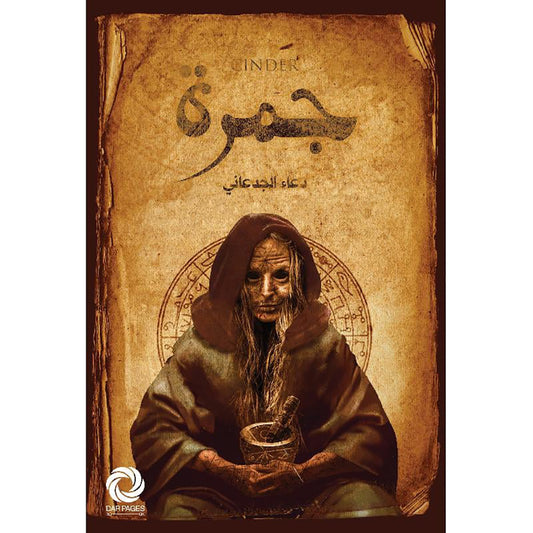

Ember - Duaa Al-Jadaani
cinder
Author's name: Duaa Al-Jadaani
They are cowards, cowards who are good at creating illusions.
- Dhs. 72.00
- Dhs. 72.00
- Unit price
- per


Take your belief from the Qur’an and the authentic Sunnah
Take your belief from the Qur’an and the authentic Sunnah Author's name: Muhammad ibn Jamil Zeno A message from Sheikh Muhammad Jamil Zeno in which he explains the doctrine of the Sunnis and the community on various doctrinal issues: monotheism, polytheism, tyranny, following the...
- Dhs. 15.00
- Dhs. 15.00
- Unit price
- per

Granada Trilogy
Granada Trilogy Author: Radwa Ashour The Granada Trilogy is a series of three novels by the Egyptian author Radwa Ashour, consisting of Granada Mariam Departure The events take place in the Kingdom of Granada after the fall of all Islamic kingdoms in Al-Andalus. The...
- Dhs. 55.00
- Dhs. 55.00
- Unit price
- per

I loved him, so everything loved me back.
I loved him so everything loved me Author's name: Raghad Al Saleh A profound, beautiful book with diverse presentations, ideas, and titles full of benefit and stories taken from the righteous predecessors and their hidden worship and how we get closer to God. I...
- Dhs. 49.00
- Dhs. 49.00
- Unit price
- per


My first stories about God's prophets and messengers
My first stories about God's prophets and messengers A series of stories for children in early childhood education, featuring the prophets and messengers of God Almighty in a simple, enjoyable, and engaging style. The aim is to present lessons and morals drawn from their...
- Dhs. 165.00
Dhs. 185.00- Dhs. 165.00
- Unit price
- per
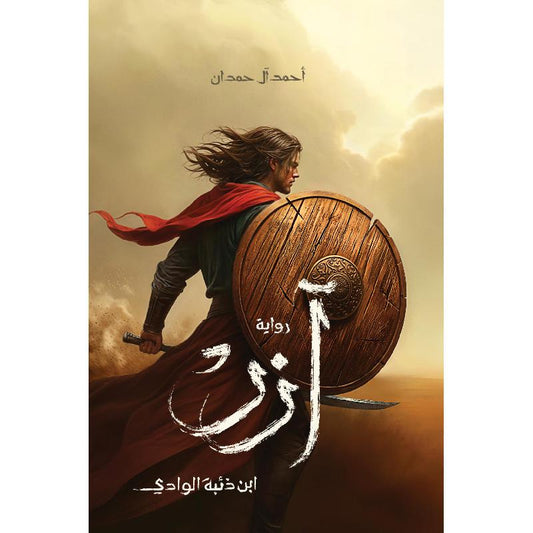

Azar, son of the Wolf of the Valley
AZAR
Son of the Valley She-wolf
Author: Ahmed Al Hamdan
I dreamt that I gave birth to a moon ascending to the sky, illuminating the Arabian Peninsula with its light.
- Dhs. 79.00
- Dhs. 79.00
- Unit price
- per
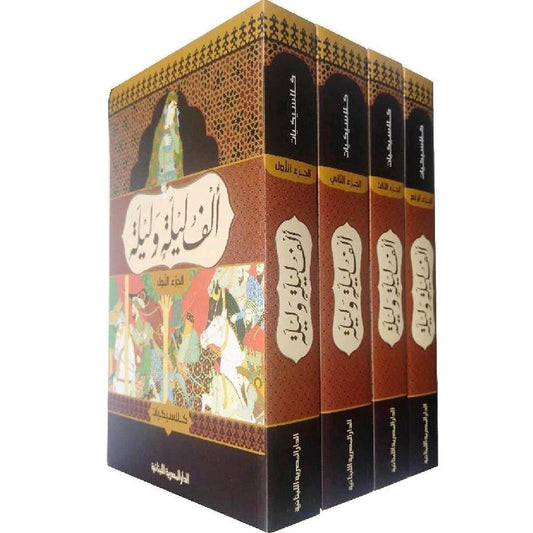

One Thousand and One Nights 4 parts
One Thousand and One Nights - 4 Parts Author Name: Abdullah Ibn al-Muqaffa One Thousand and One Nights is a collection of stories from West and South Asia, along with folk tales that were compiled and translated into Arabic during the Islamic...
- Dhs. 110.00
Dhs. 135.00- Dhs. 110.00
- Unit price
- per

Explanation of the Three Fundamentals, followed by an explanation of the Four Rules, by Sheikh Saleh Al-Fawzan
Explanation of the Three Principles Followed by an explanation of the four rules. Author's name: Imam Muhammad ibn Abd al-Wahhab Dr. Saleh bin Fawzan bin Abdullah Al-Fawzan Edited and printed by: Dr. Salman Jaber Othman Al-Mujalham Al-Suwailem The book Explanation of the Three Fundamentals,...
- Dhs. 65.00
- Dhs. 65.00
- Unit price
- per
- Choosing a selection results in a full page refresh.