
Customer service: 00971581607579 📞


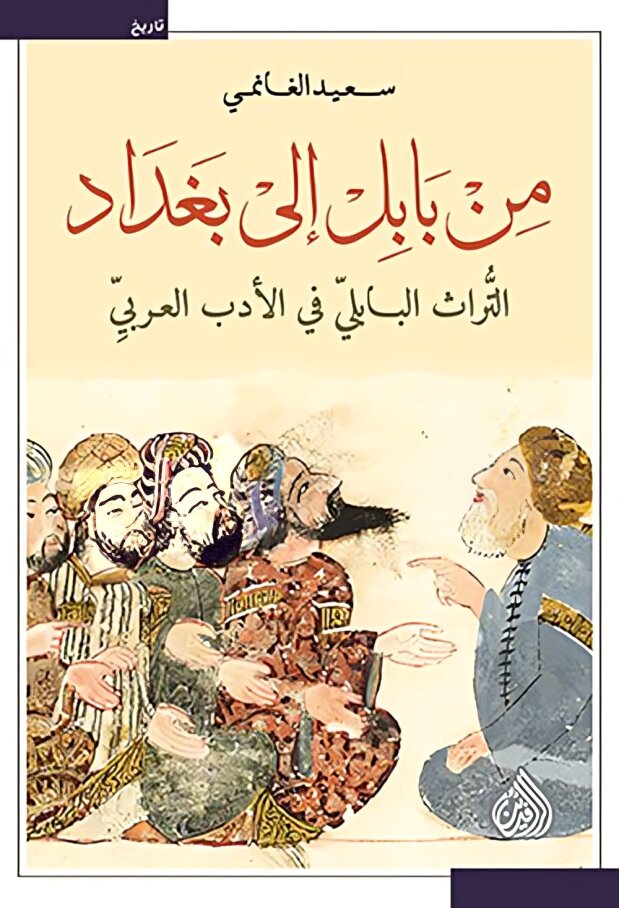
From Babylon to Baghdad
Babylonian heritage in Arabic literature
Author's name: Saeed Al-Ghanimi
The cultural influence of the Babylonians on those who came after them took two distinct paths: the path of texts, when the stories themselves were transmitted, and the path of literary traditions, when specific texts could not be transmitted, but rather literary customs and practices, and genre forms with their own characteristics in the use and interpretation of language. With the spread of texts east and west, and the localization of texts and traditions in new cultures, a slow and subtle process had to be taken into account: the adaptation of texts and traditions for the purpose of localization and acclimatization. Thus, new layers belonging to other cultures accumulated on top of authentic texts and traditions. Texts and traditions do not remain static; rather, they change slowly and imperceptibly to suit the literary and cultural environments to which they are transmitted. However, after a long period of time, when these texts and traditions return to the environment from which they originated, their external features have changed, and they appear as if they have lost their formal affiliation, at least to the historical image with which they began. This is precisely what happened when some texts and traditions returned to Arabic literature, representing texts belonging to the last cultures that adopted them. Indeed, Arabic culture itself adapted and modified them as well. The book traces the forms of adaptation of Babylonian myths as they reach neighboring literatures, particularly when they reach Arabic literature, as well as the types of literary genres and their themes; such as the slaying of the dragon, the death and resurrection of the hero, the myth of the hero's birth, the formation of heroic tales, and proverbs. It follows the myths in their transmission from the Babylonian heritage to Arabic literature directly, or through the intermediate paths through which they passed.

Best Selling
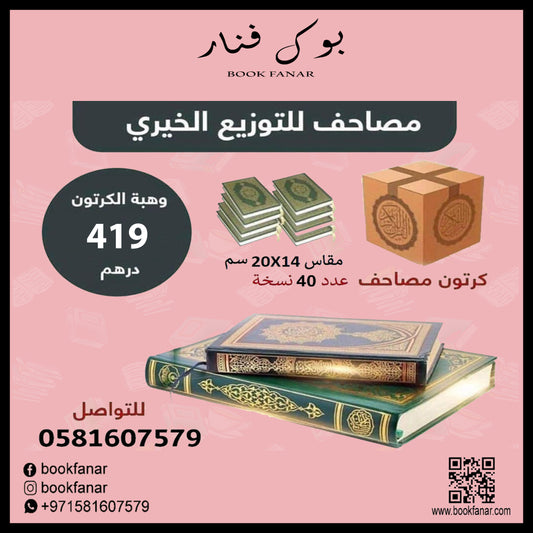

A carton of 40 copies of the Holy Qur’an for charitable distribution, quarter size 14 x 20 cm
A copy of the Quran for charitable distribution, quarter size, 14 x 20 cm Number: 40 copies in cartons White paper, 2-color printing High quality Copies of the Quran for charitable distribution with the option to print a death notice on them WhatsApp: 0581607579...
- Dhs. 419.00
- Dhs. 419.00
- Unit price
- per


Magdalene under the lime trees
Magdalene Author: Mustafa Lutfi Al-Manfaluti Magdalene is Mustafa Lutfi Al-Manfaluti's Arabic adaptation of the wonderful novel "Under the Lindens." The novel addresses the oldest and greatest idea known to humanity since literature began, revolving around the love of a boy and a...
- Dhs. 35.00
- Dhs. 35.00
- Unit price
- per


Take your belief from the Qur’an and the authentic Sunnah
Take your belief from the Qur’an and the authentic Sunnah Author's name: Muhammad ibn Jamil Zeno A message from Sheikh Muhammad Jamil Zeno in which he explains the doctrine of the Sunnis and the community on various doctrinal issues: monotheism, polytheism, tyranny, following the...
- Dhs. 15.00
- Dhs. 15.00
- Unit price
- per


The Book of Monotheism
The Book of Monotheism Author's name: Imam Muhammad Abdul Wahhab Tawheed is the right of Allah that is obligatory upon His servants and it is the greatest commandment of religion and the greatest commandment that Allah has commanded and it is the origin of...
- Dhs. 40.00
- Dhs. 40.00
- Unit price
- per


The Noble Qur'an® Series - English Only | Paperback
The Clear Quran Series® - English Only | Paperback The Clear Qur’an® series, translated by Dr. Mustafa Khattab, is one of the most eloquent attempts to capture the elegance and vitality of the Holy Qur’an with skill and precision in modern English. Its clarity...
- Dhs. 26.00
- Dhs. 26.00
- Unit price
- per


20x28 Mushaf Al Madinah King Fahd Complex Size
King Fahd Complex Quran, Jami'i size Size: 20*28 cm (Large size) A large-format Quran in Arabic calligraphy, printed by the Malik Fahd Complex, found in the Two Holy Mosques in Mecca and Medina, and in numerous mosques worldwide. Its large, bold script makes it...
- Dhs. 84.00
- Dhs. 84.00
- Unit price
- per
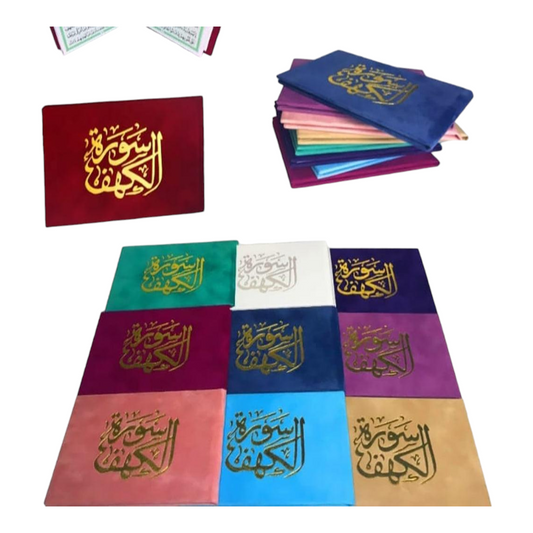

Surah Al-Kahf Velvet 8 x 12 cm
Surah Al-Kahf, velvet, 8 x 12 cm
- Dhs. 10.00
- Dhs. 10.00
- Unit price
- per

The Three Principles and their Evidence
The Three Principles and Their Evidence Pocket Size
Author's name: Muhammad ibn Abd al-Wahhab
The Four Rules and Conditions of Prayer: Revealing Doubts
- Dhs. 20.00
- Dhs. 20.00
- Unit price
- per


Welcome to Hyeonnam-dong Library
Welcome to Hyeonam-dong Library Author: Hwang Bo-reum Yeong-ju, who followed a conventional path in life—study, marriage, and a prestigious job—suddenly gives it all up. Exhausted by work, she abandons her lavish career and devotes herself to her dream: opening a bookstore. In a quaint...
- Dhs. 60.00
- Dhs. 60.00
- Unit price
- per
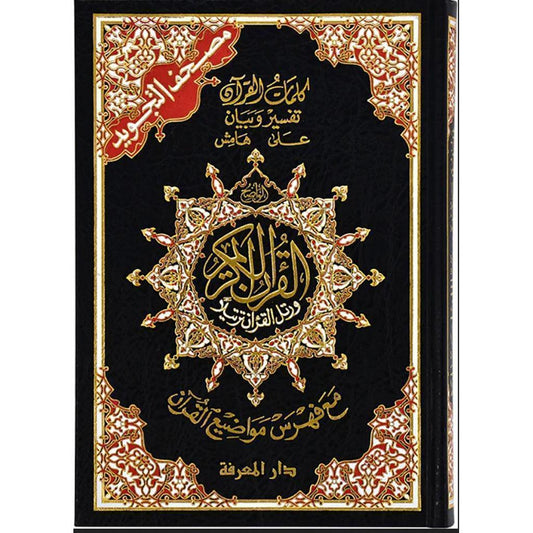

Tajweed Quran, size 17 x 24 cm
17x24 Tajweed Quran size This is a Tajweed Quran according to the Hafs recitation. It includes the following: Color-coded letters: to present the rules of Tajweed, a very good and simple way to learn and apply them. Clear text: Extra spaces have been added...
- Dhs. 75.00
- Dhs. 75.00
- Unit price
- per
- Choosing a selection results in a full page refresh.