
Customer service: 00971581607579 📞


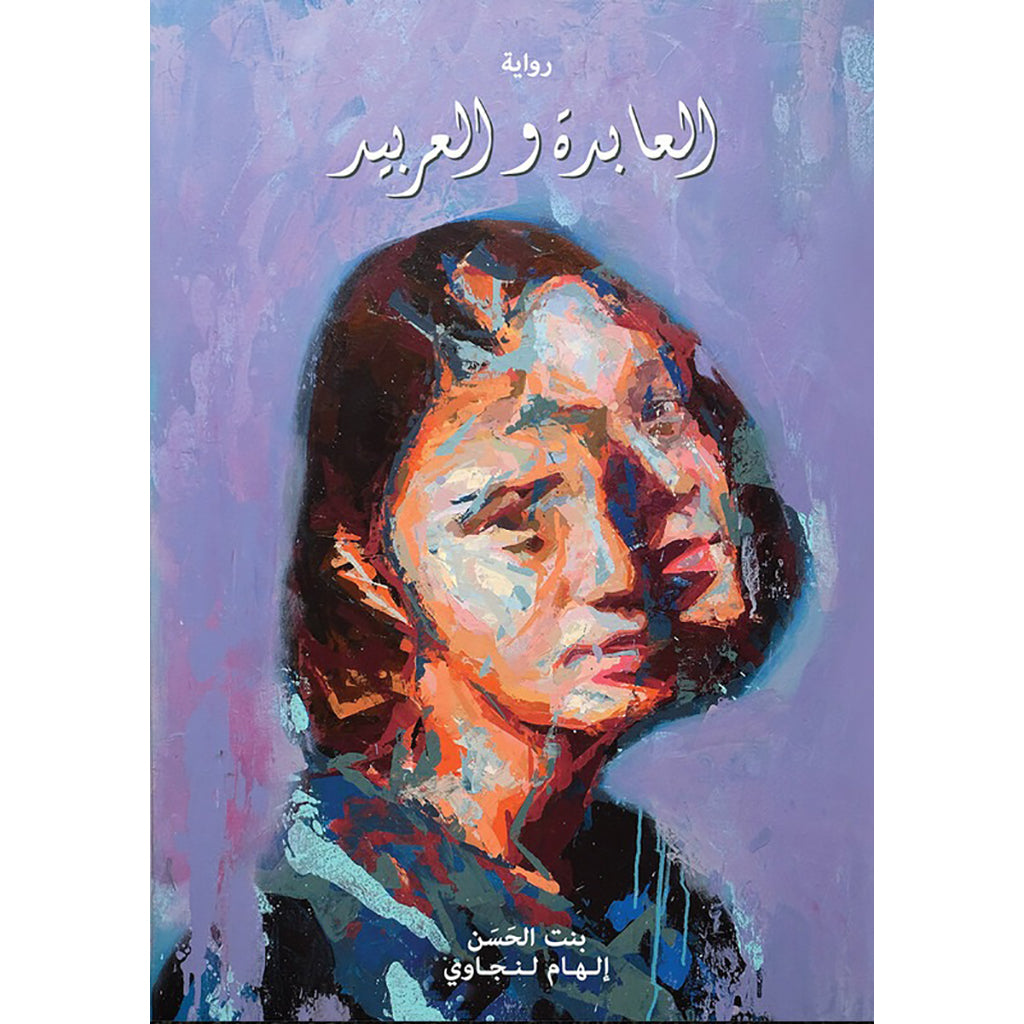
The worshipper and the rabble
Author's name: Elham Linjawi
After conducting an extensive study spanning two years and a few months on the relationship between pre-Islamic Arab idols and Masonic symbols, I dug my teeth furiously into the end of Ottoman rule in the Hejaz, slowly uncovering the buried historical truth. With one eye, I looked at history, with the other at romanticism, and with the third, within my mind, beyond human nature. I did so through the novel's protagonists: a devout woman, a lascivious man, and Laqis, the daughter of Satan. I let my emotions take control as I wrote a classic, old-fashioned romantic novel. I wove its letters with a Hijazi needle, stacked with threads of the orgy of worn-out reality and with imaginative fabrics patched with narratives of social issues connected to the depths of Arab women's issues. I made three vows to myself: First, to convey the true events of the story I lived with that devout woman, in all their details, but with my own arrangements and without social restrictions. Second, to excite the reader's imagination with constructive feminine chatter and charge him with an intense dose of provocative imagination, so that he can decipher the symbols with the radiance of his conscience, each time I expand the circle, until his mind wanders, then I surround him with a world of myths where reality blends with the unseen, the present with the past, and life with death in the headquarters of the dwellings of the talismanic idols, buried for thousands of years, under the abandoned house of "Khalil" in the Al-Ammariyah neighborhood of Jeddah. There, the events of the story are monitored under its roof, and the walls of the novel are behind its wall. Third, the reader appears on the horizon, traveling in a time machine, on an exciting journey with the machine, Sirah, the treacherous worshipper, whom Laqis, the daughter of Satan, chose to accomplish through her the great mission of unleashing her nine brothers upon her, from the rebels, goblins, and devils, so that Satan’s kingdom and his ancient authority would remain in the depths of the furrows.

Best Selling
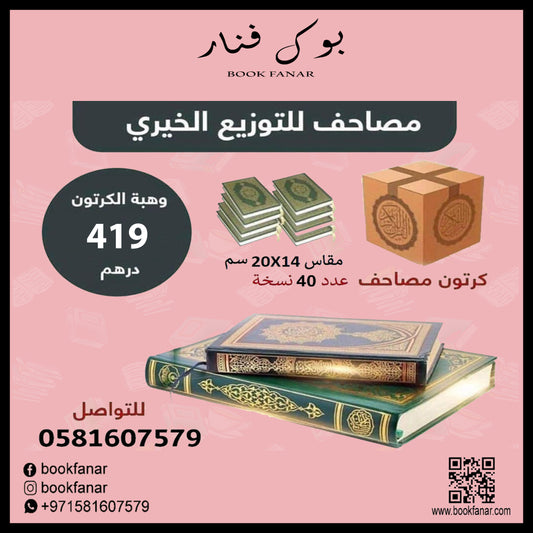

A carton of 40 copies of the Holy Qur’an for charitable distribution, quarter size 14 x 20 cm
A copy of the Quran for charitable distribution, quarter size, 14 x 20 cm Number: 40 copies in cartons White paper, 2-color printing High quality Copies of the Quran for charitable distribution with the option to print a death notice on them WhatsApp: 0581607579...
- Dhs. 419.00
- Dhs. 419.00
- Unit price
- per


Magdalene under the lime trees
Magdalene Author: Mustafa Lutfi Al-Manfaluti Magdalene is Mustafa Lutfi Al-Manfaluti's Arabic adaptation of the wonderful novel "Under the Lindens." The novel addresses the oldest and greatest idea known to humanity since literature began, revolving around the love of a boy and a...
- Dhs. 35.00
- Dhs. 35.00
- Unit price
- per


Take your belief from the Qur’an and the authentic Sunnah
Take your belief from the Qur’an and the authentic Sunnah Author's name: Muhammad ibn Jamil Zeno A message from Sheikh Muhammad Jamil Zeno in which he explains the doctrine of the Sunnis and the community on various doctrinal issues: monotheism, polytheism, tyranny, following the...
- Dhs. 15.00
- Dhs. 15.00
- Unit price
- per


The Book of Monotheism
The Book of Monotheism Author's name: Imam Muhammad Abdul Wahhab Tawheed is the right of Allah that is obligatory upon His servants and it is the greatest commandment of religion and the greatest commandment that Allah has commanded and it is the origin of...
- Dhs. 40.00
- Dhs. 40.00
- Unit price
- per


The Noble Qur'an® Series - English Only | Paperback
The Clear Quran Series® - English Only | Paperback The Clear Qur’an® series, translated by Dr. Mustafa Khattab, is one of the most eloquent attempts to capture the elegance and vitality of the Holy Qur’an with skill and precision in modern English. Its clarity...
- Dhs. 26.00
- Dhs. 26.00
- Unit price
- per


20x28 Mushaf Al Madinah King Fahd Complex Size
King Fahd Complex Quran, Jami'i size Size: 20*28 cm (Large size) A large-format Quran in Arabic calligraphy, printed by the Malik Fahd Complex, found in the Two Holy Mosques in Mecca and Medina, and in numerous mosques worldwide. Its large, bold script makes it...
- Dhs. 84.00
- Dhs. 84.00
- Unit price
- per
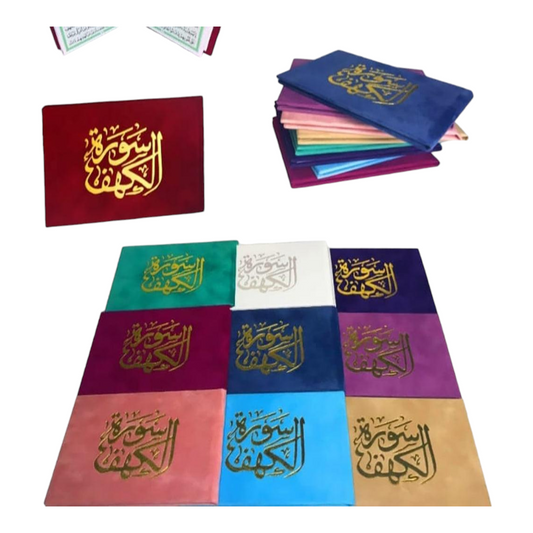

Surah Al-Kahf Velvet 8 x 12 cm
Surah Al-Kahf, velvet, 8 x 12 cm
- Dhs. 10.00
- Dhs. 10.00
- Unit price
- per

The Three Principles and their Evidence
The Three Principles and Their Evidence Pocket Size
Author's name: Muhammad ibn Abd al-Wahhab
The Four Rules and Conditions of Prayer: Revealing Doubts
- Dhs. 20.00
- Dhs. 20.00
- Unit price
- per


Welcome to Hyeonnam-dong Library
Welcome to Hyeonam-dong Library Author: Hwang Bo-reum Yeong-ju, who followed a conventional path in life—study, marriage, and a prestigious job—suddenly gives it all up. Exhausted by work, she abandons her lavish career and devotes herself to her dream: opening a bookstore. In a quaint...
- Dhs. 60.00
- Dhs. 60.00
- Unit price
- per
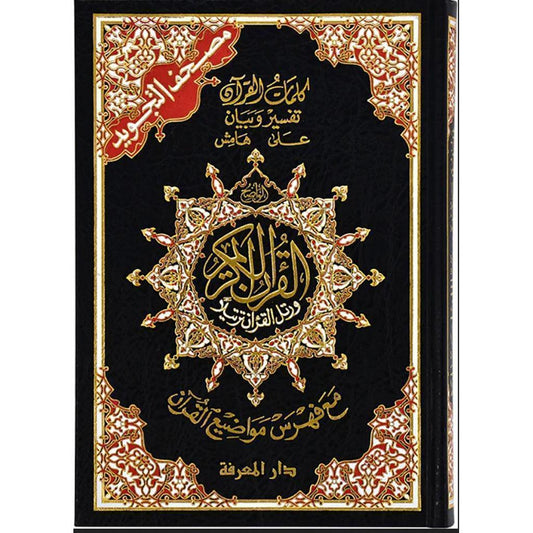

Tajweed Quran, size 17 x 24 cm
17x24 Tajweed Quran size This is a Tajweed Quran according to the Hafs recitation. It includes the following: Color-coded letters: to present the rules of Tajweed, a very good and simple way to learn and apply them. Clear text: Extra spaces have been added...
- Dhs. 75.00
- Dhs. 75.00
- Unit price
- per
- Choosing a selection results in a full page refresh.