
Customer service: 00971581607579 📞


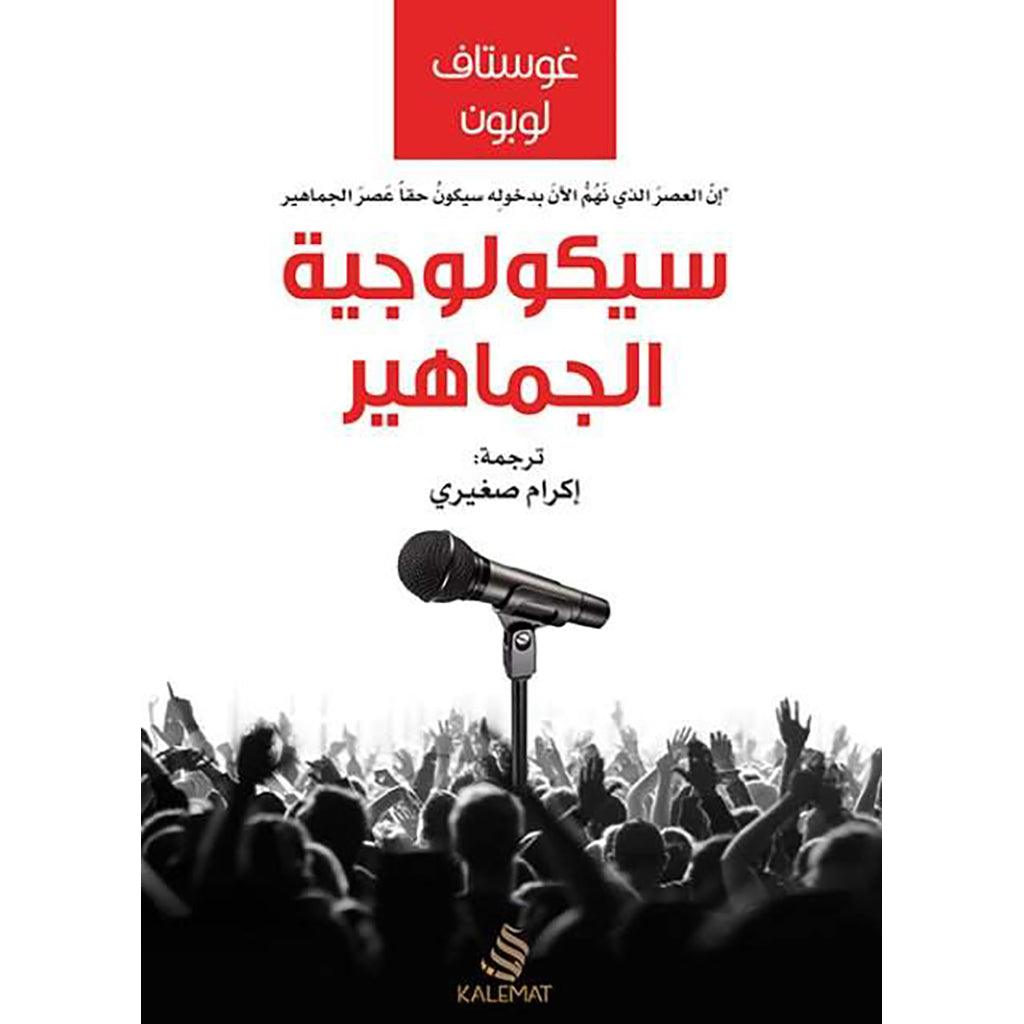
Crowd psychology
Author's name: Gustave Lebon
Crowd Psychology is a book by the French crowd psychologist Gustave Le Bon. The Arabic version was translated and introduced by Hashem Saleh, and the first Arabic edition was published by Dar Al Saqi in 1991. Although it is a single book, the internal organization of the book includes three books: Book One, Book Two, and Book Three. After the translator's introduction and the scientific principles that resulted from the author's discoveries, the preface, the introduction, and the book's introduction, Book One begins and ends with Book Three, followed by the footnotes, which provide a detailed overview of the footnotes and references the author used in writing his book, Crowd Psychology. It is well known that Le Bon's long life allowed him to witness the triumph of science in the late nineteenth century, the crises of parliamentary democratic systems, the rise of socialism, and the emergence of the popular forces that accompanied them and greatly worried him. In light of this context, we can better understand and appreciate Le Bon's thought, who was able to crystallize his theory related to the psychology of peoples or the psychology of peoples and human races. For Gustave Le Bon, the masses had become a reality. Therefore, he studied the phenomenon of the masses scientifically, in light of psychology. The basic idea of his theory focused on the fact that the disasters that befell France in the recent past, as well as all its defeats and the difficulties it faced, were due to the masses' assault on the historical stage and their inability to confront them. This explains why the weakness of the democratic parliamentary system is due to ignorance of the laws of psychology and the methods of managing the masses. In the pages of this book, Le Bon expressed these ideas in a simple and easy-to-understand manner, shaped in a comprehensive and coherent scientific theory that made him an intellectual master for an entire era. Everyone agrees that Le Bon's book, whose pages we are turning, "The Psychology of Crowds," was an unparalleled success in the field of mass psychology. The book is the manifesto that inaugurated what is now called social or group psychology.

Best Selling


A carton of 40 copies of the Holy Qur’an for charitable distribution, quarter size 14 x 20 cm
A copy of the Quran for charitable distribution, quarter size, 14 x 20 cm Number: 40 copies in cartons White paper, 2-color printing High quality Copies of the Quran for charitable distribution with the option to print a death notice on them WhatsApp: 0581607579...
- Dhs. 419.00
- Dhs. 419.00
- Unit price
- per


Magdalene under the lime trees
Magdalene Author: Mustafa Lutfi Al-Manfaluti Magdalene is Mustafa Lutfi Al-Manfaluti's Arabic adaptation of the wonderful novel "Under the Lindens." The novel addresses the oldest and greatest idea known to humanity since literature began, revolving around the love of a boy and a...
- Dhs. 35.00
- Dhs. 35.00
- Unit price
- per


Take your belief from the Qur’an and the authentic Sunnah
Take your belief from the Qur’an and the authentic Sunnah Author's name: Muhammad ibn Jamil Zeno A message from Sheikh Muhammad Jamil Zeno in which he explains the doctrine of the Sunnis and the community on various doctrinal issues: monotheism, polytheism, tyranny, following the...
- Dhs. 15.00
- Dhs. 15.00
- Unit price
- per


The Book of Monotheism
The Book of Monotheism Author's name: Imam Muhammad Abdul Wahhab Tawheed is the right of Allah that is obligatory upon His servants and it is the greatest commandment of religion and the greatest commandment that Allah has commanded and it is the origin of...
- Dhs. 40.00
- Dhs. 40.00
- Unit price
- per


The Noble Qur'an® Series - English Only | Paperback
The Clear Quran Series® - English Only | Paperback The Clear Qur’an® series, translated by Dr. Mustafa Khattab, is one of the most eloquent attempts to capture the elegance and vitality of the Holy Qur’an with skill and precision in modern English. Its clarity...
- Dhs. 26.00
- Dhs. 26.00
- Unit price
- per


20x28 Mushaf Al Madinah King Fahd Complex Size
King Fahd Complex Quran, Jami'i size Size: 20*28 cm (Large size) A large-format Quran in Arabic calligraphy, printed by the Malik Fahd Complex, found in the Two Holy Mosques in Mecca and Medina, and in numerous mosques worldwide. Its large, bold script makes it...
- Dhs. 84.00
- Dhs. 84.00
- Unit price
- per
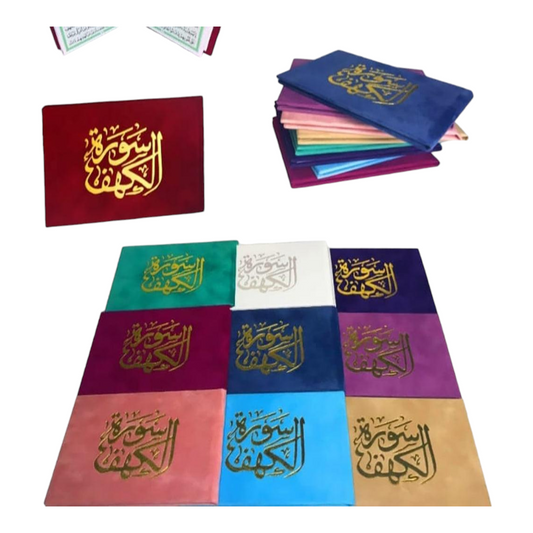

Surah Al-Kahf Velvet 8 x 12 cm
Surah Al-Kahf, velvet, 8 x 12 cm
- Dhs. 10.00
- Dhs. 10.00
- Unit price
- per

The Three Principles and their Evidence
The Three Principles and Their Evidence Pocket Size
Author's name: Muhammad ibn Abd al-Wahhab
The Four Rules and Conditions of Prayer: Revealing Doubts
- Dhs. 20.00
- Dhs. 20.00
- Unit price
- per


Welcome to Hyeonnam-dong Library
Welcome to Hyeonam-dong Library Author: Hwang Bo-reum Yeong-ju, who followed a conventional path in life—study, marriage, and a prestigious job—suddenly gives it all up. Exhausted by work, she abandons her lavish career and devotes herself to her dream: opening a bookstore. In a quaint...
- Dhs. 60.00
- Dhs. 60.00
- Unit price
- per
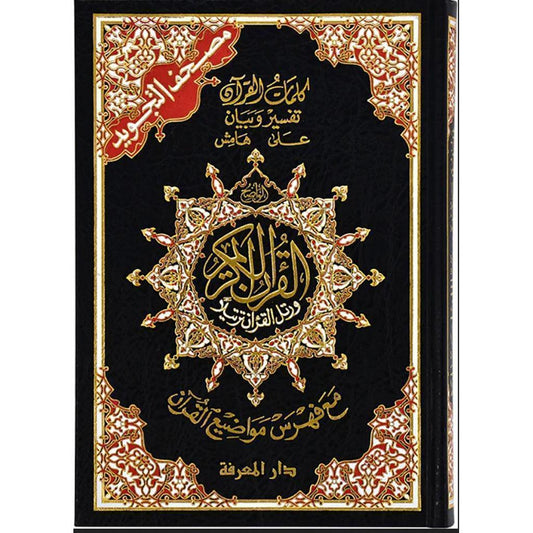

Tajweed Quran, size 17 x 24 cm
17x24 Tajweed Quran size This is a Tajweed Quran according to the Hafs recitation. It includes the following: Color-coded letters: to present the rules of Tajweed, a very good and simple way to learn and apply them. Clear text: Extra spaces have been added...
- Dhs. 75.00
- Dhs. 75.00
- Unit price
- per
- Choosing a selection results in a full page refresh.