
Customer service: 00971581607579 📞






Islamic Group - Gifts and Distributions
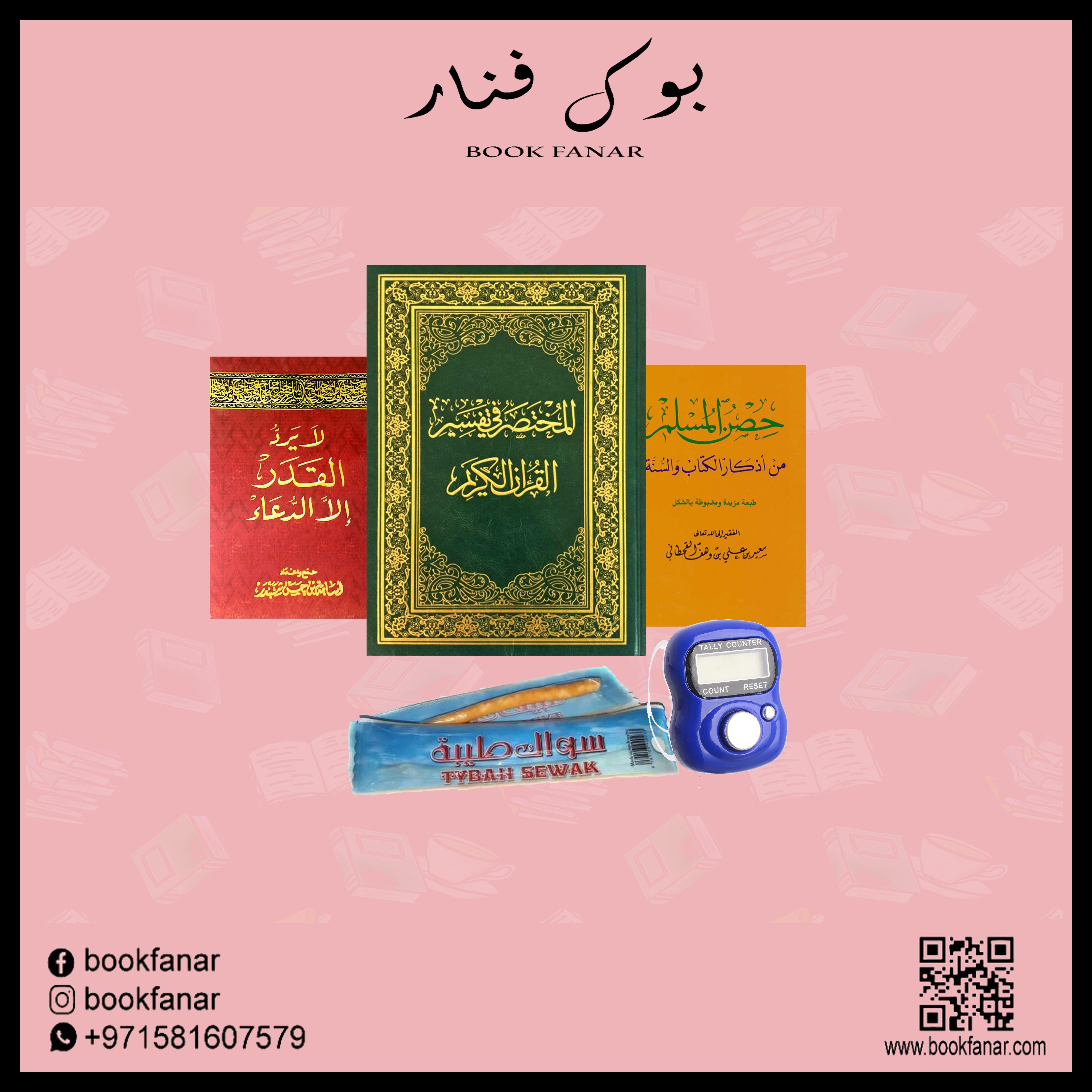
A Brief Explanation of the Holy Quran 14 x 20 cm
Hisn Al-Muslim palm size
Nothing can change fate except prayer
Electronic rosary ring
1 piece of Siwak Tayyiba
A Brief Explanation of the Holy Quran 14 x 20 cm
It is a
Clarity and simplicity of expression, free from wordiness and complexity.
Limiting oneself to interpreting the verses and explaining their meanings without delving into issues of readings, grammar, jurisprudence, and the like.
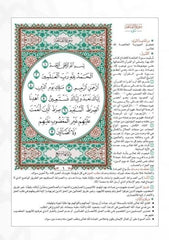
- Explaining the Qur’anic vocabulary during interpretation and coloring the explanation in a different color to make it easier for those who want it.
- Following the approach of the predecessors of this nation, may God be pleased with them, by following what is indicated by the Qur’an and Sunnah.
- Investigating the most likely meaning when there is a difference, taking into account the controls of interpretation and the rules of preference.
- The context of a number of verses’ guidance and benefits that help in contemplating them and fully benefiting from them, under a separate title: Benefits of the verses.
- Introduction to each Surah, explaining its purpose and the general theme around which it revolves.
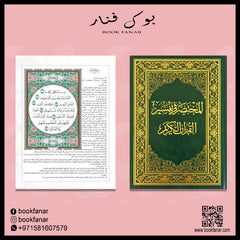
- Collecting all of the above and writing it on the margin of the Holy Qur’an, printed by the King Fahd Complex, to help the reader of the Qur’an understand the words of God Almighty in the easiest way without the need to refer to another book.
Muslim Fortress
Hisn al-Muslim - Supplications from the Qur'an and Sunnah. (Also known as "The Fortress of the Believer" or "Fortress of the Muslims")
This is a very wonderful booklet that contains many authentic supplications that a Muslim can recite daily and on special occasions.
Author's Note: This book is a summary of my previous work entitled Dhikr, Supplication, and Treatment by Ruqyah from the Book of the Sunnah. I have selected only the Words of Remembrance section for this summary to make it compact and easy to carry. To this end, I have included only the text of the words of remembrance rather than the entire hadith. I have also limited myself to one or two references from the original book for each hadith. Anyone who wishes to know the Companion who narrated a particular hadith, or additional information about where it was recorded, should refer to the original work (mentioned above).
Saeed bin Ali bin Wahf Al-Qahtani
This is a very wonderful booklet that contains many authentic supplications that a Muslim can recite daily and on special occasions.
Author's Note: This book is a summary of my previous work entitled Dhikr, Supplication, and Treatment by Ruqyah from the Book of the Sunnah. I have selected only the Words of Remembrance section for this summary to make it compact and easy to carry. To this end, I have included only the text of the words of remembrance rather than the entire hadith. I have also limited myself to one or two references from the original book for each hadith. Anyone who wishes to know the Companion who narrated a particular hadith, or additional information about where it was recorded, should refer to the original work (mentioned above).
Saeed bin Ali bin Wahf Al-Qahtani
Nothing can change fate except prayer
Collected and verified by: Osama Shabandar
The siwak is made from the roots of the arak tree, which is an evergreen shrub.
Benefits:
-
It gives the mouth a sweet and pleasant smell.
-
The siwak is used to clean teeth after eating or at any other time.
-
Antibacterial and anti-microbial.
-
Strengthening the gums and fighting their inflammation.
-
Prevents deposits and calcification.

Best Selling
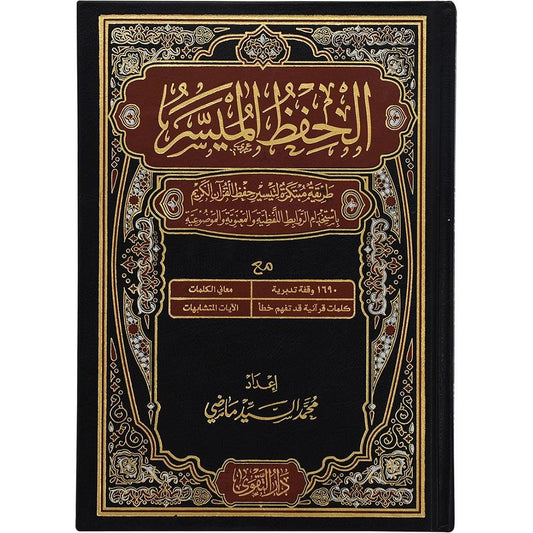

Easy Memorization Quran
Easy Memorization Quran
An innovative method to facilitate memorization of the Holy Quran using verbal and conceptual links.
Mohamed Elsayed Madi, Ahmed Issa Elmasrawi
- from Dhs. 45.00
- from Dhs. 45.00
- Unit price
- per


Tajweed Holy Quran, 30 parts, with an Arabic leather bag, size 17 x 24 cm
Tajweed Quran, 30 parts, with leather case - Arabic Size 24*17 cm This deluxe Tajweed Quran is a paperback divided into thirty separate parts, all presented in a beautiful, sturdy black leather case, perfectly designed to protect the parts from loss or damage. It...
- Dhs. 94.00
- Dhs. 94.00
- Unit price
- per


Taysir Al-Karim Al-Rahman in interpreting the words of Al-Mannan, Al-Saadi’s interpretation
Taysir al-Karim al-Rahman fi Tafsir Kalam al-Mannan (The Facilitation of the Most Gracious, Most Merciful in the Interpretation of the Words of the Beneficent) - Tafsir al-Sa'di Author's name: Sheikh Abdul Rahman bin Nasser Al-Saadi Al-Sa'di's interpretation is one that focuses on clarifying the...
- Dhs. 73.00
- Dhs. 73.00
- Unit price
- per
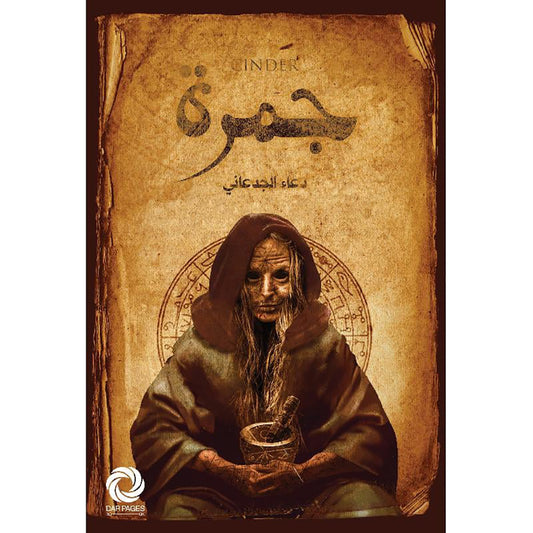

Ember - Duaa Al-Jadaani
cinder
Author's name: Duaa Al-Jadaani
They are cowards, cowards who are good at creating illusions.
- Dhs. 72.00
- Dhs. 72.00
- Unit price
- per


The Sealed Nectar - Safi al-Rahman al-Mubarakpuri
The Sealed Nectar Research in the biography of the Prophet Written by His Eminence Sheikh: Safi al-Rahman al-Mubarakfuri This book deals with a detailed study of the Prophet's biography during the Meccan and Medinan periods, in a concise, modern style. This book won first...
- Dhs. 42.00
- Dhs. 42.00
- Unit price
- per

Granada Trilogy
Granada Trilogy Author: Radwa Ashour The Granada Trilogy is a series of three novels by the Egyptian author Radwa Ashour, consisting of Granada Mariam Departure The events take place in the Kingdom of Granada after the fall of all Islamic kingdoms in Al-Andalus. The...
- Dhs. 55.00
- Dhs. 55.00
- Unit price
- per


The Qiyam Mushaf with thematic division of the verses of the Holy Quran, white paper, size 24 x 17 cm
The Qiyam Quran with thematic division of the verses of the Holy Quran, white paper, size 24 x 17 cm With Q barcode This Quran is distinguished by having a code on each of its pages. When reading the code using a barcode reader...
- Dhs. 35.00
- Dhs. 35.00
- Unit price
- per


Simplified Jurisprudence in Light of the Qur’an and Sunnah
Simplified Fiqh in Light of the Quran and Sunnah Author: A Group of Scholars The book "Simplified Fiqh in Light of the Quran and Sunnah" is a beneficial work that presents jurisprudential rulings in a clear and easy style, relying on evidence...
- Dhs. 57.00
- Dhs. 57.00
- Unit price
- per
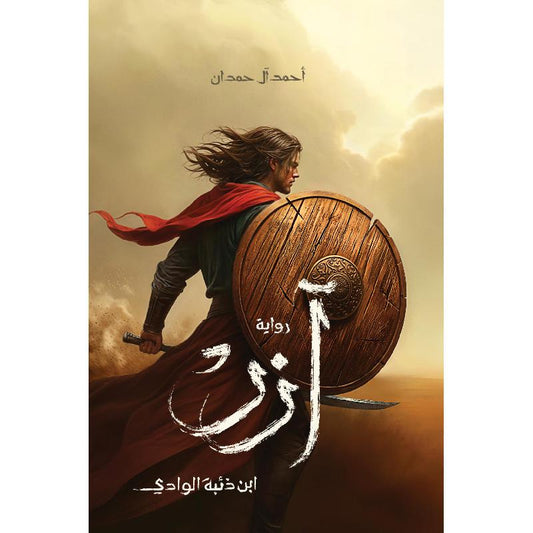

Azar, son of the Wolf of the Valley
AZAR
Son of the Valley She-wolf
Author: Ahmed Al Hamdan
I dreamt that I gave birth to a moon ascending to the sky, illuminating the Arabian Peninsula with its light.
- Dhs. 79.00
- Dhs. 79.00
- Unit price
- per


Messages from God - Cards
Messages from God
cards
They are cards containing verses from the Holy Quran.
After each verse there is a positive message that will awaken the soul from its heedlessness, and urge and encourage it to return to God again.
- Dhs. 47.00
- Dhs. 47.00
- Unit price
- per
- Choosing a selection results in a full page refresh.