
Customer service: 00971581607579 📞


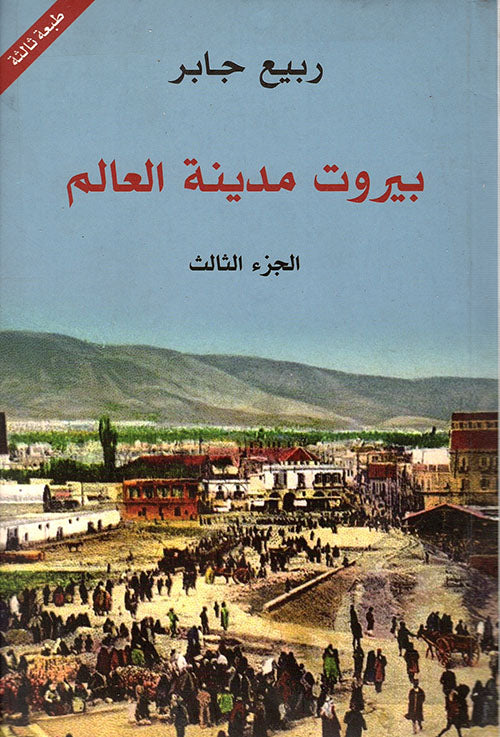


Beirut, the city of the world
Author's name: Rabi' Jaber
"The sun was setting. The scent of autumn was fragrant in the air. The orange rays flowed through the alleys of the town, giving the doors, walls, windows, and faces a thin, waxy coating. The light reflected off the glass in the buildings near the port, making them look like they were burning with fire. Abdul Jawad Ahmed Al-Baroudi left the bazaar and went down to the "Sham Station." He sat smoking a hookah with his son and contemplating the glow of the sunset on the horizon. His heart was heavier with every passing moment. He thought about an old trip. He didn't think, as memories flooded through his head and body. His whole arm trembled, and the hookah hose almost fell through his fingers. The memory of a distant winter day came back to him, and he imagined he was still running in that rain. It was gray rain, which soon turned black, and it poured without stopping. The world flowed. The sky flowed, the earth flowed, and the body of Abdul Jawad Ahmed Al-Baroudi flowed. The memories came back to him, and he saw himself running from Damascus, from the small shop where his brother's blood had flowed on the ground. He was running, his eyes peach-colored. A bloodstain spread across the face of the sun. The light of the universe went out and darkness fell. His whole arm trembled, and he thought the knife was falling from his fingers just now. As if this whole lifetime hadn’t passed… He turned around and stared at the horizon again… And I heard that sound again: clatter, clatter, clatter. But this time he didn’t raise his head. Abdul Jawad looked at the dark sunset and didn’t raise his head to the sky: he was lost in the expanding darkness and in its depths. As if he was falling into a bottomless well…
Rabih Jaber's imagination transcends the boundaries of time and place, taking him to the distant era that preceded the outbreak of World War I and the arrival of Jamal Pasha in Beirut. He sets off to the Baroudi neighborhood to tell its story and the story of the one-armed man who built the family's first small house in the place that later became known as the Baroudi neighborhood. That distant winter, the great-grandfather of the Baroudi family came to Beirut between 1820 and 1822. Abdul Jawad Ahmed Al-Baroudi, the one-armed man, came fleeing Damascus. Rabih Jaber draws the reader into the world of his ancestors, to their monuments and buildings that modernity has cloaked in a new guise. Just as Rabih Jaber draws the reader along with him, he also draws him into all of this in an attempt to awaken a time dormant in the stones and subject him to a process of questioning what happened at that time and whether what happened was merely a prelude to what was to come. With the meticulously drawn character of Abdul Jawad Ahmed Al-Baroudi, the writer swiftly transitions to that distant era, to the period before World War I, through which he continues to chronicle Beirut during that period. And he merged with his character to the point of identification, convincing the reader that he was a witness to the events of that novel, with all its fantasies and perhaps some of its reality.
Rabih Jaber's imagination transcends the boundaries of time and place, taking him to the distant era that preceded the outbreak of World War I and the arrival of Jamal Pasha in Beirut. He sets off to the Baroudi neighborhood to tell its story and the story of the one-armed man who built the family's first small house in the place that later became known as the Baroudi neighborhood. That distant winter, the great-grandfather of the Baroudi family came to Beirut between 1820 and 1822. Abdul Jawad Ahmed Al-Baroudi, the one-armed man, came fleeing Damascus. Rabih Jaber draws the reader into the world of his ancestors, to their monuments and buildings that modernity has cloaked in a new guise. Just as Rabih Jaber draws the reader along with him, he also draws him into all of this in an attempt to awaken a time dormant in the stones and subject him to a process of questioning what happened at that time and whether what happened was merely a prelude to what was to come. With the meticulously drawn character of Abdul Jawad Ahmed Al-Baroudi, the writer swiftly transitions to that distant era, to the period before World War I, through which he continues to chronicle Beirut during that period. And he merged with his character to the point of identification, convincing the reader that he was a witness to the events of that novel, with all its fantasies and perhaps some of its reality.
Omar al-Baroudi, Abdul Karim al-Nadouli, and Muhammad Aziz never leave attacks except side by side. They are never seen together. Always together. Never separated. They are called “the three Levantines.” All the Levantines are dead. Only these three remain in this camp. There was a fourth, from Beirut named Muhammad Qasim al-Daouk. Before al-Qarm, in his distant country, his comrades used to call him “Abu Mahdala.” Here, his name became “Muhammad Qasim.” There are no roofs here. No rollers rolling the roofs of houses, but Muhammad Qasim went out on a raid and did not return. Perhaps he was killed. Perhaps he fled. Perhaps he is now sitting in another camp, licking his wounds. Perhaps they took him prisoner. The Russians are still taking prisoners. The Beiruti thug, Ibrahim Baltaji, was taken prisoner with another one from his country named Muhammad al-Hoss. Jamul Kaboul, who came with the “Beirut Brigade,” the head of the Russians carrying the two men bound with ropes. Ibn al-Hoss was crying. And he screamed. The other was biting the rope. The Russians entered the gates of Sevastopol. And a big camel fled under the waves of snow. He said he dived into the snow and swam until he reached the camp. He couldn't believe he had survived. That night his toes froze. "The Three Levantines" went out under cover of darkness to the walls of Sevastopol. They wanted to take prisoners. To exchange. But they got lost in the snow. When storms blow, you can't take a single step forward. The wind uproots the trees. Only the giant among them, the Beiruti who loves the sea and waits for the big waves to come and sweep away the carcasses so he can dive to the bottom and come up carrying the shells, only the giant saved them from death. The storm covered them with blankets of snow, so he lifted them from under the blankets and carried them, each one on one shoulder. He crossed the storm, got lost, and almost crossed the sea of ice, then, at dawn, he found the camp.
In a climate that blends fantasy and reality, Rabih Jaber continues to narrate the events of his novel, Beirut, City of the World. He depicts the characters of the family of Abdul Jawad Ahmed Al-Baroudi, the one-armed man, and his three sons, the eldest of whom was fortunate enough to witness the sectarian wars and strife that swept through Mount Lebanon, Aleppo, and Damascus, while the youngest son, Omar, was fortunate enough to witness and fight in the Crimean War. Beirut's story, a fabrication of imagination, often intersects with the tragic reality that this city experienced during a period of its sad history.
In a climate that blends fantasy and reality, Rabih Jaber continues to narrate the events of his novel, Beirut, City of the World. He depicts the characters of the family of Abdul Jawad Ahmed Al-Baroudi, the one-armed man, and his three sons, the eldest of whom was fortunate enough to witness the sectarian wars and strife that swept through Mount Lebanon, Aleppo, and Damascus, while the youngest son, Omar, was fortunate enough to witness and fight in the Crimean War. Beirut's story, a fabrication of imagination, often intersects with the tragic reality that this city experienced during a period of its sad history.
Years later, when famine intensified and typhus spread, Abdul Ghani al-Baroudi remembered the time of cholera. His daughters ran around him, gathering clothes and packing bags to leave Beirut. He went back in time even further than the cholera and saw Burj Square before the "sixties' strife." He saw himself as a boy not yet ten years old, running out of his father's khan, cutting down mulberry trees, crossing the fashkha market, pushing open the garden-lined gate of the neighborhood, and running along the "white road" to his mother, Aisha. She told him, "When the muezzin calls the noon prayer, come and eat some qatayef." Al-Baroudi's neighborhood, with its rectangular walls and iron-studded oak gate, was demolished in stages between 1915 and 1919. The demolition work to widen the alleys of old Beirut was begun by the Ottomans at the beginning of World War I and completed by the British and French after the war ended with the defeat of the Turks and their exodus from our country. The demolition work obliterated the four houses built by Abdul Jawad Ahmad al-Baroudi. The tiled alley he had raised at the end of "Abdul Jawad Road" (Abdul Malik Road) was removed by his second son, Hajj Abdul Rahim Abu Hussein Al-Baroudi. Abdul Rahim Abu Hussein Al-Baroudi died. Abdul Rahim Al-Baroudi died lying on his bed surrounded by his large family in 1890. His granddaughters hovering around the bed looked at his grandfather with his white hair and square face, their eyes filling with tears. He died before the train whistled on the Beirut shore, departing from the nearby port station. He died, leaving his sons Abdul Ghani and Abdul Fattah inheriting his property and business. Abdul Fattah, nicknamed Al-Damiati, would not live long. Abdul Ghani Al-Baroudi was surrounded by heaven with nine beautiful daughters whose fame spread beyond Alexandria. He prayed to be blessed with a son who would preserve the lineage so that the family would not become extinct. He was given nine daughters and no son. Abdul Ghani al-Baroudi, born in Aleppo (1850), will drown in Beirut's salty sea before reaching the age of seventy, and with his death, the lineage of Abdul Jawad Ahmad al-Baroudi, the one-armed man, will be extinct. But this sad death deep in the waters is still far away. We have not yet reached the First World War. We have not seen the Turkish governor dig with a silver pickaxe through the first wall of old Beirut. We have not seen the Baroudi neighborhood collapse. One day, these houses will fall. We have not yet reached that day. We are in an ancient time. We have not experienced the "Fietanat al-Sibaya" (the 1860 war). We have not seen the mountain burn. We have not seen the Christians of Damascus migrate to Beirut. We have not seen the yellow air. This is the autumn of 1859. And here is Umm Zahra (Suhaila al-Nabulsi al-Baroudi) sitting on the smooth threshold of her house, under the white-stone archway, kneading dough and watching a red hen hop on the limestone path. A large dough. She is not kneading only for herself, her daughter Zahra, and her daughter Zahra's children. She is kneading for the restaurant at the port. And sometimes she kneads for the khan - the family khan. "Khan Al-Tuta," the khan of her late husband's son, the khan of Hajj Abdul Rahim. She lowers her plump white arm into the dough bowl, lifts the dough onto it and presses, the dough spurting out from between her fingers as her hand sinks into it. The smell of dough fills her face today. The neighborhood today is filled with the scent of cinnamon and nutmeg, the smell of sugar and rice flour on the fire. Saadia Al-Hoss, the fourth wife of the late Abdul Jawad, took charge of making the stew. Usually, she - Umm Zahra - would cook the stew. But this time, Saadia Al-Hoss - Umm Hind insisted. She insisted, and the hardworking Umm Hussein - tired from the long work - said, "Okay," and Umm Zahra stopped talking and said, "As Umm Hussein says, a girl is her daughter." From his first lines, the novelist draws you into that beautiful old time, immersing you in the world of old Beirut, walking through its markets: Al-Buzrakan, Al-Fashkha Market, and Al-Attarin Market. Following the trail of Hajj Abdul Rahim, who responds to the greetings of the merchants of the Fashkha market as he passes by them daily at the time when they adjust their prayer times to his appearance in the market, they close the doors of their shops, recommending to their neighbors the merchandise left outside, hurrying after him to the "Spice Market", where the crowd seemed intense. The Ottoman soldiers were praying there. Thus, the novelist opens the story of old Beirut with that eloquent scene in image and sound. Events follow one another and scenes follow one another, presenting the reader with a historical, social, and economic text within a novelistic framework whose expressions stir the reader's imagination, allowing him to experience that historical era with its events, climates, and all its details through a wonderful narrative style.

Best Selling
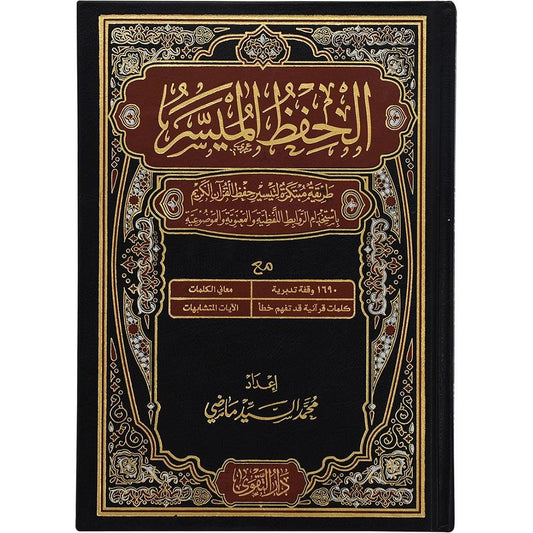

Easy Memorization Quran
Easy Memorization Quran
An innovative method to facilitate memorization of the Holy Quran using verbal and conceptual links.
Mohamed Elsayed Madi, Ahmed Issa Elmasrawi
- from Dhs. 45.00
- from Dhs. 45.00
- Unit price
- per


Take your belief from the Qur’an and the authentic Sunnah
Take your belief from the Qur’an and the authentic Sunnah Author's name: Muhammad ibn Jamil Zeno A message from Sheikh Muhammad Jamil Zeno in which he explains the doctrine of the Sunnis and the community on various doctrinal issues: monotheism, polytheism, tyranny, following the...
- Dhs. 15.00
- Dhs. 15.00
- Unit price
- per

I loved him, so everything loved me back.
I loved him so everything loved me Author's name: Raghad Al Saleh A profound, beautiful book with diverse presentations, ideas, and titles full of benefit and stories taken from the righteous predecessors and their hidden worship and how we get closer to God. I...
- Dhs. 49.00
- Dhs. 49.00
- Unit price
- per
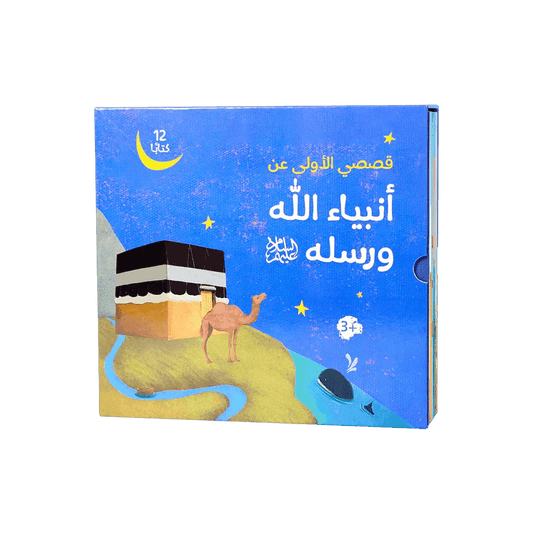

My first stories about God's prophets and messengers
My first stories about God's prophets and messengers A series of stories for children in early childhood education, featuring the prophets and messengers of God Almighty in a simple, enjoyable, and engaging style. The aim is to present lessons and morals drawn from their...
- Dhs. 165.00
Dhs. 185.00- Dhs. 165.00
- Unit price
- per
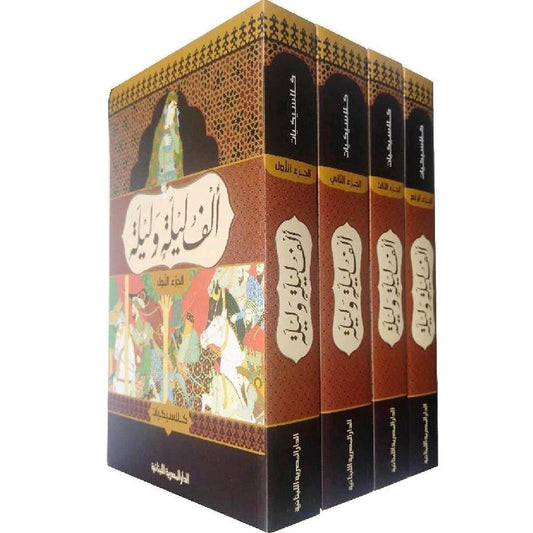

One Thousand and One Nights 4 parts
One Thousand and One Nights - 4 Parts Author Name: Abdullah Ibn al-Muqaffa One Thousand and One Nights is a collection of stories from West and South Asia, along with folk tales that were compiled and translated into Arabic during the Islamic...
- Dhs. 110.00
Dhs. 135.00- Dhs. 110.00
- Unit price
- per

Explanation of the Three Fundamentals, followed by an explanation of the Four Rules, by Sheikh Saleh Al-Fawzan
Explanation of the Three Principles Followed by an explanation of the four rules. Author's name: Imam Muhammad ibn Abd al-Wahhab Dr. Saleh bin Fawzan bin Abdullah Al-Fawzan Edited and printed by: Dr. Salman Jaber Othman Al-Mujalham Al-Suwailem The book Explanation of the Three Fundamentals,...
- Dhs. 65.00
- Dhs. 65.00
- Unit price
- per

The Power of Your Subconscious Mind Dr. Joseph Murphy
The power of your subconscious mind By Dr. Joseph Murphy This book is one of the best-selling self-help books of all time. This edition explains mental focus techniques that can remove subconscious obstacles that prevent us from achieving the success we desire, in a...
- Dhs. 62.00
Dhs. 73.00- Dhs. 62.00
- Unit price
- per

Because You are Allah: A Journey to the Seventh Heaven - Part One
Because You Are God: A Journey to the Seventh Heaven - Part One Author's name: Ali Jaber Al-Fifi The writer was able to take us through his creations on a deep journey to learn something about some of His names, such that no name...
- Dhs. 33.00
- Dhs. 33.00
- Unit price
- per

رسائل أيقظت رجلا
رسائل أيقظت رجلاً للكاتبة الإماراتية منيرة النعيمي في أبوظبي، يعيش سيف بين مسؤوليات الأبوة وذكريات لا تفارقه، محاولًا أن يصنع لأطفاله حياةً آمنة بعد أن غيّب الموت شريكة عمره. أربعة أطفال هم عالمه، وبيتٌ امتلأ يومًا بالحب، ثم تعلّم كيف يتعايش مع غياب من...
- Dhs. 65.00
- Dhs. 65.00
- Unit price
- per


One-Page Marketing Plan
The 1-Page Marketing Plan Author: Allan Dib To build a successful business, you must stop random marketing activities and start following a reliable plan for rapid growth. Creating a practical marketing plan used to be difficult and time-consuming, which is why it often...
- Dhs. 79.00
- Dhs. 79.00
- Unit price
- per
- Choosing a selection results in a full page refresh.