
Customer service: 00971581607579 📞




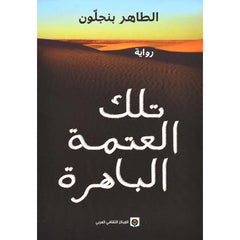

That dazzling darkness
Author's name: Tahar Benjelloun
This dazzling darkness is written in a way that makes the reader believe it is the personal experience of the writer Tahar Ben Jelloun, but in reality it is a novel based on real events and inspired by the testimonies of others who underwent imprisonment in the horrific Moroccan prison of Tazmamart.
The novel was published in French and translated into Arabic by the brilliant poet Bassam Hajjar, published by the Arab Cultural Center, as part of a distinguished and diverse collection of translated novels. Since its publication, "That Dazzling Darkness" has been considered one of the most important and authentic prison literature novels. The English version won the International Dublin Literature Award (IMPAC) in 2004.
About the book That Dazzling Darkness
In "That Dazzling Darkness," Tahar Ben Jelloun conducts a fictional trial of the Arab political system, deconstructing many of the mechanisms of political and social oppression in his country. He does so through real events inspired by the testimony of a detainee at Tazmamart Prison, who spent twenty years there.
The novel recounts real events told by the prisoner (Aziz), the main character, and other supporting characters. They are a group of military personnel involved in, or accused of, carrying out the Skhirat coup attempt against King Sahin II in 1971.
A senior military commander led the prisoners to the Skhirat Royal Palace, despite the fact that they had only been sent to participate in a military exercise on July 10, 1971. Aziz did not fire a single shot during the operation, both because he did not understand what was happening and because his father, a personal friend of the king, was present at his court. The father later disowned his son and did not seek his release.
Aziz was in a state of shock while he was in the palace, with corpses scattered around him. The planners and perpetrators of the coup were arrested and then imprisoned in Tazmamart prison, which was opened for detainees. He was buried in the sand, as the narrator describes it: “The grave was a cell, three meters long and one and a half meters wide, and its ceiling was very low, ranging between 150 and 160 centimeters high. I could not stand in it…”
Thus, Tahar Benjelloun narrates the truth and reality, presenting scenes of the control of the authorities and security forces over every aspect of life, where fear of the authorities and their men turns into a pathological condition that resides within the prisoners, and they must pay a heavy price to recover from this condition. “When he was released, he was transferred to a convalescent home until the signs of his wounds and weakness disappeared. Aziz saw his face in the mirror in the military dentist’s room after his release from prison, as he had not seen his own features for eighteen years before. He described how he described those terrifying moments when he stared at the wrinkles on his face, his bulging eyes, and his features.”
From the novel "That Dazzling Darkness"
I have always searched for the black stone that purifies the soul of death. And when I say "forever," I imagine a bottomless well, a tunnel dug with my fingers, with my teeth. I have the stubborn hope that I will see, even for a minute, for one eternal, elongated minute, a ray of light, a spark that will be imprinted in the socket of my eye and kept secret by my entrails.
So you are here, residing in my chest, nursing the nights without end, here, in this grave, in the interior of the damp earth, filled with the scent of a human being emptied of his humanity by hoe blows that flay his skin, and snatch from him his sight and the voice of reason.
The novel was published in French and translated into Arabic by the brilliant poet Bassam Hajjar, published by the Arab Cultural Center, as part of a distinguished and diverse collection of translated novels. Since its publication, "That Dazzling Darkness" has been considered one of the most important and authentic prison literature novels. The English version won the International Dublin Literature Award (IMPAC) in 2004.
About the book That Dazzling Darkness
In "That Dazzling Darkness," Tahar Ben Jelloun conducts a fictional trial of the Arab political system, deconstructing many of the mechanisms of political and social oppression in his country. He does so through real events inspired by the testimony of a detainee at Tazmamart Prison, who spent twenty years there.
The novel recounts real events told by the prisoner (Aziz), the main character, and other supporting characters. They are a group of military personnel involved in, or accused of, carrying out the Skhirat coup attempt against King Sahin II in 1971.
A senior military commander led the prisoners to the Skhirat Royal Palace, despite the fact that they had only been sent to participate in a military exercise on July 10, 1971. Aziz did not fire a single shot during the operation, both because he did not understand what was happening and because his father, a personal friend of the king, was present at his court. The father later disowned his son and did not seek his release.
Aziz was in a state of shock while he was in the palace, with corpses scattered around him. The planners and perpetrators of the coup were arrested and then imprisoned in Tazmamart prison, which was opened for detainees. He was buried in the sand, as the narrator describes it: “The grave was a cell, three meters long and one and a half meters wide, and its ceiling was very low, ranging between 150 and 160 centimeters high. I could not stand in it…”
Thus, Tahar Benjelloun narrates the truth and reality, presenting scenes of the control of the authorities and security forces over every aspect of life, where fear of the authorities and their men turns into a pathological condition that resides within the prisoners, and they must pay a heavy price to recover from this condition. “When he was released, he was transferred to a convalescent home until the signs of his wounds and weakness disappeared. Aziz saw his face in the mirror in the military dentist’s room after his release from prison, as he had not seen his own features for eighteen years before. He described how he described those terrifying moments when he stared at the wrinkles on his face, his bulging eyes, and his features.”
From the novel "That Dazzling Darkness"
I have always searched for the black stone that purifies the soul of death. And when I say "forever," I imagine a bottomless well, a tunnel dug with my fingers, with my teeth. I have the stubborn hope that I will see, even for a minute, for one eternal, elongated minute, a ray of light, a spark that will be imprinted in the socket of my eye and kept secret by my entrails.
So you are here, residing in my chest, nursing the nights without end, here, in this grave, in the interior of the damp earth, filled with the scent of a human being emptied of his humanity by hoe blows that flay his skin, and snatch from him his sight and the voice of reason.

Best Selling
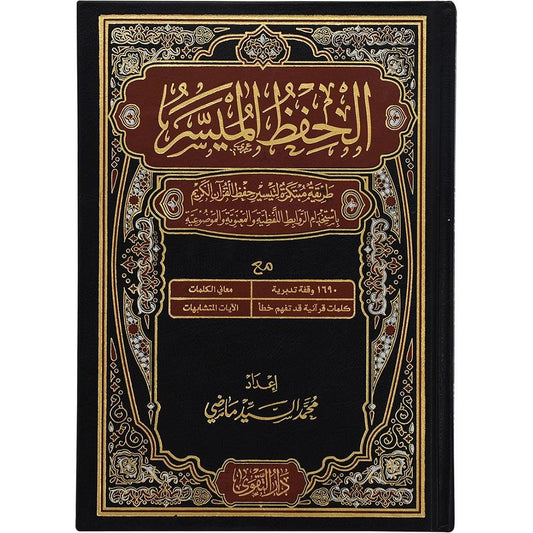

Easy Memorization Quran
Easy Memorization Quran
An innovative method to facilitate memorization of the Holy Quran using verbal and conceptual links.
Mohamed Elsayed Madi, Ahmed Issa Elmasrawi
- from Dhs. 45.00
- from Dhs. 45.00
- Unit price
- per


Tajweed Holy Quran, 30 parts, with an Arabic leather bag, size 17 x 24 cm
Tajweed Quran, 30 parts, with leather case - Arabic Size 24*17 cm This deluxe Tajweed Quran is a paperback divided into thirty separate parts, all presented in a beautiful, sturdy black leather case, perfectly designed to protect the parts from loss or damage. It...
- Dhs. 94.00
- Dhs. 94.00
- Unit price
- per


Taysir Al-Karim Al-Rahman in interpreting the words of Al-Mannan, Al-Saadi’s interpretation
Taysir al-Karim al-Rahman fi Tafsir Kalam al-Mannan (The Facilitation of the Most Gracious, Most Merciful in the Interpretation of the Words of the Beneficent) - Tafsir al-Sa'di Author's name: Sheikh Abdul Rahman bin Nasser Al-Saadi Al-Sa'di's interpretation is one that focuses on clarifying the...
- Dhs. 73.00
- Dhs. 73.00
- Unit price
- per
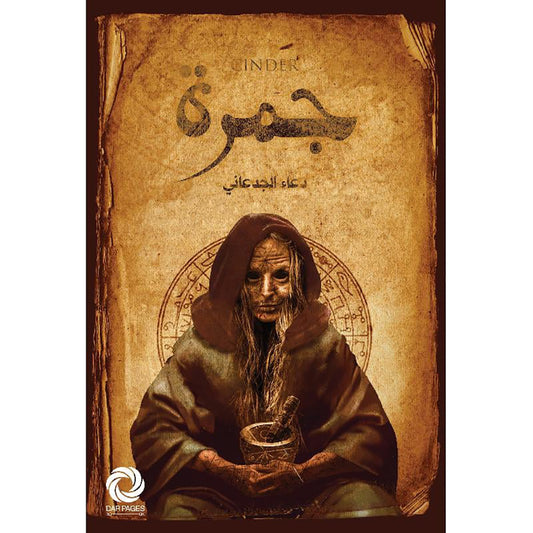

Ember - Duaa Al-Jadaani
cinder
Author's name: Duaa Al-Jadaani
They are cowards, cowards who are good at creating illusions.
- Dhs. 72.00
- Dhs. 72.00
- Unit price
- per


Take your belief from the Qur’an and the authentic Sunnah
Take your belief from the Qur’an and the authentic Sunnah Author's name: Muhammad ibn Jamil Zeno A message from Sheikh Muhammad Jamil Zeno in which he explains the doctrine of the Sunnis and the community on various doctrinal issues: monotheism, polytheism, tyranny, following the...
- Dhs. 15.00
- Dhs. 15.00
- Unit price
- per

Granada Trilogy
Granada Trilogy Author: Radwa Ashour The Granada Trilogy is a series of three novels by the Egyptian author Radwa Ashour, consisting of Granada Mariam Departure The events take place in the Kingdom of Granada after the fall of all Islamic kingdoms in Al-Andalus. The...
- Dhs. 55.00
- Dhs. 55.00
- Unit price
- per


The Qiyam Mushaf with thematic division of the verses of the Holy Quran, white paper, size 24 x 17 cm
The Qiyam Quran with thematic division of the verses of the Holy Quran, white paper, size 24 x 17 cm With Q barcode This Quran is distinguished by having a code on each of its pages. When reading the code using a barcode reader...
- Dhs. 35.00
- Dhs. 35.00
- Unit price
- per

I loved him, so everything loved me back.
I loved him so everything loved me Author's name: Raghad Al Saleh A profound, beautiful book with diverse presentations, ideas, and titles full of benefit and stories taken from the righteous predecessors and their hidden worship and how we get closer to God. I...
- Dhs. 49.00
- Dhs. 49.00
- Unit price
- per
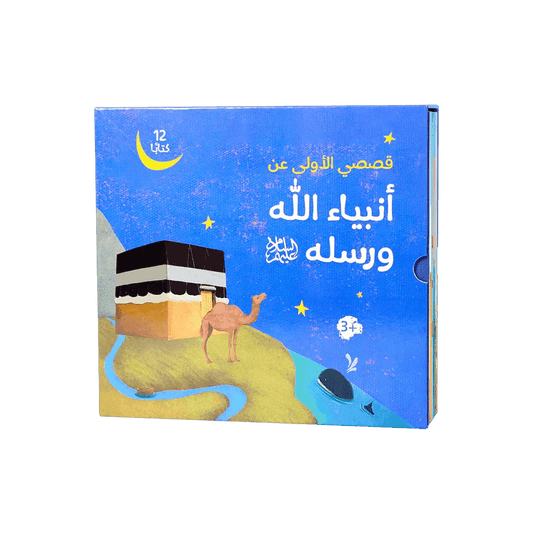

My first stories about God's prophets and messengers
My first stories about God's prophets and messengers A series of stories for children in early childhood education, featuring the prophets and messengers of God Almighty in a simple, enjoyable, and engaging style. The aim is to present lessons and morals drawn from their...
- Dhs. 165.00
Dhs. 185.00- Dhs. 165.00
- Unit price
- per
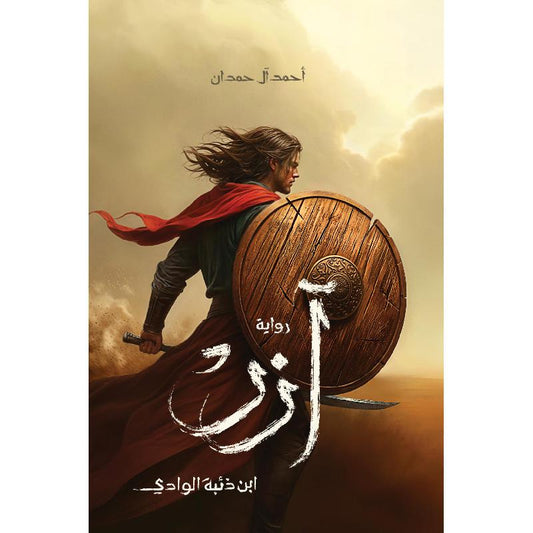

Azar, son of the Wolf of the Valley
AZAR
Son of the Valley She-wolf
Author: Ahmed Al Hamdan
I dreamt that I gave birth to a moon ascending to the sky, illuminating the Arabian Peninsula with its light.
- Dhs. 79.00
- Dhs. 79.00
- Unit price
- per
- Choosing a selection results in a full page refresh.