
Customer service: 00971581607579 📞


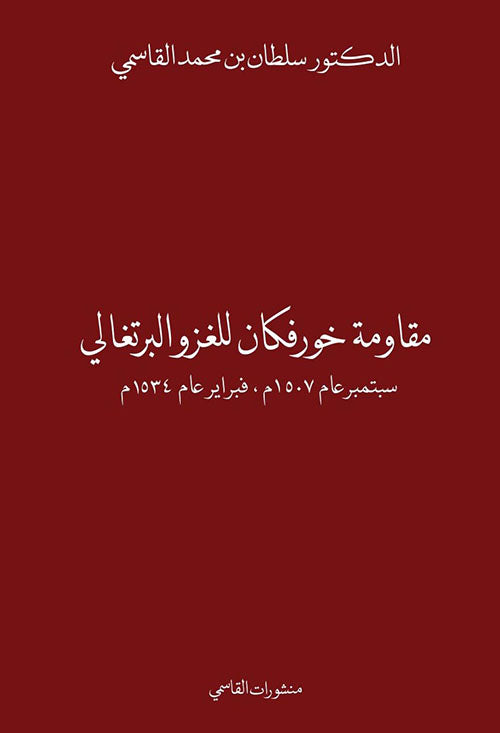
Resistance of Khorfakkan to the Portuguese Invasion, September 1507 CE, February 1534 CE
Braille Method
Every time His Highness Sheikh Dr. Sultan bin Mohammad Al Qasimi, Member of the Supreme Council and Ruler of Sharjah, pays a visit to history, whether recent or distant, there is always a new stance and statement, with the leverage of analysis, interpretation, observation, and comprehensive understanding of events, based on verified references. This is presented in an engaging and enjoyable narrative, expertly utilizing storytelling tools, with a style that is seemingly simple yet profound, adhering to the principle of simplicity that provides the reader with information and encourages them to delve deeply into the historical narrative for the lessons, insights, and ideas it contains.
“Resistance of Khorfakkan to the Portuguese Invasion, September 1507 CE, February 1534 CE” is a new novel by His Highness the Ruler of Sharjah, published by Al Qasimi Publications in 2023. It is one of the historical novels that form a comprehensive narrative project for His Highness, as he has published many novels that draw on historical material and are also based on diverse fields of knowledge. Through his novels, His Highness presents his vision of reality and history, with the aim of benefiting from it in the present reality, as well as for the lessons, wisdom, and values it encompasses, such as courage, chivalry, and wisdom. It also aims to purify history from the impurities of falsehood, refute slander, and correct information related to historical events. We also see in these novels that His Highness reclaims history to interrogate and judge it, thereby restoring truth, which strongly contributes to shaping a different Arab and Islamic reality.
In his novels, His Highness the Ruler of Sharjah engages in the act of excavation and research, delving deep into historical events, relying on numerous rare and unavailable documents, references, and manuscripts. Consequently, the reader observes a wealth of information within a single narrative work. His novels also respect the reader by encouraging them to think, reflect, and analyze historical events to which His Highness restores brilliance and presence, so that they are not forgotten. Therefore, the reader's journey through these narrative works involves genuine pleasure and a voyage of discovery into many unknowns in reality and history.
The novel is approximately 75 pages long and is the 9th publication in the category of novels and narratives, and the 81st among the total works of His Highness the Ruler of Sharjah across various fields of knowledge. It is set in the sixteenth century and tells the story of ancestors who lived through these events, their courage and steadfastness, and their refusal to relinquish their precious land. It specifically narrates the heroics of the people of Khorfakkan and how they managed to confront the Portuguese fleet led by Afonso de Albuquerque.
The introduction to the novel by His Highness the Ruler of Sharjah states: “Resistance of Khorfakkan to the Portuguese Invasion is a rigorously documented historical novel that tells of the resistance of the people of Khorfakkan to the Portuguese invasion in 1507, who killed innocent people, mutilated the elderly of Khorfakkan, destroyed the fort, and burned the city. Fate would have it that after several years, they returned again, but the people of Khorfakkan ambushed them, killed many Portuguese soldiers, and captured others. However, they did not mutilate them, unlike how the Portuguese mutilated their fathers.” Perhaps through this comprehensive introduction, which formed an important textual threshold, the reader enters the atmosphere of the novel and grasps its meanings and messages. The work monitors the excessive cruelty practiced by the Portuguese occupiers, in a brutal manner that disregarded any values or ethics, leaving behind a trail of destruction in the form of burning the city and demolishing one of its archaeological and historical landmarks, the fort. This has always been the practice of Western invaders in every city or country they occupy: to demolish historical monuments and cultural landmarks to destroy identity and heritage. His Highness then pauses in this introduction at the return of the Portuguese occupier once again and the valiant resistance they encountered from the people of Khorfakkan. He highlights the values of bravery, courage, fortitude, and the spirit of struggle among these people. His Highness dwells on a crucial point: the way the people dealt with these invaders after capturing some of them. They were treated according to inherited religious values and ethics; they did not retaliate in kind, nor did they seek revenge or gloat by mutilating them. Instead, they treated them with noble ethics and high values.
The novel opens with the scene of the Portuguese fleet on the morning of September 21, 1507, sailing towards the city of Khorfakkan. It consisted of 6 warships, 4 large and 2 smaller vessels, led by Afonso de Albuquerque, accompanied by several senior commanders and a military force of 460 soldiers aboard these ships, along with a large number of nobles and knights. As the fleet approached the eastern mountains of Khorfakkan, five Arab sailors spotted it on a small boat called a "sanbouk." This small boat immediately headed towards Khorfakkan, and the Portuguese tried as much as possible to sink the boat and pursue it, but it managed to reach the end of the eastern mountain range, turn around it, and hide from the Portuguese.
This narrative opening paints a wonderfully vivid scene, serving as a creative and innovative prelude that keeps the reader eagerly following the rest of the events. The sailors on the "sanbouk" headed towards Khorfakkan to warn of the invaders' arrival and prepare for them. The narrative's brilliance shines in that extraordinary scene upon the sanbouk's arrival near the shore, where the people were shouting: "Sanbouk! Sanbouk! Sanbouk!" while the sailors on the small vessel were shouting to the people: "Portugal! Portugal! Portugal!" to alert those on the shore that Portuguese ships were coming and that they should warn the people.
His Highness the Ruler of Sharjah paints a wonderfully descriptive picture of Khorfakkan at that time, stating: "The city of Khorfakkan is located in an open area on a large plain, surrounded by a large mountain range, and it is open towards the sea. People from the mountains come to sell horses, which are bought by ship traders who take them to India as cargo." This vibrant image places the reader at the heart of events and in the reality of that political, cultural, civilizational, and economic time. The book continues to describe life back then, indicating that Khorfakkan was ruled at that time by a representative of the King of Hormuz, who had a group of soldiers under his command.
The book meticulously details the gathering of the people in large groups near the shore, while Portuguese warships approached one after another. Some residents carried white flags to signal surrender, while some merchants and dignitaries fled the city. The Portuguese commander observed all this, and when his ships landed on the shore, the people of Khorfakkan on horseback tried to prevent them from disembarking. However, the cannons of the Portuguese boats fired shells at them, resulting in a number of martyrs, after which the soldiers disembarked onto the shore.
The book offers a crucial insight into the region's history, revealing the spirit of solidarity and cooperation among its people. The work shows that the people of Khorfakkan possessed knowledge and culture, especially in the dialogues that took place with the Portuguese commander Afonso, which revealed their knowledge of Western history, in addition to their civilizational background.
The novel paints an epic picture of the heroism of Khorfakkan's people in confronting the advancing Portuguese soldiers within the city. They inflicted damage upon them, firing a barrage of arrows, their wartime tools in resisting the invasion. The narrative is replete with numerous scenes and events that reveal the bravery of the city's inhabitants as they diligently worked to protect their land and possessions with high spirit and unwavering duty despite the oppression and slaughter. The resistance of these people, who showed extraordinary courage, did not falter. The narrative's course reveals the cruelty of the Portuguese and their lack of values and ethics, especially in their capture of the elderly, where Afonso de Albuquerque ordered their ears to be cut off and their noses to be mutilated. However, the bravery of Khorfakkan's people did not stop despite this severe oppression. The Portuguese commander then ordered his soldiers to plunder the city and leave. The courage of Khorfakkan's people was demonstrated once again when the Portuguese returned years after these events in 1534. Victory was their ally in confronting the occupation, as they defeated the Portuguese and captured a large number of them. These invaders had no choice but to negotiate with the leader of the Qawasim, Sheikh Saqr Al Qasimi, in a scene where will triumphed over brute force.

Best Selling
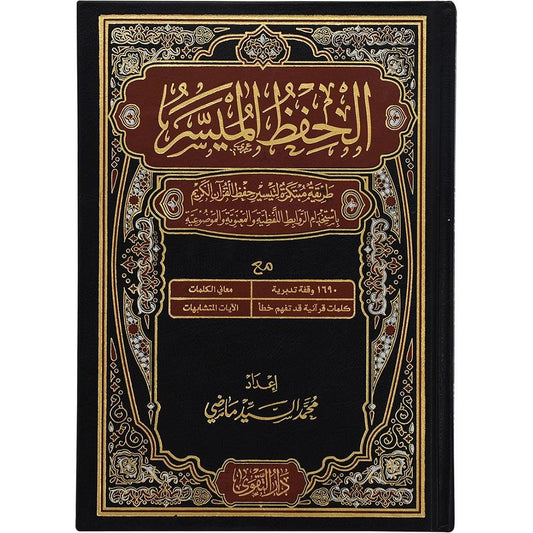

Easy Memorization Quran
Easy Memorization Quran
An innovative method to facilitate memorization of the Holy Quran using verbal and conceptual links.
Mohamed Elsayed Madi, Ahmed Issa Elmasrawi
- from Dhs. 45.00
- from Dhs. 45.00
- Unit price
- per


Tajweed Holy Quran, 30 parts, with an Arabic leather bag, size 17 x 24 cm
Tajweed Quran, 30 parts, with leather case - Arabic Size 24*17 cm This deluxe Tajweed Quran is a paperback divided into thirty separate parts, all presented in a beautiful, sturdy black leather case, perfectly designed to protect the parts from loss or damage. It...
- Dhs. 94.00
- Dhs. 94.00
- Unit price
- per


Taysir Al-Karim Al-Rahman in interpreting the words of Al-Mannan, Al-Saadi’s interpretation
Taysir al-Karim al-Rahman fi Tafsir Kalam al-Mannan (The Facilitation of the Most Gracious, Most Merciful in the Interpretation of the Words of the Beneficent) - Tafsir al-Sa'di Author's name: Sheikh Abdul Rahman bin Nasser Al-Saadi Al-Sa'di's interpretation is one that focuses on clarifying the...
- Dhs. 73.00
- Dhs. 73.00
- Unit price
- per
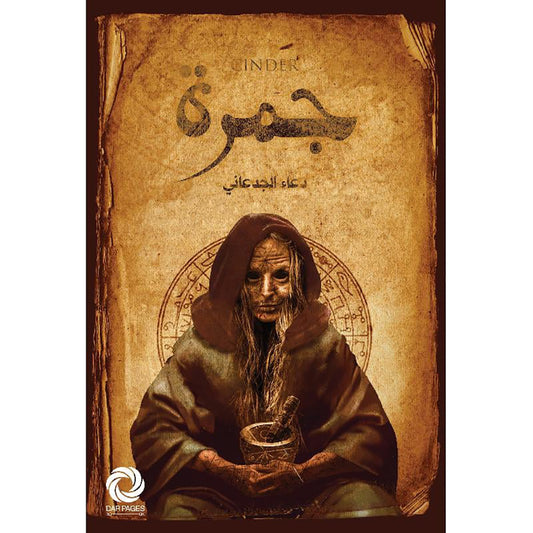

Ember - Duaa Al-Jadaani
cinder
Author's name: Duaa Al-Jadaani
They are cowards, cowards who are good at creating illusions.
- Dhs. 72.00
- Dhs. 72.00
- Unit price
- per


The Sealed Nectar - Safi al-Rahman al-Mubarakpuri
The Sealed Nectar Research in the biography of the Prophet Written by His Eminence Sheikh: Safi al-Rahman al-Mubarakfuri This book deals with a detailed study of the Prophet's biography during the Meccan and Medinan periods, in a concise, modern style. This book won first...
- Dhs. 42.00
- Dhs. 42.00
- Unit price
- per

Granada Trilogy
Granada Trilogy Author: Radwa Ashour The Granada Trilogy is a series of three novels by the Egyptian author Radwa Ashour, consisting of Granada Mariam Departure The events take place in the Kingdom of Granada after the fall of all Islamic kingdoms in Al-Andalus. The...
- Dhs. 55.00
- Dhs. 55.00
- Unit price
- per


The Qiyam Mushaf with thematic division of the verses of the Holy Quran, white paper, size 24 x 17 cm
The Qiyam Quran with thematic division of the verses of the Holy Quran, white paper, size 24 x 17 cm With Q barcode This Quran is distinguished by having a code on each of its pages. When reading the code using a barcode reader...
- Dhs. 35.00
- Dhs. 35.00
- Unit price
- per


Simplified Jurisprudence in Light of the Qur’an and Sunnah
Simplified Fiqh in Light of the Quran and Sunnah Author: A Group of Scholars The book "Simplified Fiqh in Light of the Quran and Sunnah" is a beneficial work that presents jurisprudential rulings in a clear and easy style, relying on evidence...
- Dhs. 57.00
- Dhs. 57.00
- Unit price
- per

I loved him, so everything loved me back.
I loved him so everything loved me Author's name: Raghad Al Saleh A profound, beautiful book with diverse presentations, ideas, and titles full of benefit and stories taken from the righteous predecessors and their hidden worship and how we get closer to God. I...
- Dhs. 49.00
- Dhs. 49.00
- Unit price
- per
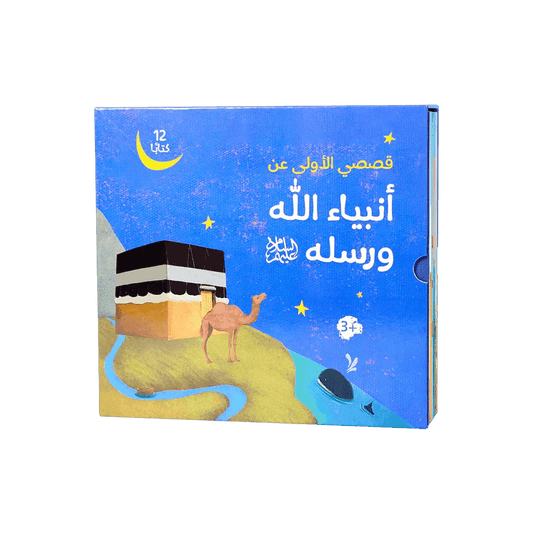

My first stories about God's prophets and messengers
My first stories about God's prophets and messengers A series of stories for children in early childhood education, featuring the prophets and messengers of God Almighty in a simple, enjoyable, and engaging style. The aim is to present lessons and morals drawn from their...
- Dhs. 165.00
Dhs. 185.00- Dhs. 165.00
- Unit price
- per
- Choosing a selection results in a full page refresh.