
Customer service: 00971581607579 📞




Resistance of Khorfakkan to the Portuguese Invasion, September 1507, February 1534
Whenever His Highness Sheikh Dr. Sultan bin Mohammed Al Qasimi, Member of the Supreme Council and Ruler of Sharjah, pays a visit to history, whether recent or distant, there is always a new stance and statement, backed by analysis, interpretation, observation and comprehension of facts, and based on verified references, with an engaging and entertaining narrative, masterfully employing storytelling tools. His style is effortlessly eloquent, adhering to the principle of simplicity that provides readers with information and encourages them to delve deeply into the historical narrative work, which is rich in lessons, insights, and ideas.
“Resistance of Khorfakkan to the Portuguese Invasion, September 1507, February 1534” is a new narrative work by His Highness the Ruler of Sharjah, published by Al Qasimi Publications in 2023. It is one of the historical novels that form an integrated narrative project for His Highness. He has published numerous fictional works that draw inspiration from history and are also based on diverse fields of knowledge. Through his narrative works, His Highness presents his vision of reality and history, aiming to benefit from it in the present, and to extract lessons, morals, and values such as courage, chivalry, and wisdom. He also seeks to purify it from falsehoods, refute fabrications, and correct information related to historical events. In these novels, we see His Highness revisiting history to interrogate and analyze it, thereby restoring truth to its rightful place, which strongly contributes to shaping a different Arab and Islamic reality and present.
In his narrative works, His Highness the Ruler of Sharjah engages in excavation and research, delving deep into historical events, relying on numerous documents, references, and rare and unavailable manuscripts. Consequently, readers will notice a wealth of information within a single narrative work. His novels also respect the reader by encouraging them to think, reflect, and analyze historical events to which His Highness restores their brilliance and presence, preventing them from being forgotten. Therefore, exploring these narrative works by the reader involves genuine pleasure and a journey of discovery into many unknowns in reality and history.
The novel is approximately 75 pages long and is the 9th publication in the fiction and narrative category, and the 81st among the total works of His Highness the Ruler of Sharjah across various fields of knowledge. It revolves around history in the 16th century, narrating the story of the ancestors who lived through these events, the courage and resilience they displayed, and their unwavering protection of their precious land. It specifically recounts the heroism of the people of Khorfakkan and how they managed to confront the Portuguese fleet led by Afonso de Albuquerque.
The introduction to the novel by His Highness the Ruler of Sharjah states: “The Resistance of Khorfakkan to the Portuguese Invasion is a rigorously documented historical novel, narrating the resistance of the people of Khorfakkan to the Portuguese invasion in 1507. The invaders killed innocent people, mutilated the elders of Khorfakkan, destroyed the fort, and burned the city. Fate would have it that several years later, they returned, only to be ambushed by the people of Khorfakkan, who killed many Portuguese soldiers and captured others. However, they did not mutilate them, unlike how the Portuguese had mutilated their fathers.” Perhaps through this comprehensive introduction, which serves as an important textual threshold, the reader enters the atmosphere of the novel and grasps its meanings and messages. The work monitors the excessive cruelty practiced by the Portuguese occupiers, in a brutal manner that disregarded any values or ethics, leaving behind a trail of destruction, exemplified by the burning of the city and the demolition of one of its archaeological and historical landmarks, the fort. This has always been the invaders’ objective in every city or country they occupied: to destroy archaeological sites and cultural landmarks to undermine identity and heritage. His Highness then, in this introduction, addresses the return of the Portuguese occupier and the valiant resistance they encountered from the people of Khorfakkan. He highlights the values of bravery, courage, might, and the spirit of struggle among these people. His Highness pauses at a crucial point: the way the people dealt with these invaders after capturing some of them. They were treated based on inherited religious values and ethics; they did not reciprocate the treatment, nor did they seek revenge or gloat by mutilating them. Instead, they dealt with them according to noble ethics and high values.
The novel opens with a scene of the Portuguese fleet on the morning of September 21, 1507, sailing towards the city of Khorfakkan. It consisted of 6 warships, 4 large and 2 small, led by Afonso de Albuquerque, accompanied by several senior commanders, and a military force of 460 soldiers, along with many nobles and knights. As the fleet approached the eastern mountains of Khorfakkan, five Arab sailors on a small ship called a "sanbouk" spotted it. This small ship immediately headed towards Khorfakkan. The Portuguese tried as much as possible to sink the ship and catch up with it, but it managed to reach the end of the eastern mountain range, turn around, and hide from the Portuguese.
This narrative opening paints a magnificent visual scene, serving as a creative and innovative prelude that makes the reader eagerly follow the rest of the events. The sailors on the "sanbouk" headed towards Khorfakkan to report the arrival of the invaders, thus allowing for preparations. The narrative's brilliance shines in the astonishing scene when the sanbouk approached the shore, where the people were shouting: "Sanbouk! Sanbouk! Sanbouk!", while the sailors on the small ship shouted at the people: "Portukal! Portukal! Portukal!", to warn those on the shore that Portuguese ships were coming and that they should alert the people.
His Highness the Ruler of Sharjah paints a wonderfully descriptive picture of Khorfakkan at that time, stating: “The city of Khorfakkan is located in an open area on a large plain, surrounded by a vast mountain range, and open towards the sea. People come from the mountains to sell horses, which are bought by ship traders who take them to India as cargo.” This vibrant image places the reader at the heart of the events and in the reality of that political, cultural, civilizational, and economic era. The book continues to describe life at that time, indicating that Khorfakkan was then ruled by a representative of the King of Hormuz, who had a group of soldiers under his command.
The book meticulously describes the gathering of large groups of people near the shore as the Portuguese warships approached one after another. Some residents raised white flags to signal surrender, while some merchants and dignitaries fled the city. The Portuguese commander observed all of this. When his ships landed on the shore, the people of Khorfakkan, mounted on their horses, tried to prevent them from disembarking. However, the Portuguese boat cannons fired shells at them, resulting in a number of martyrs, after which the soldiers disembarked onto the shore.
The book provides a crucial insight into the history of the region, revealing the spirit of solidarity and cooperation among its people. The work demonstrates that the people of Khorfakkan possessed knowledge and culture, especially evident in the dialogues that took place with the Portuguese commander Afonso, which revealed their awareness of Western history, in addition to their civilizational background.
The novel paints an epic picture of the heroism of the people of Khorfakkan in confronting the advancing Portuguese soldiers within the city. They inflicted damage upon them, showering them with arrows, which were their military tools in resisting the invasion. The narrative is replete with various scenes and events that reveal the bravery of the city's people as they diligently worked to protect their land and property with high resolve and an unwavering duty, despite the oppression and killing. The resistance of these people, who displayed extraordinary courage, did not wane. The narrative also highlights the cruelty of the Portuguese and their lack of values and ethics, especially in their capture of the elderly. Afonso de Albuquerque ordered their ears to be cut off and their noses to be severed. However, the bravery of the people of Khorfakkan did not cease despite this severe brutality. Consequently, the Portuguese commander ordered his soldiers to plunder the city and leave. The courage of the people of Khorfakkan was once again evident when the Portuguese returned years later, in 1534. Victory was their ally in confronting the occupation, as they defeated the Portuguese and captured a large number of them. These invaders had no choice but to negotiate with the leader of the Qawasim, Sheikh Saqr Al Qasimi, in a scene where will triumphed over brute force.

Best Selling
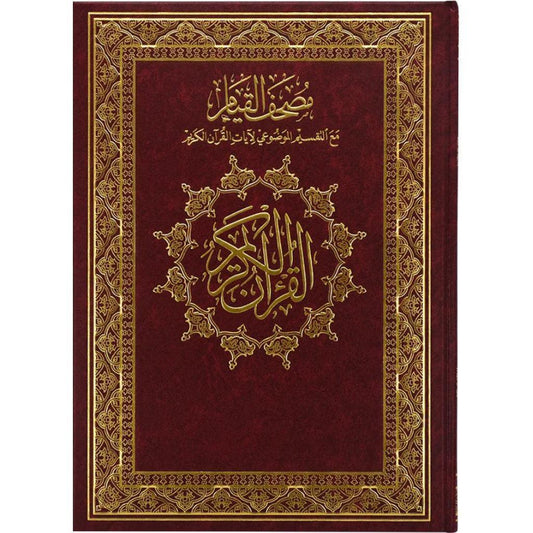

The Qiyam Mushaf with thematic division of the verses of the Holy Quran, comprehensive, white paper, size 25 x 35 cm
The Qiyam Quran with thematic division of the verses of the Holy Quran, a comprehensive edition, white paper, size 25 x 35 cm Each page of this Quran contains five pages of the memorization Quran, and each part of the Holy Quran is divided...
- Dhs. 45.00
Dhs. 68.00- Dhs. 45.00
- Unit price
- per

A story for each surah
A story for each surah Author's name: Dr. Muhammad Jihad Al-Suwait The book compiles a story for each chapter of the Holy Quran in an easy-to-understand and accessible style that helps the reader to reflect and grasp the profound message without unnecessary complexity or...
- Dhs. 65.00
- Dhs. 65.00
- Unit price
- per


Fregoli syndrome
Fregoli syndrome Author's name: Manal Maashi Nader, a psychologist, is forced by life circumstances to take on the case of a teenager suffering from the rarest and strangest psychological disorder (Fregoli Syndrome), in his first job, assuming the identity of another psychiatrist. On his...
- Dhs. 80.00
- Dhs. 80.00
- Unit price
- per

A thousand shining suns
A thousand shining suns Author's name: Khaled Hosseini A Thousand Splendid Suns (Persian: دو صد خورشیدرو) is a 2007 novel by Afghan author Khaled Hosseini, the follow-up to his debut novel, The Kite Runner (2003), which also became a bestseller. The book was released...
- Dhs. 57.00
- Dhs. 57.00
- Unit price
- per

The best version of you
The best version of you Author's name: Moudi Abdel Rabbo On the journey of self-discovery and personal growth, this book takes us deep into human experiences, making us realize that change is not just a choice but an absolute necessity. Here, where courage meets...
- Dhs. 40.00
- Dhs. 40.00
- Unit price
- per


Fregoli Syndrome 2 - Apple Field
Fregoli syndrome 2 apple field Author's name: Manal Maashi (Nader Abdel Majeed), a psychotherapist with the stigma of a criminal, returns after an absence of ten years to his old home in his village, the village of Al-Sanabel, taking with him a teenager suffering...
- Dhs. 75.00
- Dhs. 75.00
- Unit price
- per
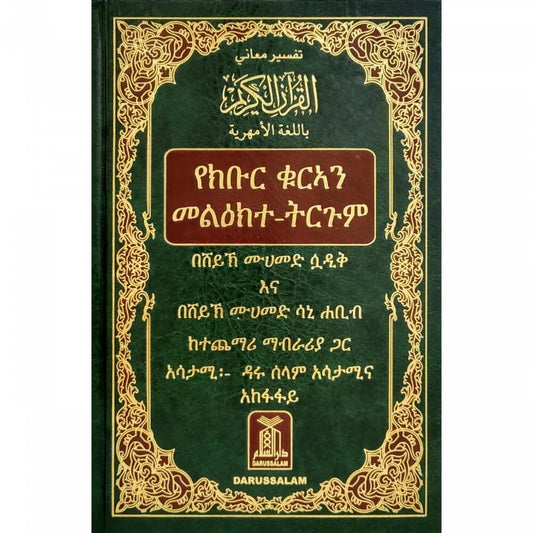

Interpretation of the Meanings of the Holy Quran in Amharic
Interpretation of the meanings of the Holy Quran in the Amharic language
- Dhs. 65.00
- Dhs. 65.00
- Unit price
- per


Simplified interpretation
Simplified interpretation
Prepared by an elite group of scholars
- from Dhs. 32.00
- from Dhs. 32.00
- Unit price
- per
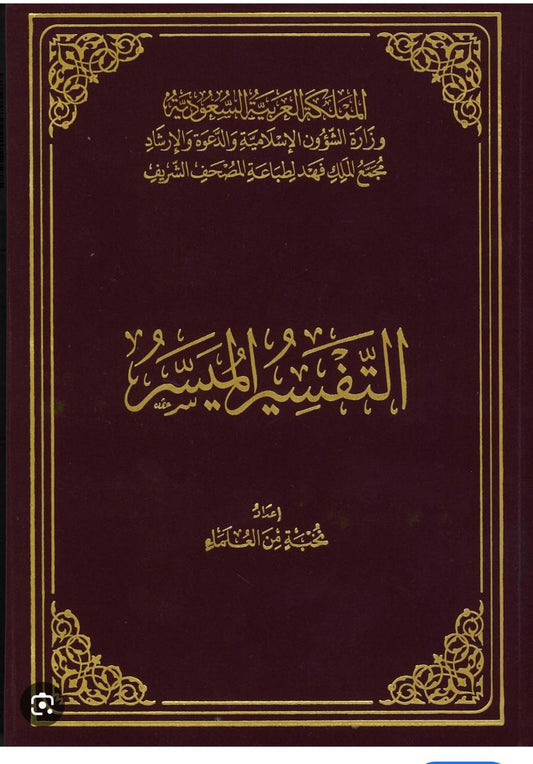

The Simplified Interpretation, King Fahd Complex Edition
Simplified Interpretation, King Fahd Complex Edition
Prepared by a select group of scholars
- from Dhs. 67.00
- from Dhs. 67.00
- Unit price
- per


Adjustable Quran holder
Adjustable Quran holder
Lightweight metal stand, easy to assemble and fold
It carries easily anywhere
- Dhs. 89.00
- Dhs. 89.00
- Unit price
- per
- Choosing a selection results in a full page refresh.