
Customer service: 00971581607579 📞


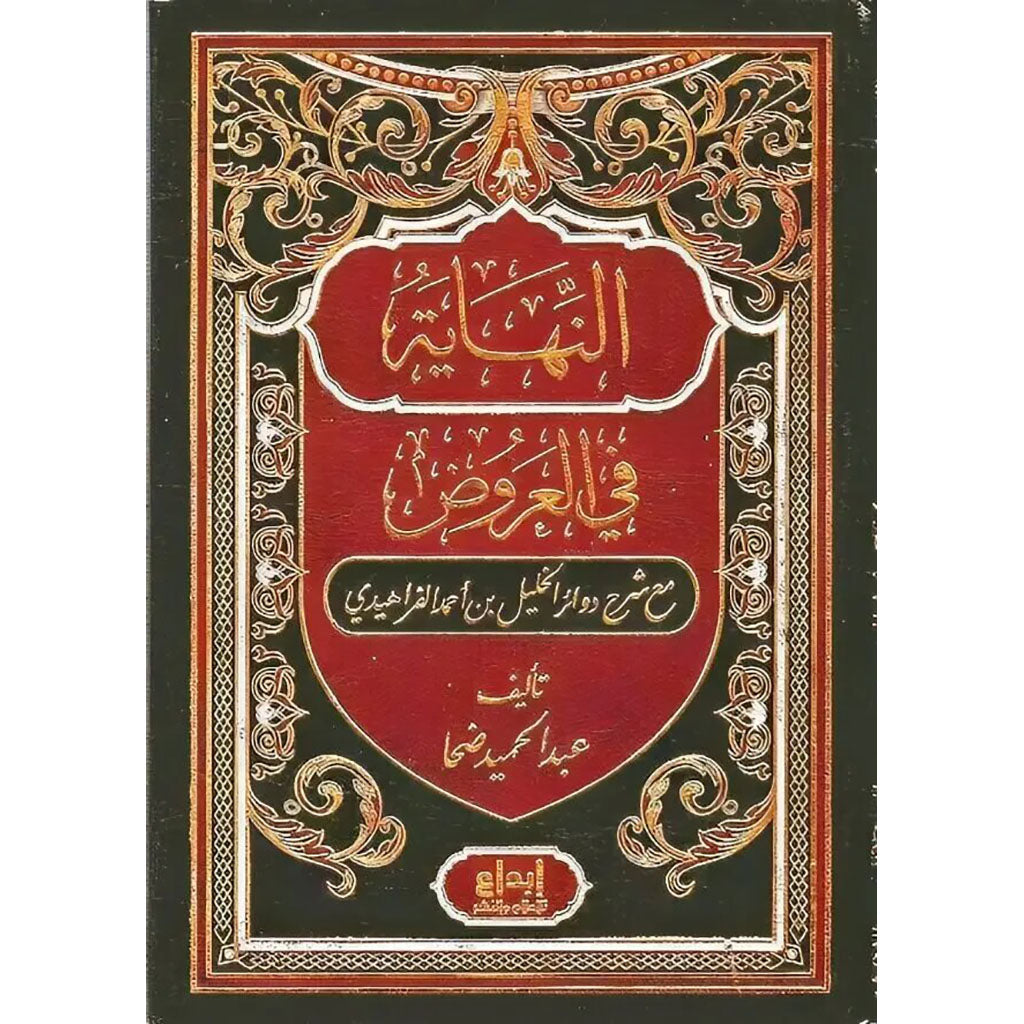
The end of the shows
Author's name: Abdul Hamid Dahha
I intended this book to be unique in its field. My approach was to discuss every aspect of prosody—even the most axiomatic—and provide evidence for my opinion. This stemmed from my critical reading of both classical and modern poetry, as well as my familiarity with most classical and modern books on prosody. I found commonalities in these works that I found objectionable, including the prosodists' encroachment on poetic authority and the establishment of rules that deviated from the poets' own definitions of poetry—the poets being the possessors of talent and refined taste. Therefore, I wrote this book aiming to reconcile poetry and prosody, making the poets themselves the ultimate authority. This is because the prosodists, in many respects, have strayed far from the essence of poetry and the poets' methods with their own prosodic rules. In this book, I have considered two main categories; The poet who seeks clear and straightforward explanations of the meter, without delving into complex discussions and arguments, is addressed in the section on the poetic meter, which I titled "What the Poet Needs." In this section, I summarize the meter's forms, its defects, and its permissible metrical variations. The researcher and student of knowledge, however, seeks arguments and discussions. Some scholars of prosody told me during discussions of certain issues in the book, "What you have raised in this book will spark considerable debate." This is acceptable, as long as it clarifies the issues and re-examines established assumptions that have become entrenched due to a lack of discussion and uncritical transmission of prosodic matters. Examples include issues of truncation and truncation, the four metrical variations, al-Akhfash's correction of al-Khalil's al-Mutadarak, many metrical variations and defects, some rhyme flaws, and poetic necessities.

Best Selling
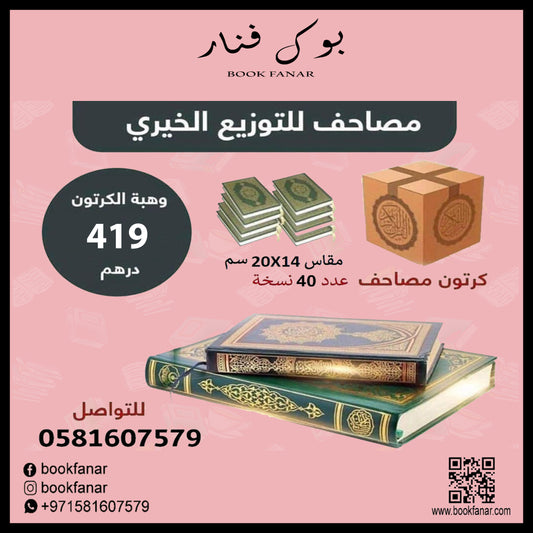

A carton of 40 copies of the Holy Qur’an for charitable distribution, quarter size 14 x 20 cm
A copy of the Quran for charitable distribution, quarter size, 14 x 20 cm Number: 40 copies in cartons White paper, 2-color printing High quality Copies of the Quran for charitable distribution with the option to print a death notice on them WhatsApp: 0581607579...
- Dhs. 419.00
- Dhs. 419.00
- Unit price
- per


Magdalene under the lime trees
Magdalene Author: Mustafa Lutfi Al-Manfaluti Magdalene is Mustafa Lutfi Al-Manfaluti's Arabic adaptation of the wonderful novel "Under the Lindens." The novel addresses the oldest and greatest idea known to humanity since literature began, revolving around the love of a boy and a...
- Dhs. 35.00
- Dhs. 35.00
- Unit price
- per


Take your belief from the Qur’an and the authentic Sunnah
Take your belief from the Qur’an and the authentic Sunnah Author's name: Muhammad ibn Jamil Zeno A message from Sheikh Muhammad Jamil Zeno in which he explains the doctrine of the Sunnis and the community on various doctrinal issues: monotheism, polytheism, tyranny, following the...
- Dhs. 15.00
- Dhs. 15.00
- Unit price
- per


The Book of Monotheism
The Book of Monotheism Author's name: Imam Muhammad Abdul Wahhab Tawheed is the right of Allah that is obligatory upon His servants and it is the greatest commandment of religion and the greatest commandment that Allah has commanded and it is the origin of...
- Dhs. 40.00
- Dhs. 40.00
- Unit price
- per


The Noble Qur'an® Series - English Only | Paperback
The Clear Quran Series® - English Only | Paperback The Clear Qur’an® series, translated by Dr. Mustafa Khattab, is one of the most eloquent attempts to capture the elegance and vitality of the Holy Qur’an with skill and precision in modern English. Its clarity...
- Dhs. 26.00
- Dhs. 26.00
- Unit price
- per


20x28 Mushaf Al Madinah King Fahd Complex Size
King Fahd Complex Quran, Jami'i size Size: 20*28 cm (Large size) A large-format Quran in Arabic calligraphy, printed by the Malik Fahd Complex, found in the Two Holy Mosques in Mecca and Medina, and in numerous mosques worldwide. Its large, bold script makes it...
- Dhs. 84.00
- Dhs. 84.00
- Unit price
- per
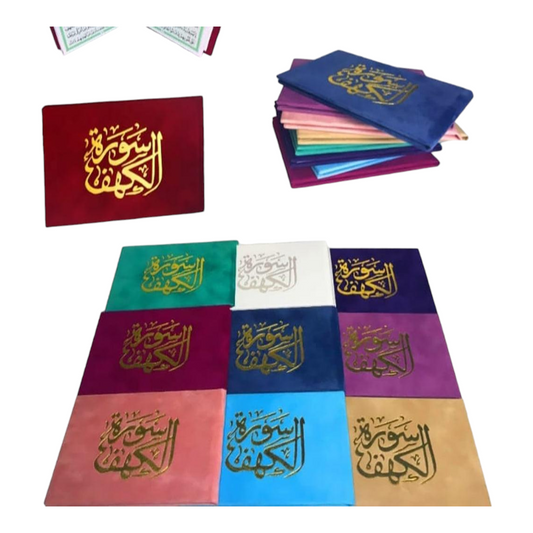

Surah Al-Kahf Velvet 8 x 12 cm
Surah Al-Kahf, velvet, 8 x 12 cm
- Dhs. 10.00
- Dhs. 10.00
- Unit price
- per

The Three Principles and their Evidence
The Three Principles and Their Evidence Pocket Size
Author's name: Muhammad ibn Abd al-Wahhab
The Four Rules and Conditions of Prayer: Revealing Doubts
- Dhs. 20.00
- Dhs. 20.00
- Unit price
- per


Welcome to Hyeonnam-dong Library
Welcome to Hyeonam-dong Library Author: Hwang Bo-reum Yeong-ju, who followed a conventional path in life—study, marriage, and a prestigious job—suddenly gives it all up. Exhausted by work, she abandons her lavish career and devotes herself to her dream: opening a bookstore. In a quaint...
- Dhs. 60.00
- Dhs. 60.00
- Unit price
- per
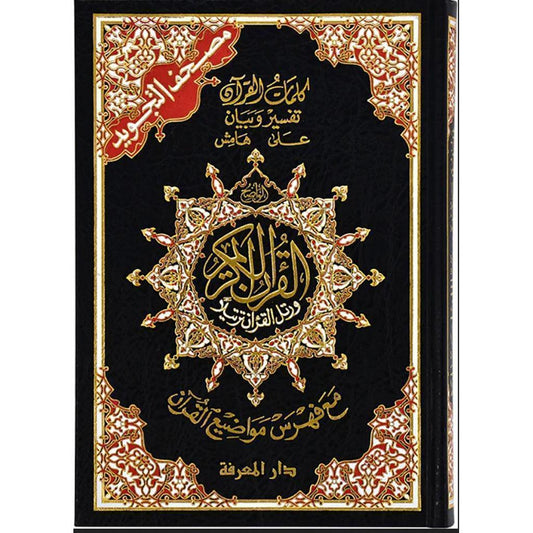

Tajweed Quran, size 17 x 24 cm
17x24 Tajweed Quran size This is a Tajweed Quran according to the Hafs recitation. It includes the following: Color-coded letters: to present the rules of Tajweed, a very good and simple way to learn and apply them. Clear text: Extra spaces have been added...
- Dhs. 75.00
- Dhs. 75.00
- Unit price
- per
- Choosing a selection results in a full page refresh.