
Customer service: 00971581607579 📞



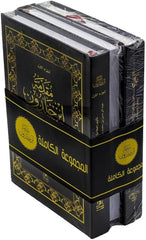
Author: Abd al-Rahman ibn Muhammad ibn Khaldun, known as the Sage of Historians, who died in 808 AH
The Muqaddimah is a book written by Ibn Khaldun in 1377 CE as an introduction to his massive work titled Kitab al-Ibar (the full title of the book is Kitab al-Ibar, wa Diwan al-Mubtada' wa al-Khabar fi Ayyam al-Arab wa al-Ajam wa al-Barbar, wa man Asarahum min Dhawi al-Sultan al-Akbar). The Muqaddimah was later considered a separate, encyclopedic work, as it covers all fields of knowledge, including Sharia, history, geography, economics, urbanism, sociology, politics, and medicine. In it, he discussed the conditions of human beings, the differences in their natures, and the impact of the environment on humans. He also studied the development of nations and peoples, the rise of states, and the reasons for their collapse, focusing on the concept of 'asabiyyah (group solidarity) in his explanation. With this book, Ibn Khaldun preceded other thinkers in many opinions and ideas, to the extent that he is considered the founder of sociology, preceding the French philosopher Auguste Comte.
The Muqaddimah can be summarized in a set of theories and principles that Ibn Khaldun established, making him the true founder of sociology, contrary to what Western scholars claim that the true founder is the Frenchman Auguste Comte. By reading the Muqaddimah, three basic concepts can be identified that confirm this: firstly, Ibn Khaldun in his introduction explained that human societies operate and progress according to specific laws, and these laws allow for a degree of future prediction if they are studied and understood well; secondly, that this science (the science of urbanism, as he called it) is not affected by individual events but rather by societies as a whole; and finally, Ibn Khaldun emphasized that these laws can be applied to societies living in different times, provided that the structures are the same in all of them. For example, an agricultural society is the same agricultural society after 100 years or in the same era. Thus, Ibn Khaldun is the one who laid the true foundations of sociology. Ibn Khaldun is considered the founder of sociology and the first to establish it on its modern foundations. He reached brilliant theories in this science regarding the laws of urbanism, the theory of 'asabiyyah, and the establishment of states, their stages of prosperity, and their fall. His views and theories preceded by several centuries what famous scholars, such as the French scholar Auguste Comte, later achieved.

Best Selling
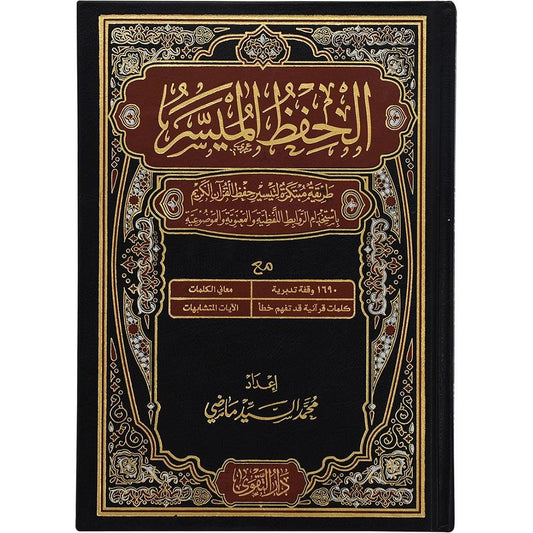

Easy Memorization Quran
Easy Memorization Quran
An innovative method to facilitate memorization of the Holy Quran using verbal and conceptual links.
Mohamed Elsayed Madi, Ahmed Issa Elmasrawi
- from Dhs. 45.00
- from Dhs. 45.00
- Unit price
- per


Take your belief from the Qur’an and the authentic Sunnah
Take your belief from the Qur’an and the authentic Sunnah Author's name: Muhammad ibn Jamil Zeno A message from Sheikh Muhammad Jamil Zeno in which he explains the doctrine of the Sunnis and the community on various doctrinal issues: monotheism, polytheism, tyranny, following the...
- Dhs. 15.00
- Dhs. 15.00
- Unit price
- per

Explanation of the Three Fundamentals, followed by an explanation of the Four Rules, by Sheikh Saleh Al-Fawzan
Explanation of the Three Principles Followed by an explanation of the four rules. Author's name: Imam Muhammad ibn Abd al-Wahhab Dr. Saleh bin Fawzan bin Abdullah Al-Fawzan Edited and printed by: Dr. Salman Jaber Othman Al-Mujalham Al-Suwailem The book Explanation of the Three Fundamentals,...
- Dhs. 65.00
- Dhs. 65.00
- Unit price
- per

The Power of Your Subconscious Mind Dr. Joseph Murphy
The power of your subconscious mind By Dr. Joseph Murphy This book is one of the best-selling self-help books of all time. This edition explains mental focus techniques that can remove subconscious obstacles that prevent us from achieving the success we desire, in a...
- Dhs. 62.00
Dhs. 73.00- Dhs. 62.00
- Unit price
- per

Because You are Allah: A Journey to the Seventh Heaven - Part One
Because You Are God: A Journey to the Seventh Heaven - Part One Author's name: Ali Jaber Al-Fifi The writer was able to take us through his creations on a deep journey to learn something about some of His names, such that no name...
- Dhs. 33.00
- Dhs. 33.00
- Unit price
- per

رسائل أيقظت رجلا
رسائل أيقظت رجلاً للكاتبة الإماراتية منيرة النعيمي في أبوظبي، يعيش سيف بين مسؤوليات الأبوة وذكريات لا تفارقه، محاولًا أن يصنع لأطفاله حياةً آمنة بعد أن غيّب الموت شريكة عمره. أربعة أطفال هم عالمه، وبيتٌ امتلأ يومًا بالحب، ثم تعلّم كيف يتعايش مع غياب من...
- Dhs. 65.00
- Dhs. 65.00
- Unit price
- per


One-Page Marketing Plan
The 1-Page Marketing Plan Author: Allan Dib To build a successful business, you must stop random marketing activities and start following a reliable plan for rapid growth. Creating a practical marketing plan used to be difficult and time-consuming, which is why it often...
- Dhs. 79.00
- Dhs. 79.00
- Unit price
- per

Icadoli
Icadoli Author's name: Hanan Lashin Palm fronds shaded the horizon in the distance like green clouds. A strange cry deafened his ears, then he suddenly felt talons grabbing his shoulders. He looked up and saw a giant bird spreading its wings, shadowing him over...
- Dhs. 48.00
- Dhs. 48.00
- Unit price
- per

The Frozen River
The Frozen River
Author: Arbuthnot Lauson
A translated historical novel set in the late 18th century in the state of Maine, USA, blending mystery, investigation, and social and historical aspects.
- Dhs. 68.00
- Dhs. 68.00
- Unit price
- per

Small shop overlooking the sea
Small shop overlooking the sea
Author's name: Sonoko Machida
- Dhs. 68.00
- Dhs. 68.00
- Unit price
- per
- Choosing a selection results in a full page refresh.