
Customer service: 00971581607579 📞


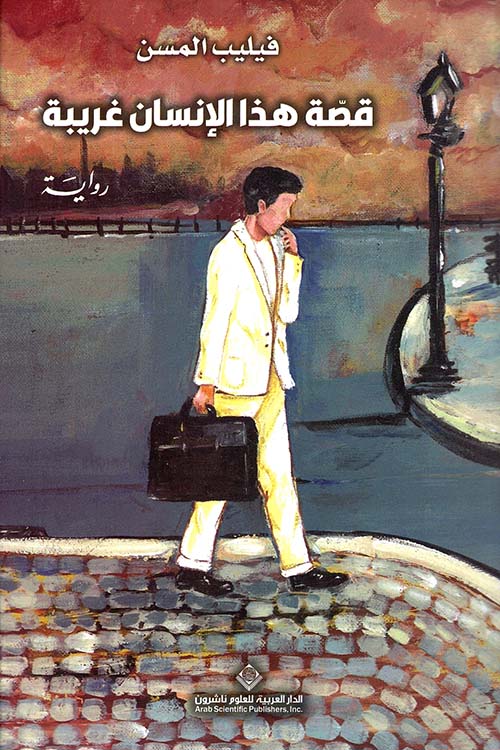
The Story of This Man is Strange
Author: Philip Al-Musin
From the very first pages of the novel, the reader of "The Story of This Strange Man" will realize the absolute identification between the author and his creation, between the literary work and the (self/writer) who is a partner in it. The writer understands that she is writing and building an imagined scenario about a story she found strange. "My imagination's story is simple, but I found it strange... My characters are simple, but I found them strange... And like the simple stories of 'Man,' the story of this man was strange." A perfect reading of the novel will reveal that what preoccupies the author, Philip Al-Musin, in this novel, is the human being whose existence and strange stories are told. So, what kind of human is the narrator/author talking about, and what strange story has he brought forth? It is a story born from the author/narrator's imagination, which he first read in his mind and found strange, as he says. He "was unable to define the character of its hero, nor was he able to place it within a general framework among the characters of all other human beings." And because the author/narrator has the ability to make it move through (imagination), he resorts, according to the possibilities of literary and aesthetic norms, to a trick that allows him to reveal from his hero's life what aligns with his imagination. This imagination will accompany the life of a university professor who returns from abroad and enters the political arena with a mindset of change and reform. When this character fails in his mission, he does not hesitate to kill him: "White," so you were killed. So, I became pessimistic and frustrated by your death, without hope..." This image perhaps reveals what is happening not only in Lebanon but in all countries whose authorities do not recognize people's right to change and to think outside the box. Through this system of dialectics, the narrative unfolds to reveal the author/narrator's power over his characters; his imagination is what gives them life and what kills them. He says, "There are no limits to judgments in our imagination. How many times have we killed heads of state, a boss, or a friend who betrayed us... How many times have we wished for death, darkness, and knelt to the shrine, to God, to snatch their souls? If imagination has no limits, then is the reality we live in an illusion?" In the novelistic discourse, the author adopts the principle of participatory reading, meaning that he urges his reader to participate in producing the meaning of the text, its purpose, and its legitimate questions, such as: Is there anything that justifies killing a human being? What do you think of a soldier who kills his enemy to protect his land and family? What do you think of killing an animal for food? Is going to death voluntarily called suicide or martyrdom? From the atmosphere of the novel, the reader sat contemplating his present and past, recounting the secrets of his history to his depths, and looking at the sea and its expanse... We sat together looking at his past, at his travels, at his first love, at his mother, at his father, at his grandfather... We sat looking at his memories beyond the boundless expanse... There are no walls to limit the expanse, for another expanse resides within it. He is my companion on my path and my days, he is my hero and the hero of my story. I saw him as a fetus emerging from his mother's womb, I heard him cry like most of creation on this earth. I felt his crying enter my depths as if his crying was mine. I asked myself why he cries, why I cry, and why we cry? Why don't we laugh in the face of this world as it opens its arms to us, saying, "Welcome to my home." I read his story as if it were my story and the narrative of my soul. I read it easily, simply, and felt nothing but its strangeness, like all the strange things in this universe. Do not adapt to the things of the universe and become strange to its wisdom, but live deeply within the strangeness of things to become wise in their "strangeness."

Best Selling
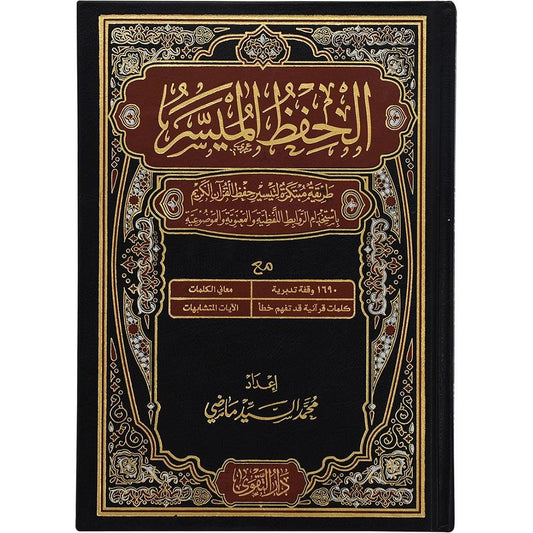

Easy Memorization Quran
Easy Memorization Quran
An innovative method to facilitate memorization of the Holy Quran using verbal and conceptual links.
Mohamed Elsayed Madi, Ahmed Issa Elmasrawi
- from Dhs. 45.00
- from Dhs. 45.00
- Unit price
- per


Tajweed Holy Quran, 30 parts, with an Arabic leather bag, size 17 x 24 cm
Tajweed Quran, 30 parts, with leather case - Arabic Size 24*17 cm This deluxe Tajweed Quran is a paperback divided into thirty separate parts, all presented in a beautiful, sturdy black leather case, perfectly designed to protect the parts from loss or damage. It...
- Dhs. 94.00
- Dhs. 94.00
- Unit price
- per


Taysir Al-Karim Al-Rahman in interpreting the words of Al-Mannan, Al-Saadi’s interpretation
Taysir al-Karim al-Rahman fi Tafsir Kalam al-Mannan (The Facilitation of the Most Gracious, Most Merciful in the Interpretation of the Words of the Beneficent) - Tafsir al-Sa'di Author's name: Sheikh Abdul Rahman bin Nasser Al-Saadi Al-Sa'di's interpretation is one that focuses on clarifying the...
- Dhs. 73.00
- Dhs. 73.00
- Unit price
- per
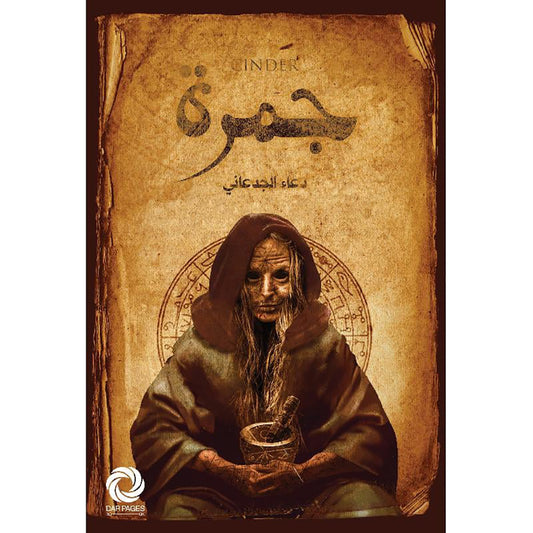

Ember - Duaa Al-Jadaani
cinder
Author's name: Duaa Al-Jadaani
They are cowards, cowards who are good at creating illusions.
- Dhs. 72.00
- Dhs. 72.00
- Unit price
- per


Take your belief from the Qur’an and the authentic Sunnah
Take your belief from the Qur’an and the authentic Sunnah Author's name: Muhammad ibn Jamil Zeno A message from Sheikh Muhammad Jamil Zeno in which he explains the doctrine of the Sunnis and the community on various doctrinal issues: monotheism, polytheism, tyranny, following the...
- Dhs. 15.00
- Dhs. 15.00
- Unit price
- per

Granada Trilogy
Granada Trilogy Author: Radwa Ashour The Granada Trilogy is a series of three novels by the Egyptian author Radwa Ashour, consisting of Granada Mariam Departure The events take place in the Kingdom of Granada after the fall of all Islamic kingdoms in Al-Andalus. The...
- Dhs. 55.00
- Dhs. 55.00
- Unit price
- per


The Qiyam Mushaf with thematic division of the verses of the Holy Quran, white paper, size 24 x 17 cm
The Qiyam Quran with thematic division of the verses of the Holy Quran, white paper, size 24 x 17 cm With Q barcode This Quran is distinguished by having a code on each of its pages. When reading the code using a barcode reader...
- Dhs. 35.00
- Dhs. 35.00
- Unit price
- per

I loved him, so everything loved me back.
I loved him so everything loved me Author's name: Raghad Al Saleh A profound, beautiful book with diverse presentations, ideas, and titles full of benefit and stories taken from the righteous predecessors and their hidden worship and how we get closer to God. I...
- Dhs. 49.00
- Dhs. 49.00
- Unit price
- per
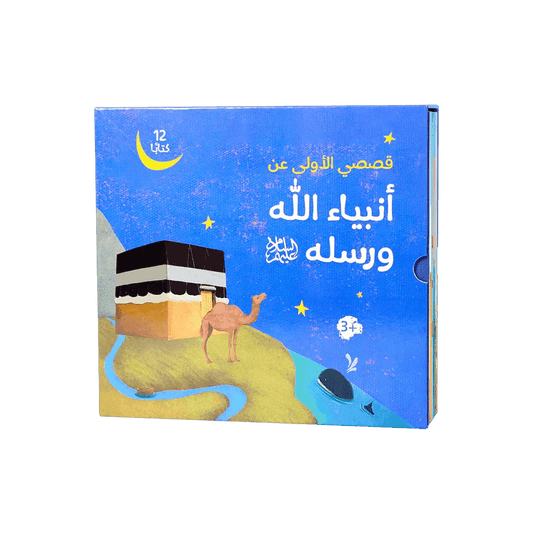

My first stories about God's prophets and messengers
My first stories about God's prophets and messengers A series of stories for children in early childhood education, featuring the prophets and messengers of God Almighty in a simple, enjoyable, and engaging style. The aim is to present lessons and morals drawn from their...
- Dhs. 165.00
Dhs. 185.00- Dhs. 165.00
- Unit price
- per
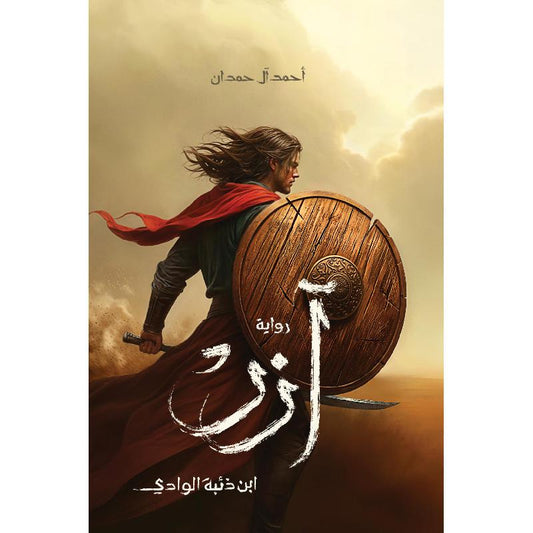

Azar, son of the Wolf of the Valley
AZAR
Son of the Valley She-wolf
Author: Ahmed Al Hamdan
I dreamt that I gave birth to a moon ascending to the sky, illuminating the Arabian Peninsula with its light.
- Dhs. 79.00
- Dhs. 79.00
- Unit price
- per
- Choosing a selection results in a full page refresh.