
Customer service: 00971581607579 📞


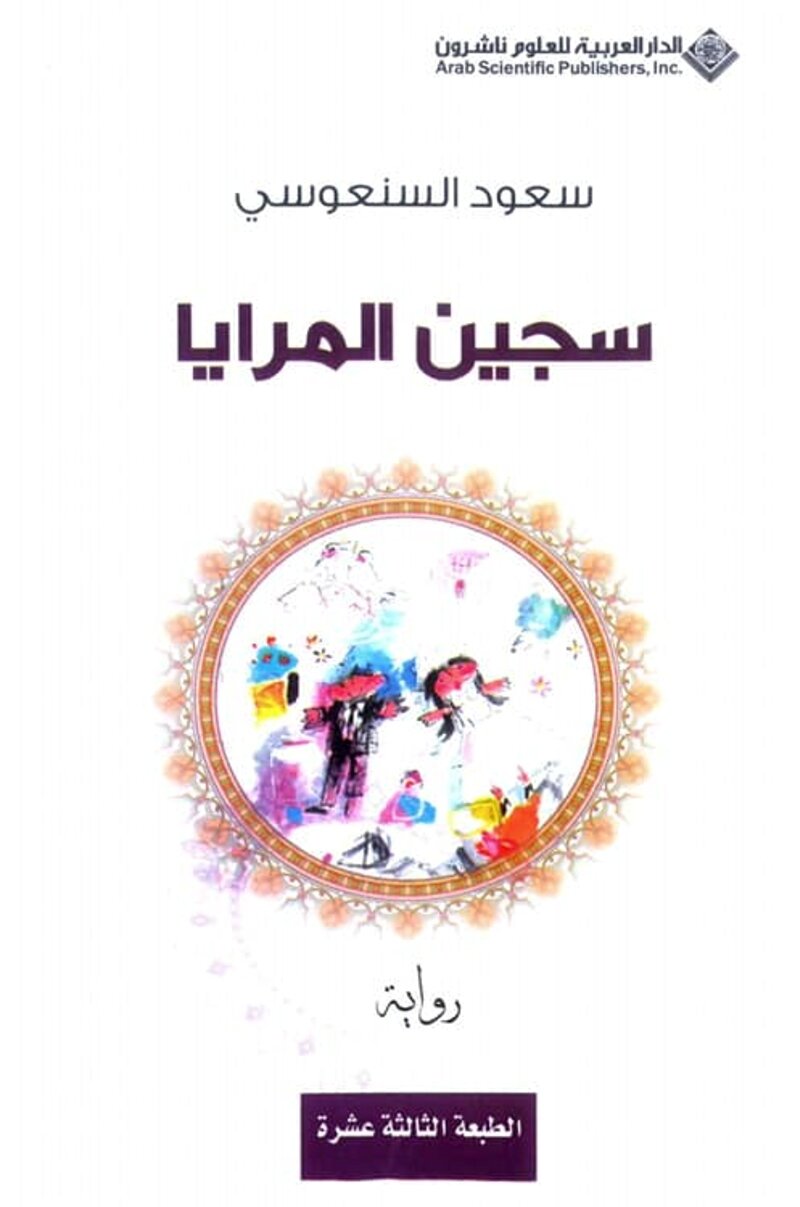
Prisoner of Mirrors
Author's name: Saud Al-Sanousi
In this work, the narrator approaches the human self and its hidden tendencies, skillfully combining the theses of modern narrative criticism with the techniques of psychology and psychoanalysis to formulate a critical complex that seeks to explore multiple issues: the homeland, the occupied other, punishment and reward, values and ideals, sadness and loneliness, memories and associations. Collectively, they are discourses or letters in which the novelist defines his conception of himself in relation to writing. He then turns to the question of the act of writing, where the insistence on experimentation seems a strong demand, given what this means in terms of immersion in the question of the self. The story of its hero "is similar to a boring movie, in which the absolute heroism was reserved for sadness, which endured until the end. As for happiness, it was the poor child who appeared in her white dress for a few minutes (...). As for my story, it was a mixture of sadness, pain, orphanhood, and deprivation, sprinkled with seeds of happiness that were too insignificant to have any taste..." What distinguishes the work is that realistic vision tinged with the possibilities of romantic conscience and dimensions of tragic sense and what it reflects in terms of manifestations of loss and deprivation of the reality of the (individual) ego of the hero, as much as it refers to the other side of the paradox represented in the dominance of horror imposed by the scenes of the invasion of Kuwait in the nineties on the reality of the hero and his loss of his father "Dawoud Abdel Aziz" who was martyred defending his country... From here the plot of the novel intensifies for our writer through the threads of the emotional scene marked by the characteristics of resistance, rejection and arrogance that direct the behavior of the other - the aggressor - in contrast to the swelling sense of the ego of frustration and decline to the point of despair and atrophy in the novel's hero. Especially when he loses his mother later. “Prisoner of Mirrors” is more than letters or tales told here and there. It is a dig in memory and a reading that encompasses that Kuwaiti diversity with all its intensity and amazing backstages. In it, Alsanousi formulates a problematic in which the (social-psychological) intertwines with the (cultural-cognitive) of his country’s history to highlight between the lines the struggle of hope and despair, the surge of romantic love in its most sublime and delicate forms, and looking at the world through the “eyes of the heart” alone.

Best Selling
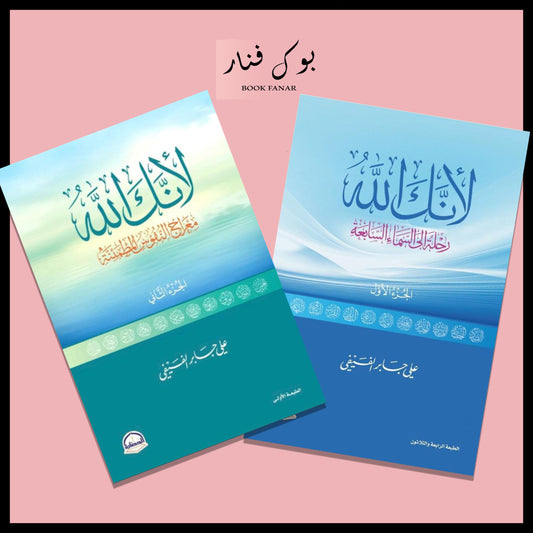

Because You Are God, Part One and Two - Ali Jaber Al-Fifi
Islamic Group - Gifts and Distributions Because you are God Ali Jaber Al-Fifi Part One and Two Because you are God, a journey to the seventh heaven The writer was able to take us through his creations on a deep journey to learn something...
- Dhs. 59.00
- Dhs. 59.00
- Unit price
- per


Taysir Al-Karim Al-Rahman in interpreting the words of Al-Mannan, Al-Saadi’s interpretation
Taysir al-Karim al-Rahman fi Tafsir Kalam al-Mannan (The Facilitation of the Most Gracious, Most Merciful in the Interpretation of the Words of the Beneficent) - Tafsir al-Sa'di Author's name: Sheikh Abdul Rahman bin Nasser Al-Saadi Al-Sa'di's interpretation is one that focuses on clarifying the...
- Dhs. 73.00
- Dhs. 73.00
- Unit price
- per

Majnun Layla's Diwan
Majnun Layla's Diwan Author's name: Qais Ibn Al-Mulawwah Qays ibn al-Mulawwah, nicknamed Majnun Layla (24 AH / 645 AD - 68 AH / 688 AD), was an Arab love poet, one of the madmen, from the people of Najd. He lived during the caliphate...
- Dhs. 60.00
- Dhs. 60.00
- Unit price
- per
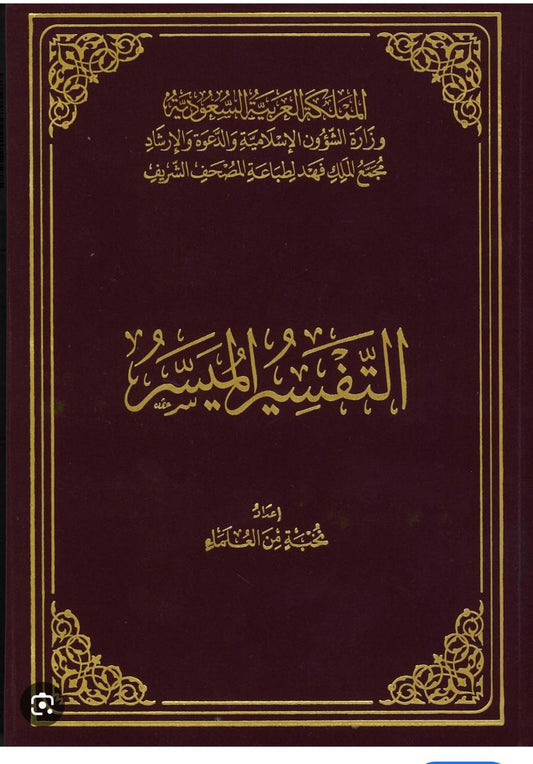

The Simplified Interpretation, King Fahd Complex Edition
Simplified Interpretation, King Fahd Complex Edition
Prepared by a select group of scholars
- from Dhs. 67.00
- from Dhs. 67.00
- Unit price
- per


Summary of the beginning and the end 1-2
Summary of the beginning and the end Author's name: Ismail ibn Katheer al-Dimashqi It is a presentation of history from the beginning of creation to its end, beginning with the creation of the heavens, the earth, and the angels until the creation of Adam....
- Dhs. 89.00
- Dhs. 89.00
- Unit price
- per

baron
baron Part Three Author's name: Shahd Qurban Ruby thought that meeting him again would be a new beginning, and that love alone was enough to achieve the impossible, but she was wrong. Marcel was still the same person, the man who refused to change,...
- Dhs. 70.00
- Dhs. 70.00
- Unit price
- per


Alize Yarn - Burcum Batik 100% Acrylic 100g 230yd
Alize Burcum Batik Multicolored knitting and crochet yarn, made from 100% acrylic, dyed in brilliant colors. Soft and comfortable to use. Ideal for sweaters, cardigans, blouses, and accessories. It does not fray after washing, and the stitches remain even. Mixing: 100% acrylic Ball weight:...
- from Dhs. 12.00
- from Dhs. 12.00
- Unit price
- per

I loved him, so everything loved me back.
I loved him so everything loved me Author's name: Raghad Al Saleh A profound, beautiful book with diverse presentations, ideas, and titles full of benefit and stories taken from the righteous predecessors and their hidden worship and how we get closer to God. I...
- Dhs. 49.00
- Dhs. 49.00
- Unit price
- per

Al-Siraj in explaining the strange words of the Qur’an
Al-Siraj In Clarifying the Peculiarities of the Quran Author's Name: Muhammad bin Abdulaziz Al-Khudairi The book begins with Surah Al-Fatihah, then Al-Baqarah, and continues down to Surah Al-Nas. The introduction to each surah clarifies its number, the number of its verses, and...
- Dhs. 40.00
- Dhs. 40.00
- Unit price
- per


Al-Qaida Al-Nooraniya, medium size 14 x 20 cm
Al-Qaida Al-Nooraniya, medium size 14 x 20 cm Al-Qa'ida Al-Nooraniyyah is one of the most beneficial and easiest methods for teaching beginners and young people how to read and memorize the Book of Allah - the Almighty - with minimal effort and in the...
- Dhs. 9.00
- Dhs. 9.00
- Unit price
- per
- Choosing a selection results in a full page refresh.