
Customer service: 00971581607579 📞


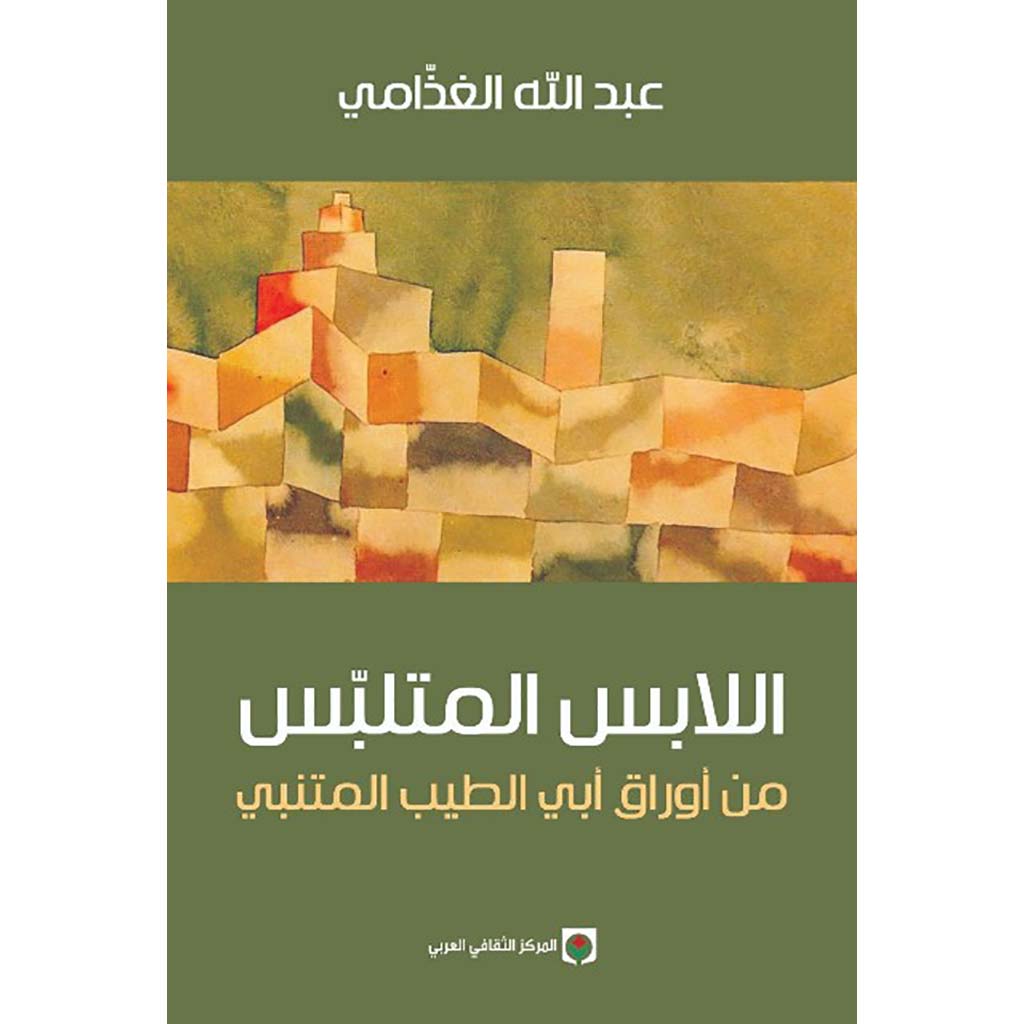

The wearer
From the papers of Abu Tayeb al-Mutanabbi
Author's name: Abdullah Al-Ghadami
Al-Mutanabbi says
Every courage in a person is sufficient, but none is like the courage in a wise man.
A dangerous verse that reveals the state of Al-Mutanabbi himself, between the state of the brave wise, or the unwise brave, that is, the state of Al-Mutanabbi between the one who wears wisdom or the one who wears the system. Al-Mutanabbi remained wise and his wisdom spread on tongues and filled the memory of culture. He is wise, no doubt, just as he is a great poet as well, but he remains a systemic one controlled by unwise forces. He died an unwise death, even if it was a brave one, because his wisdom was absent at the moment he faced death, so courage did not protect him. Let us review the state of this verse and the state of the fate of Al-Mutanabbi, the owner of the saying.
Courage can be a virtue or a vice. According to Socrates' saying that virtue is a middle ground between two vices, courage, in order to be a virtue, must fall somewhere in the middle between cowardice and recklessness. Courage can fall into a kind of cowardice or a kind of recklessness. In the case of cowardice or recklessness, it will be foolishness, which is what Al-Mutanabbi meant when he said (Cowards think that weakness is wisdom / And that is the deception of vile nature)! Cowardice disguised as reason is a deception of vile nature, and this is the upside down face of courage. The same applies to recklessness, which is clear foolishness and results in foolish behavior in its actions and reactions. If courage is afflicted with the defect of recklessness, it is equivalent to foolishness because it controls its possessor and is a dominating force over him. Courage combined with wisdom and insight becomes a soft power, including moral and intellectual courage, courage of opinion and planning, and here it becomes a virtue. That's why Al-Mutanabbi compared a cheap death to a precious death (The taste of death in a small matter / Is like the taste of death in a great matter). Death is cheap or precious in value, but its taste will remain the same in both cases. Al-Mutanabbi elevated the status of opinion when he said (Opinion before the bravery of the brave / It comes first, and she comes second).
Like the position of opinion comes the position of wisdom. Both precede courage and are conditioned by it so that courage can be a virtue and transcend the traits of foolishness and vice. Al-Mutanabbi made wisdom a condition for courage, but did not make courage a condition for wisdom. This means that wisdom is rich in itself and is not conditioned by anything else. Courage, on the other hand, is conditioned by opinion and wisdom, or rather, it is conditioned by wise opinion. Wise opinion is an intellectual law, and it is also a political, economic, and social law, as well as a law in the system of public relations. Courage, with the aid of wise opinion, will be a value that creates human advancement from a state of reaction to a state of action, and the coexistence of words and deeds under the concept of wise opinion. This is a recipe from Al-Mutanabbi's pharmacy, a pharmacy that contains poisons at times and wisdom at other times. One of Al-Mutanabbi’s characteristics is that whenever he was subjective, he turned into a systematic one, and whenever he was freed from his subjectivity, he became a philosopher. He remained thus in all his fluctuations, and if he had been faithful to his wise state, he might have become a philosopher-poet, but poeticism overwhelmed him and made him fluctuate between wisdom and systematicity, even if he was creative in both states. But what happened was that he fell victim to systematicity, so he died a cheap death and did not achieve the death he had wished for himself and his beloved friend, Sayf al-Dawla. His end was treacherous at the hands of a thief who lay in wait for him and sought his help against him. He forced him to submit to his excessive selfishness, and when Al-Mutanabbi was about to flee from a small battle that was not befitting of him, he returned to the battle because the thief Fatak Al-Asadi provoked his sense of consistency by taunting him with his famous verse (The horses, the night, and the desert know me...etc.), which made him return to the duel field and receive a stab that ended his life. Here, his verse about courage in the wise was scattered, as he lost his wisdom and was distinguished by courage without wisdom to fortify it, so he died by his fatal mistake. This is Al-Mutanabbi, clothed in wisdom and clothed in consistency.
Saudi writer and thinker
Professor of Criticism and Theory / King Saud University - Riyadh

Best Selling
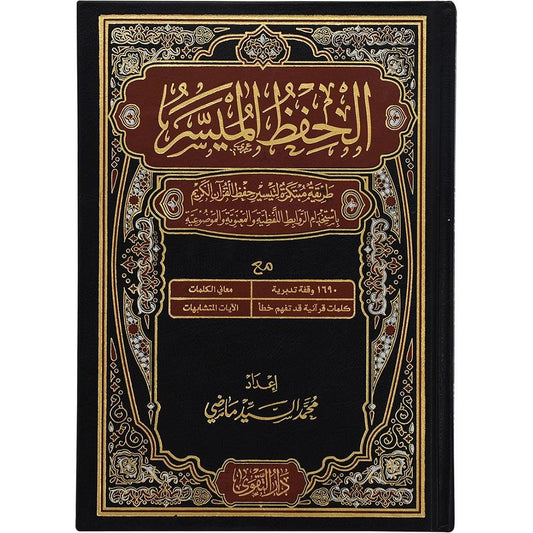

Easy Memorization Quran
Easy Memorization Quran
An innovative method to facilitate memorization of the Holy Quran using verbal and conceptual links.
Mohamed Elsayed Madi, Ahmed Issa Elmasrawi
- from Dhs. 45.00
- from Dhs. 45.00
- Unit price
- per


Tajweed Holy Quran, 30 parts, with an Arabic leather bag, size 17 x 24 cm
Tajweed Quran, 30 parts, with leather case - Arabic Size 24*17 cm This deluxe Tajweed Quran is a paperback divided into thirty separate parts, all presented in a beautiful, sturdy black leather case, perfectly designed to protect the parts from loss or damage. It...
- Dhs. 94.00
- Dhs. 94.00
- Unit price
- per


Taysir Al-Karim Al-Rahman in interpreting the words of Al-Mannan, Al-Saadi’s interpretation
Taysir al-Karim al-Rahman fi Tafsir Kalam al-Mannan (The Facilitation of the Most Gracious, Most Merciful in the Interpretation of the Words of the Beneficent) - Tafsir al-Sa'di Author's name: Sheikh Abdul Rahman bin Nasser Al-Saadi Al-Sa'di's interpretation is one that focuses on clarifying the...
- Dhs. 73.00
- Dhs. 73.00
- Unit price
- per
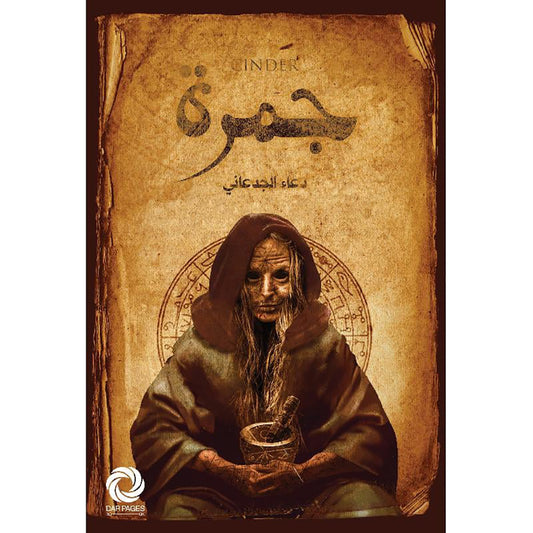

Ember - Duaa Al-Jadaani
cinder
Author's name: Duaa Al-Jadaani
They are cowards, cowards who are good at creating illusions.
- Dhs. 72.00
- Dhs. 72.00
- Unit price
- per


The Sealed Nectar - Safi al-Rahman al-Mubarakpuri
The Sealed Nectar Research in the biography of the Prophet Written by His Eminence Sheikh: Safi al-Rahman al-Mubarakfuri This book deals with a detailed study of the Prophet's biography during the Meccan and Medinan periods, in a concise, modern style. This book won first...
- Dhs. 42.00
- Dhs. 42.00
- Unit price
- per

Granada Trilogy
Granada Trilogy Author: Radwa Ashour The Granada Trilogy is a series of three novels by the Egyptian author Radwa Ashour, consisting of Granada Mariam Departure The events take place in the Kingdom of Granada after the fall of all Islamic kingdoms in Al-Andalus. The...
- Dhs. 55.00
- Dhs. 55.00
- Unit price
- per


The Qiyam Mushaf with thematic division of the verses of the Holy Quran, white paper, size 24 x 17 cm
The Qiyam Quran with thematic division of the verses of the Holy Quran, white paper, size 24 x 17 cm With Q barcode This Quran is distinguished by having a code on each of its pages. When reading the code using a barcode reader...
- Dhs. 35.00
- Dhs. 35.00
- Unit price
- per


Simplified Jurisprudence in Light of the Qur’an and Sunnah
Simplified Fiqh in Light of the Quran and Sunnah Author: A Group of Scholars The book "Simplified Fiqh in Light of the Quran and Sunnah" is a beneficial work that presents jurisprudential rulings in a clear and easy style, relying on evidence...
- Dhs. 57.00
- Dhs. 57.00
- Unit price
- per

I loved him, so everything loved me back.
I loved him so everything loved me Author's name: Raghad Al Saleh A profound, beautiful book with diverse presentations, ideas, and titles full of benefit and stories taken from the righteous predecessors and their hidden worship and how we get closer to God. I...
- Dhs. 49.00
- Dhs. 49.00
- Unit price
- per
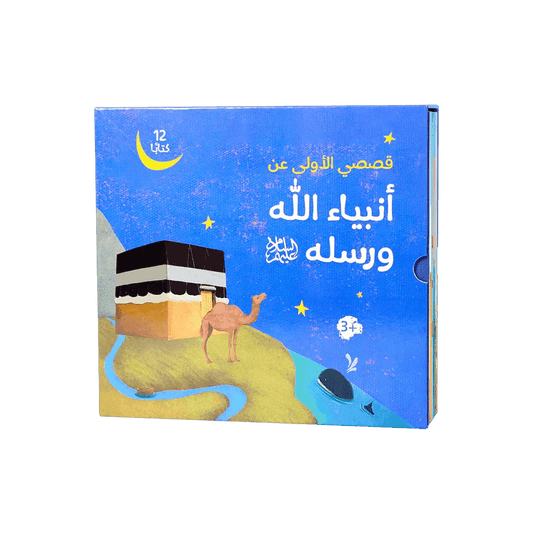

My first stories about God's prophets and messengers
My first stories about God's prophets and messengers A series of stories for children in early childhood education, featuring the prophets and messengers of God Almighty in a simple, enjoyable, and engaging style. The aim is to present lessons and morals drawn from their...
- Dhs. 165.00
Dhs. 185.00- Dhs. 165.00
- Unit price
- per
- Choosing a selection results in a full page refresh.