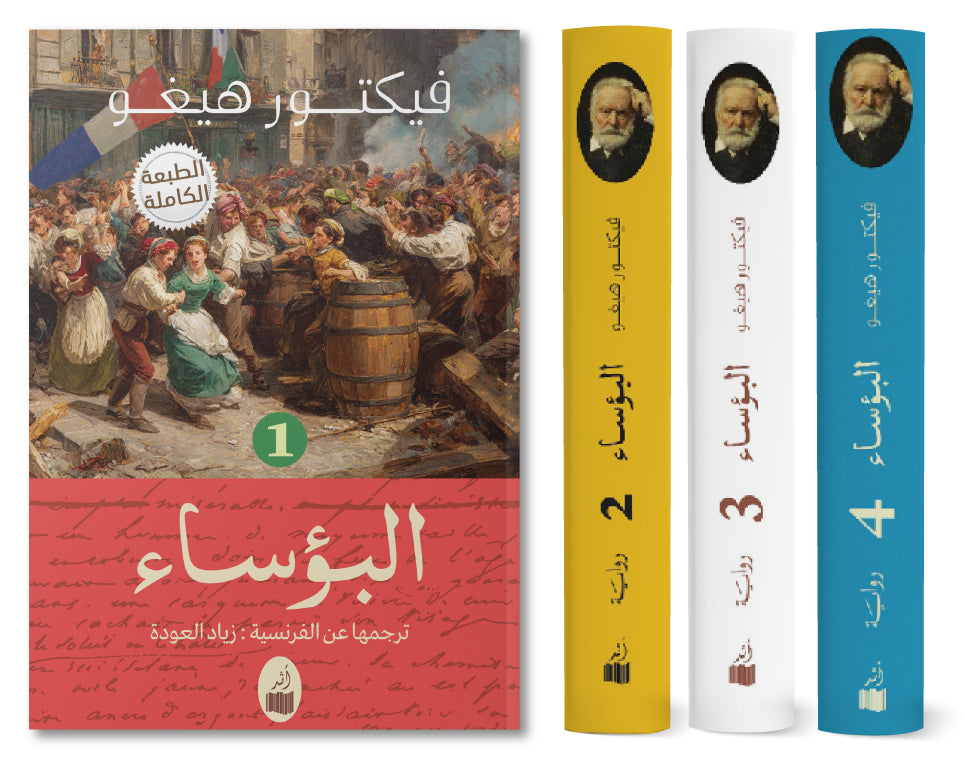
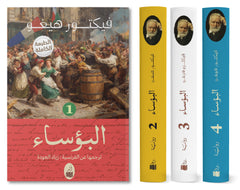
I present to the Arab reader this direct translation of the novel Les Misérables, as Victor Hugo wrote it in his native language, where his poetic voice, the rhythm of his phrases, and his exquisite metaphors are evident. Among Hugo's six major novels, Les Misérables remains the most widely known and profoundly influential on the human mind and emotions. Its characters – Jean Valjean, Fantine, Cosette, Javert, Marius, and Gavroche the boy – have entered the realm of legend, becoming timeless symbols of suffering, hope, and resistance in the face of injustice.
It is a novel that celebrates the common person, reveals the wounds of the marginalized, and powerfully defends the values of goodness, justice, tolerance, and fairness. It is also a story of the Parisian barricades, sometimes triumphant, sometimes defeated and martyred, and the story of Enjolras and his righteous comrades. It is the story of the dark sewers of Paris where Jean Valjean performs the feat of saving the wounded Marius, and the story of the human dregs represented by Thénardier, a man of baseness, enmity, and worship of money. It is a multifaceted novel, pulsating with heroism and sacrifice at times, and depicting baseness and greed at others, revealing the depths of humanity in its moments of glory and defeat.
It is no coincidence that the great novelist Tolstoy said of it: "It is the greatest novel in literary history." This translation is an attempt to preserve the poetic spirit and human glow of the original text, and to bring the Arab reader closer to Hugo as he wished to be heard, without an intermediary obscuring his artistic and spiritual flow.
It is an invitation to read Les Misérables as a human epic whose brilliance never fades, no matter how much time passes. Ziyad Al-Awda