
Customer service: 00971581607579 📞




Winner of the 2022 Royal Society Science Book Award
“The book moves at dizzying speed across billions of years... Gee is a wonderfully captivating writer, blending humor, subtlety, polemics, and poetry to enrich his incredibly interwoven narrative... [bringing] lucid meaning to the immensely complex narratives.” - The Times
Henry G makes the diversely changing canvas of life understandable and exciting. Who will enjoy reading this book? Everyone! —Jared Diamond, author of Guns, Germs, and Steel
For billions of years, Earth was a strange, inhospitable place—covered by turbulent seas, its landscape slowly shaped by ceaseless volcanic eruptions, and an atmosphere in a constant state of chemical flux. Yet, despite facing every setback living things could muster, life withered and rose again to evolve. Life learned, adapted, and persisted over the billions of years that followed. It withstood fire and ice. It gave birth to sponges, which, over billions of years of complex evolution and adaptation, braved the unknown on harsh shores and sought their existence beyond the seas. From that first foray to the spread of the early hominins who later became Homo sapiens, life has persisted unabated. “A Very Short History of Life” is an enlightening story of survival and perseverance, illuminating the delicate balance in which life has always existed, and continues to exist today. It is our planet as you have never seen it before. Henry Gee's words teem with life—massive supercontinents drifting, colliding, and merging, shaping the face of the planet as we know it today. Creatures are engagingly rendered, from the "communal" bacteria that inhabit the seas, to the squabbling dinosaurs of the Triassic period, to the magnificent mammals that hold the (newly evolved) future in their hands. These early, long-extinct, almost alien life forms are brought to life in thrilling detail. The stages of life's evolution—from the development of the digestive system to the awe of the creatures that soar in the sky—are conveyed with captivating familiarity and relatability.

Best Selling
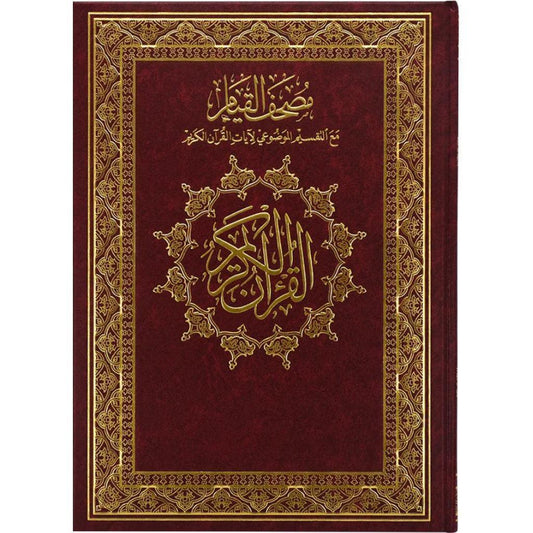

The Qiyam Mushaf with thematic division of the verses of the Holy Quran, comprehensive, white paper, size 25 x 35 cm
The Qiyam Quran with thematic division of the verses of the Holy Quran, a comprehensive edition, white paper, size 25 x 35 cm Each page of this Quran contains five pages of the memorization Quran, and each part of the Holy Quran is divided...
- Dhs. 45.00
Dhs. 68.00- Dhs. 45.00
- Unit price
- per

A story for each surah
A story for each surah Author's name: Dr. Muhammad Jihad Al-Suwait The book compiles a story for each chapter of the Holy Quran in an easy-to-understand and accessible style that helps the reader to reflect and grasp the profound message without unnecessary complexity or...
- Dhs. 65.00
- Dhs. 65.00
- Unit price
- per


Fregoli syndrome
Fregoli syndrome Author's name: Manal Maashi Nader, a psychologist, is forced by life circumstances to take on the case of a teenager suffering from the rarest and strangest psychological disorder (Fregoli Syndrome), in his first job, assuming the identity of another psychiatrist. On his...
- Dhs. 80.00
- Dhs. 80.00
- Unit price
- per

A thousand shining suns
A thousand shining suns Author's name: Khaled Hosseini A Thousand Splendid Suns (Persian: دو صد خورشیدرو) is a 2007 novel by Afghan author Khaled Hosseini, the follow-up to his debut novel, The Kite Runner (2003), which also became a bestseller. The book was released...
- Dhs. 57.00
- Dhs. 57.00
- Unit price
- per

The best version of you
The best version of you Author's name: Moudi Abdel Rabbo On the journey of self-discovery and personal growth, this book takes us deep into human experiences, making us realize that change is not just a choice but an absolute necessity. Here, where courage meets...
- Dhs. 40.00
- Dhs. 40.00
- Unit price
- per


Fregoli Syndrome 2 - Apple Field
Fregoli syndrome 2 apple field Author's name: Manal Maashi (Nader Abdel Majeed), a psychotherapist with the stigma of a criminal, returns after an absence of ten years to his old home in his village, the village of Al-Sanabel, taking with him a teenager suffering...
- Dhs. 75.00
- Dhs. 75.00
- Unit price
- per
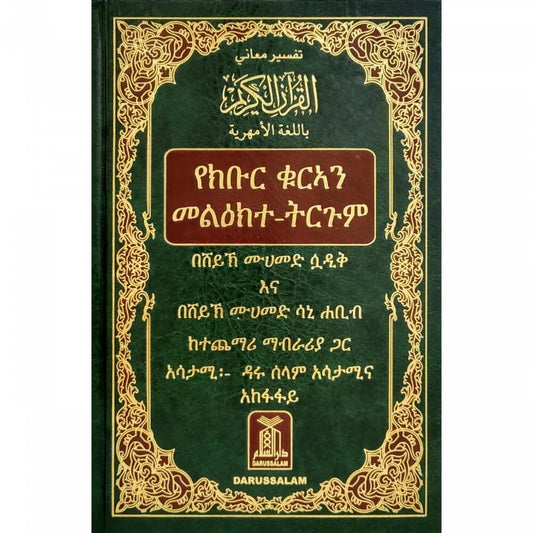

Interpretation of the Meanings of the Holy Quran in Amharic
Interpretation of the meanings of the Holy Quran in the Amharic language
- Dhs. 65.00
- Dhs. 65.00
- Unit price
- per


Simplified interpretation
Simplified interpretation
Prepared by an elite group of scholars
- from Dhs. 32.00
- from Dhs. 32.00
- Unit price
- per
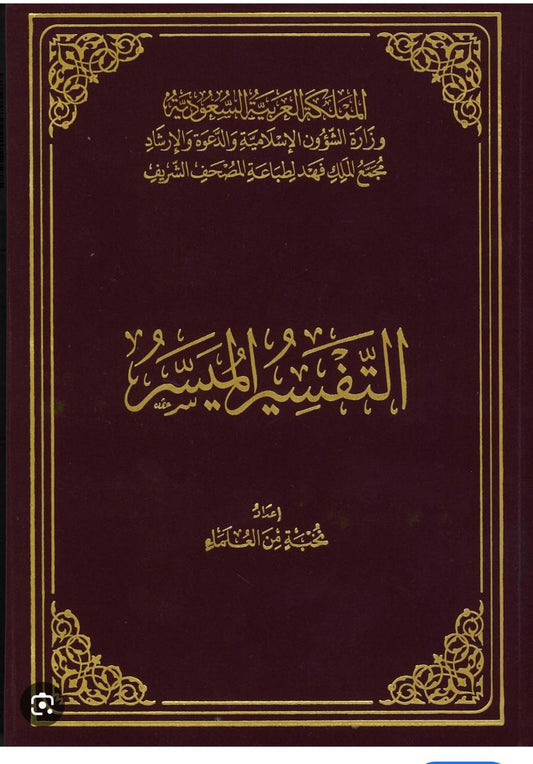

The Simplified Interpretation, King Fahd Complex Edition
Simplified Interpretation, King Fahd Complex Edition
Prepared by a select group of scholars
- from Dhs. 67.00
- from Dhs. 67.00
- Unit price
- per
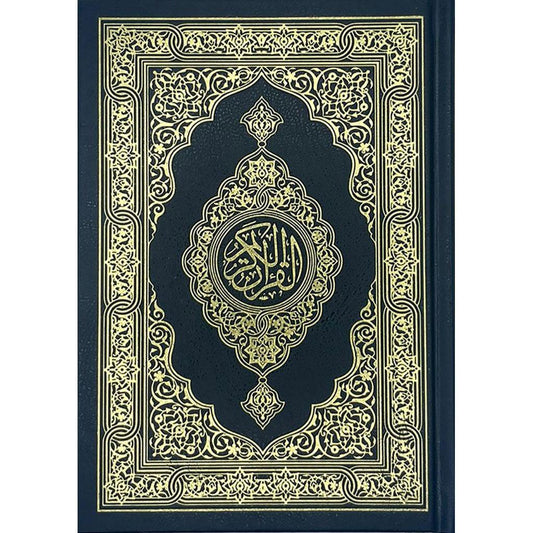

Holy Quran, size 14 x 20 cm, white paper
Quran, size 14 x 20 cm, white paper
Very distinctive artistic binding
White paper, 2-color printing
High quality
Special prices for bulk orders
- Dhs. 15.00
- Dhs. 15.00
- Unit price
- per
- Choosing a selection results in a full page refresh.