
Customer service: 00971581607579 📞


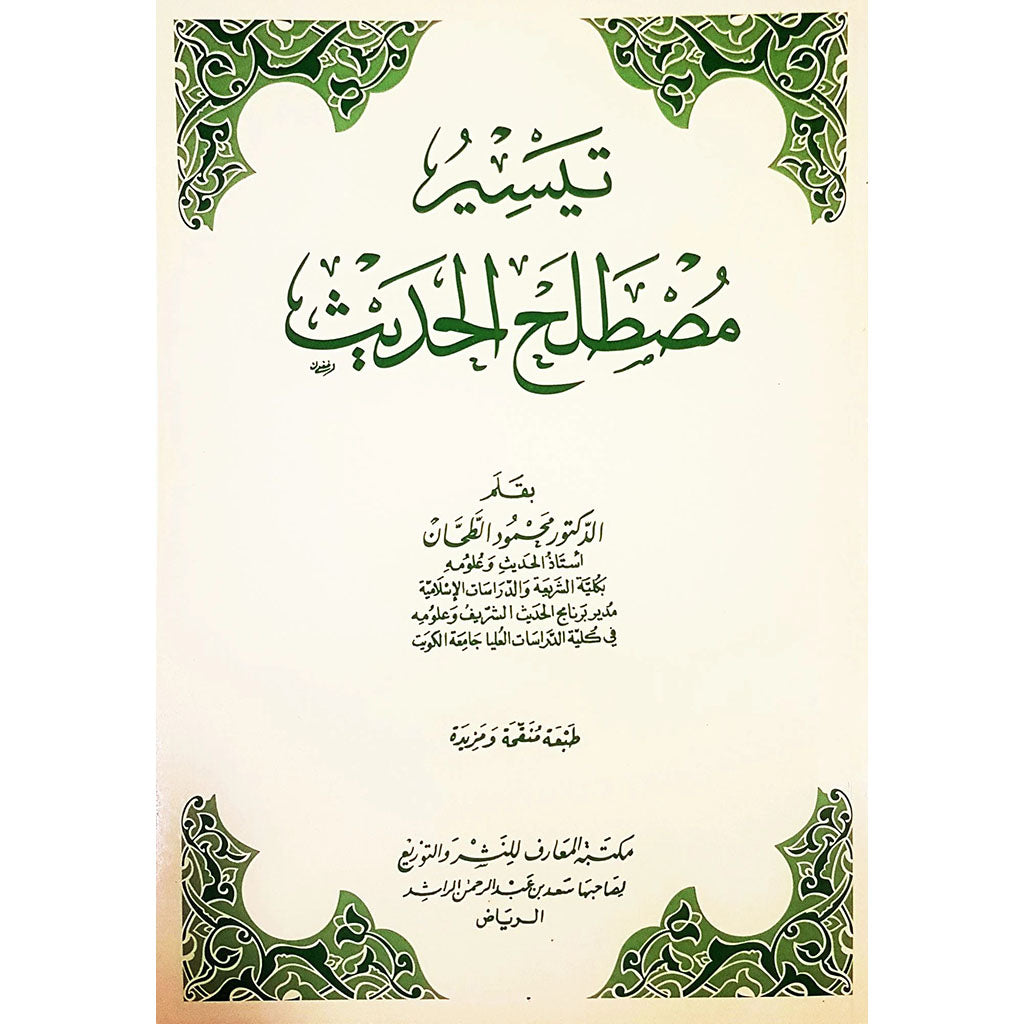
Simplifying Hadith terminology
Author's name: Mahmoud Al-Tahhan
On the Origins of Terminology Science and its Most Famous Works: A Historical Overview of the Origins of Terminology Science and the Stages Through Which the Most Famous Works in Terminology Science Passed. Preliminary Definitions. Chapter One: The Report. Section One: Classification of the Report According to its Reaching Us. Subsection One: The Mutawatir Report. Subsection Two: The Ahad Report. Chapter Two: Classification of the Ahad Report. Subsection One: Classification of the Ahad Report According to the Number of its Chains of Transmission. Requirement One: The Mashhur. Requirement Two: The Aziz. Requirement Three: The Gharib. Subsection Two: Classification of the Ahad Report According to its Strength and Weakness. Requirement One: The Maqbul. Requirement Two: The Mardud. Chapter Three: The Ahad Report Shared Between the Maqbul and Mardud. Subsection One: Classification of the Report According to the One to Whom the Qudsi Hadith is Attributed: The Marfu', The Mawquf, The Maqtu'. Subsection Two: Other Types Shared Between the Maqbul and Mardud: The Musnad, The Muttasil, Additions of Reliable Narrators, The I'tibar, The Mutaabi', and The Shahid. Chapter Two: The Characteristics of Those Whose Narrations are Accepted and Related Matters of Criticism and Justification. Subsection One: On the Narrator and the Conditions of Acceptance. Subsection Two: A General Overview of the Books of Criticism and Justification. Subsection Three: The Levels of Criticism and Justification. Chapter Three: Narration, its Etiquette, and How to Establish it. First: How to Verify Narration and Methods of Transmitting It. Section One: How to Hear and Transmit Hadith and the Method of Verifying It. Section Two: Methods of Transmission and Forms of Performance. Section Three: Writing, Verifying, and Classifying Hadith. Section Four: The Characteristics of Narrating Hadith. Chapter Two: Etiquette of Narration. Section One: Etiquette of the Hadith Narrator. Section Two: Etiquette of the Hadith Student. Chapter Four: The Chain of Transmission and Related Matters. Chapter One: Subtleties of the Chain of Transmission. Section One: High and Low Chains of Transmission. Section Two: The Chain of Transmission. Section Three: Narration of Elders from Juniors. Section Four: Narration of Fathers from Sons. Section Five: Narration of Sons from Fathers. Section Six: The Embellished and Narration of Peers. Section Seven: The Preceding and the Following. Chapter Two: Knowledge of the Narrators. Section One: Knowledge of the Companions. Section Two: Knowledge of the Followers. Section Three: Knowledge of Brothers and Sisters. Section Four: Knowledge of Agreed and Disagreement. Section Five: Knowledge of Similar and Dissimilar Narrations. Section Six: Knowledge of Ambiguous Narrations. Section Seven: Knowledge of Neglected Narrations. Section Eight: Knowledge of Ambiguous Narrations. Section Nine: Knowledge of Unique Narrations. Section Ten: Knowledge of Those Mentioned by Name or Eleventh Topic: Knowledge of Vocabulary from Names, Nicknames, and Titles; Twelfth Topic: Knowledge of the Names of Those Known by Their Nicknames; Thirteenth Topic: Knowledge of Titles; Fourteenth Topic: Knowledge of Those Attributed to Other Than Their Fathers; Fifteenth Topic: Knowledge of Lineages That Contrary to Their Apparent Meaning; Sixteenth Topic: Knowledge of the Dates of Narrators; Seventeenth Topic: Knowledge of Those Among the Reliable Narrators Whose Narrations Became Mixed; Eighteenth Topic: Knowledge of the Classes of Scholars and Narrators; Nineteenth Topic: Knowledge of the Freed Slaves Among the Narrators and Scholars; Twenty Topic: Knowledge of the Reliable and Weak Narrators; Twenty-First Topic: Knowledge of the Homelands and Countries of the Narrators

Best Selling
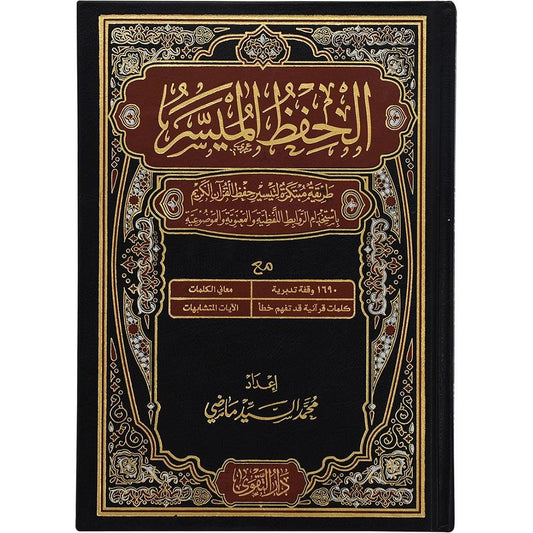

Easy Memorization Quran
Easy Memorization Quran
An innovative method to facilitate memorization of the Holy Quran using verbal and conceptual links.
Mohamed Elsayed Madi, Ahmed Issa Elmasrawi
- from Dhs. 45.00
- from Dhs. 45.00
- Unit price
- per
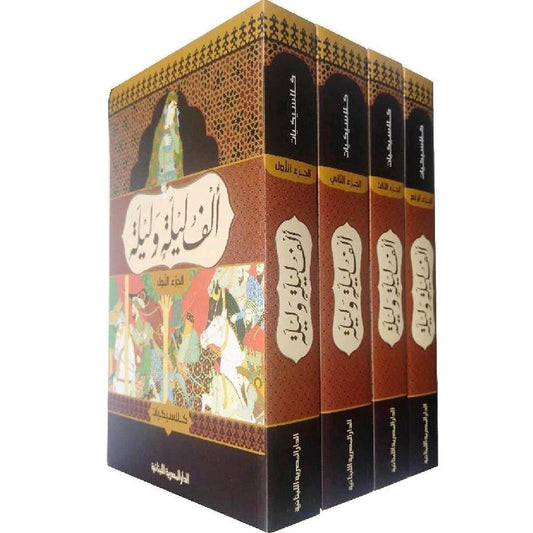

One Thousand and One Nights 4 parts
One Thousand and One Nights - 4 Parts Author Name: Abdullah Ibn al-Muqaffa One Thousand and One Nights is a collection of stories from West and South Asia, along with folk tales that were compiled and translated into Arabic during the Islamic...
- Dhs. 110.00
Dhs. 135.00- Dhs. 110.00
- Unit price
- per

Explanation of the Three Fundamentals, followed by an explanation of the Four Rules, by Sheikh Saleh Al-Fawzan
Explanation of the Three Principles Followed by an explanation of the four rules. Author's name: Imam Muhammad ibn Abd al-Wahhab Dr. Saleh bin Fawzan bin Abdullah Al-Fawzan Edited and printed by: Dr. Salman Jaber Othman Al-Mujalham Al-Suwailem The book Explanation of the Three Fundamentals,...
- Dhs. 65.00
- Dhs. 65.00
- Unit price
- per

The Power of Your Subconscious Mind Dr. Joseph Murphy
The power of your subconscious mind By Dr. Joseph Murphy This book is one of the best-selling self-help books of all time. This edition explains mental focus techniques that can remove subconscious obstacles that prevent us from achieving the success we desire, in a...
- Dhs. 62.00
Dhs. 73.00- Dhs. 62.00
- Unit price
- per

Because You are Allah: A Journey to the Seventh Heaven - Part One
Because You Are God: A Journey to the Seventh Heaven - Part One Author's name: Ali Jaber Al-Fifi The writer was able to take us through his creations on a deep journey to learn something about some of His names, such that no name...
- Dhs. 33.00
- Dhs. 33.00
- Unit price
- per

The courage to be unloved
The courage to be unpopular Author's Name: Ichiro Kishimi - Fumitake Koga "It is not what we are given at birth that matters, but how we use that provision." "Your suffering in life cannot be attributed to your past or your environment. Nor is...
- Dhs. 57.00
- Dhs. 57.00
- Unit price
- per

رسائل أيقظت رجلا
رسائل أيقظت رجلاً للكاتبة الإماراتية منيرة النعيمي في أبوظبي، يعيش سيف بين مسؤوليات الأبوة وذكريات لا تفارقه، محاولًا أن يصنع لأطفاله حياةً آمنة بعد أن غيّب الموت شريكة عمره. أربعة أطفال هم عالمه، وبيتٌ امتلأ يومًا بالحب، ثم تعلّم كيف يتعايش مع غياب من...
- Dhs. 65.00
- Dhs. 65.00
- Unit price
- per


One-Page Marketing Plan
The 1-Page Marketing Plan Author: Allan Dib To build a successful business, you must stop random marketing activities and start following a reliable plan for rapid growth. Creating a practical marketing plan used to be difficult and time-consuming, which is why it often...
- Dhs. 79.00
- Dhs. 79.00
- Unit price
- per

The Frozen River
The Frozen River
Author: Arbuthnot Lauson
A translated historical novel set in the late 18th century in the state of Maine, USA, blending mystery, investigation, and social and historical aspects.
- Dhs. 68.00
- Dhs. 68.00
- Unit price
- per
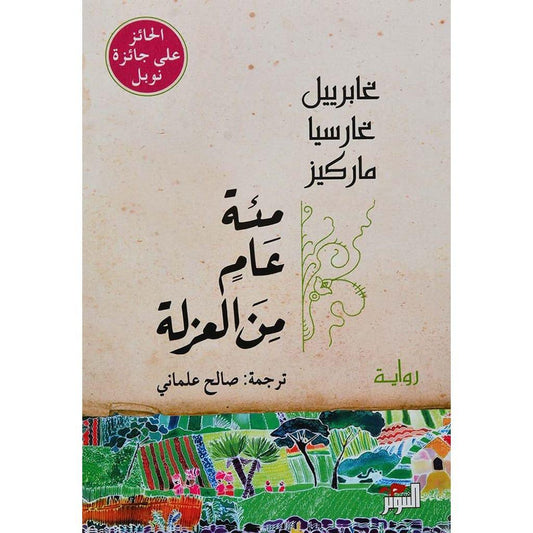

One Hundred Years of Solitude
One Hundred Years of Solitude Author's name: Gabriel García Márquez Translator: Saleh Almani One Hundred Years of Solitude is one of the most recommended books, as it is one of the best books that discusses the subject in a brilliant way, and it is...
- Dhs. 68.00
- Dhs. 68.00
- Unit price
- per
- Choosing a selection results in a full page refresh.