
Customer service: 00971581607579 📞


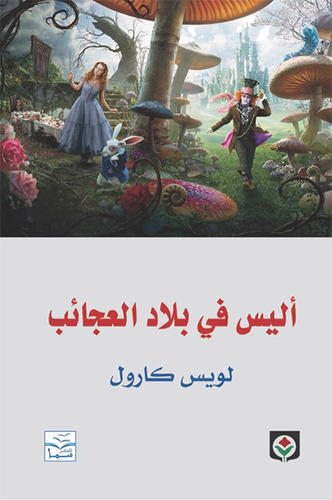
Alice in Wonderland
Author's name: Lewis Carroll
Lewis Carroll admired young children's innocent, unbiased approach to the world they live in. In Alice in Wonderland, he wanted to show the reader their perspective on the adult world, which includes the rules and social etiquette that adults adhere to, as well as the self-absorbed narcissism and bad habits they adopt in their daily behavior. He also wanted to best represent the struggle of children to survive in the turbulent adult world. In order to assimilate them, Alice was forced to abandon the open-mindedness that is a characteristic of young children. As it appears, adults need rules in their lives, and they follow them without considering the value of adhering to them. Their blind obedience leads them to adopt incomprehensible and sometimes arbitrary behavior. Alice experienced this in Wonderland. When she enters it, she encounters a way of living and thinking different from what she was accustomed to in her surroundings. There's a duchess trying to find logic in everything, and unfair trials for people who committed no crime. From her journey, Alice learned to understand the adult world to some extent. In fact, the little girl was experiencing maturity, evidenced by the physical changes she underwent repeatedly throughout the story. She was constantly growing and shrinking, each time adding something new to her knowledge. She understood that the inhabitants of Wonderland were "always angry," and that she had to adapt to strange rules and changing moods. Over time, she managed the situation optimally, daring to call the Queen of the Globes' orders nonsense and preventing executions. It's true that she faced doubts about her identity as she grew and shrunk, and this was clearly demonstrated by the question of the caterpillar sitting on the surface of the mushroom: "Who are you?" Alice was confused, and her ability to find a convincing response after the repeated physical transformations that morning failed her. However, she eventually realized that the creatures she had encountered—although some of them suffered from identity instability, such as the child who had turned into a pig—were in fact nothing more than a pack of playing cards. She immediately woke up from her dream to find herself in her real world.

Best Selling
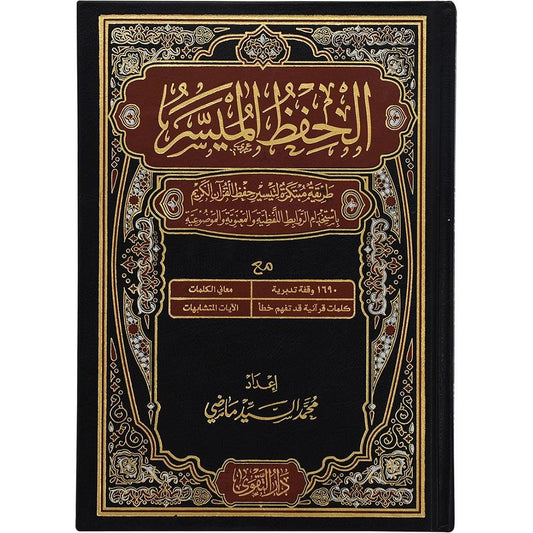

Easy Memorization Quran
Easy Memorization Quran
An innovative method to facilitate memorization of the Holy Quran using verbal and conceptual links.
Mohamed Elsayed Madi, Ahmed Issa Elmasrawi
- from Dhs. 45.00
- from Dhs. 45.00
- Unit price
- per


Tajweed Holy Quran, 30 parts, with an Arabic leather bag, size 17 x 24 cm
Tajweed Quran, 30 parts, with leather case - Arabic Size 24*17 cm This deluxe Tajweed Quran is a paperback divided into thirty separate parts, all presented in a beautiful, sturdy black leather case, perfectly designed to protect the parts from loss or damage. It...
- Dhs. 94.00
- Dhs. 94.00
- Unit price
- per


Taysir Al-Karim Al-Rahman in interpreting the words of Al-Mannan, Al-Saadi’s interpretation
Taysir al-Karim al-Rahman fi Tafsir Kalam al-Mannan (The Facilitation of the Most Gracious, Most Merciful in the Interpretation of the Words of the Beneficent) - Tafsir al-Sa'di Author's name: Sheikh Abdul Rahman bin Nasser Al-Saadi Al-Sa'di's interpretation is one that focuses on clarifying the...
- Dhs. 73.00
- Dhs. 73.00
- Unit price
- per
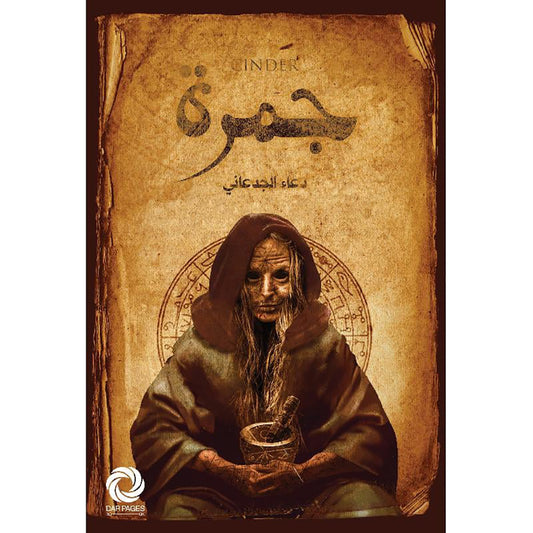

Ember - Duaa Al-Jadaani
cinder
Author's name: Duaa Al-Jadaani
They are cowards, cowards who are good at creating illusions.
- Dhs. 72.00
- Dhs. 72.00
- Unit price
- per


Take your belief from the Qur’an and the authentic Sunnah
Take your belief from the Qur’an and the authentic Sunnah Author's name: Muhammad ibn Jamil Zeno A message from Sheikh Muhammad Jamil Zeno in which he explains the doctrine of the Sunnis and the community on various doctrinal issues: monotheism, polytheism, tyranny, following the...
- Dhs. 15.00
- Dhs. 15.00
- Unit price
- per

Granada Trilogy
Granada Trilogy Author: Radwa Ashour The Granada Trilogy is a series of three novels by the Egyptian author Radwa Ashour, consisting of Granada Mariam Departure The events take place in the Kingdom of Granada after the fall of all Islamic kingdoms in Al-Andalus. The...
- Dhs. 55.00
- Dhs. 55.00
- Unit price
- per


The Qiyam Mushaf with thematic division of the verses of the Holy Quran, white paper, size 24 x 17 cm
The Qiyam Quran with thematic division of the verses of the Holy Quran, white paper, size 24 x 17 cm With Q barcode This Quran is distinguished by having a code on each of its pages. When reading the code using a barcode reader...
- Dhs. 35.00
- Dhs. 35.00
- Unit price
- per

I loved him, so everything loved me back.
I loved him so everything loved me Author's name: Raghad Al Saleh A profound, beautiful book with diverse presentations, ideas, and titles full of benefit and stories taken from the righteous predecessors and their hidden worship and how we get closer to God. I...
- Dhs. 49.00
- Dhs. 49.00
- Unit price
- per
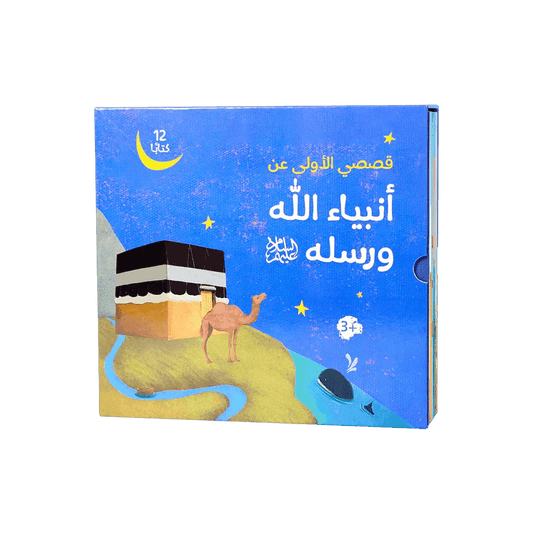

My first stories about God's prophets and messengers
My first stories about God's prophets and messengers A series of stories for children in early childhood education, featuring the prophets and messengers of God Almighty in a simple, enjoyable, and engaging style. The aim is to present lessons and morals drawn from their...
- Dhs. 165.00
Dhs. 185.00- Dhs. 165.00
- Unit price
- per
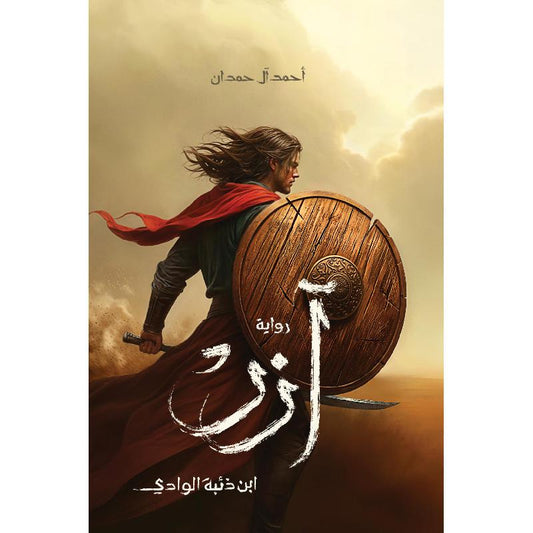

Azar, son of the Wolf of the Valley
AZAR
Son of the Valley She-wolf
Author: Ahmed Al Hamdan
I dreamt that I gave birth to a moon ascending to the sky, illuminating the Arabian Peninsula with its light.
- Dhs. 79.00
- Dhs. 79.00
- Unit price
- per
- Choosing a selection results in a full page refresh.