
Customer service: 00971581607579 📞


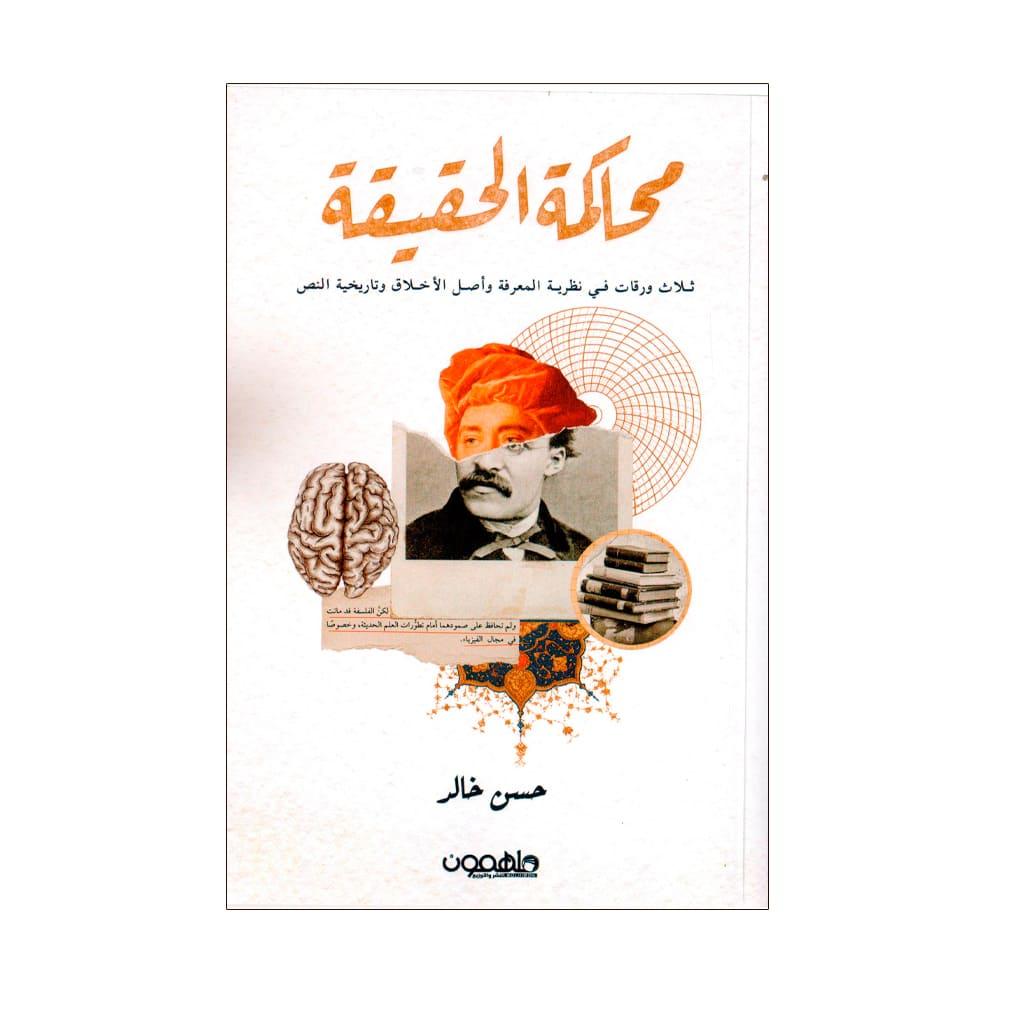
Truth Trial
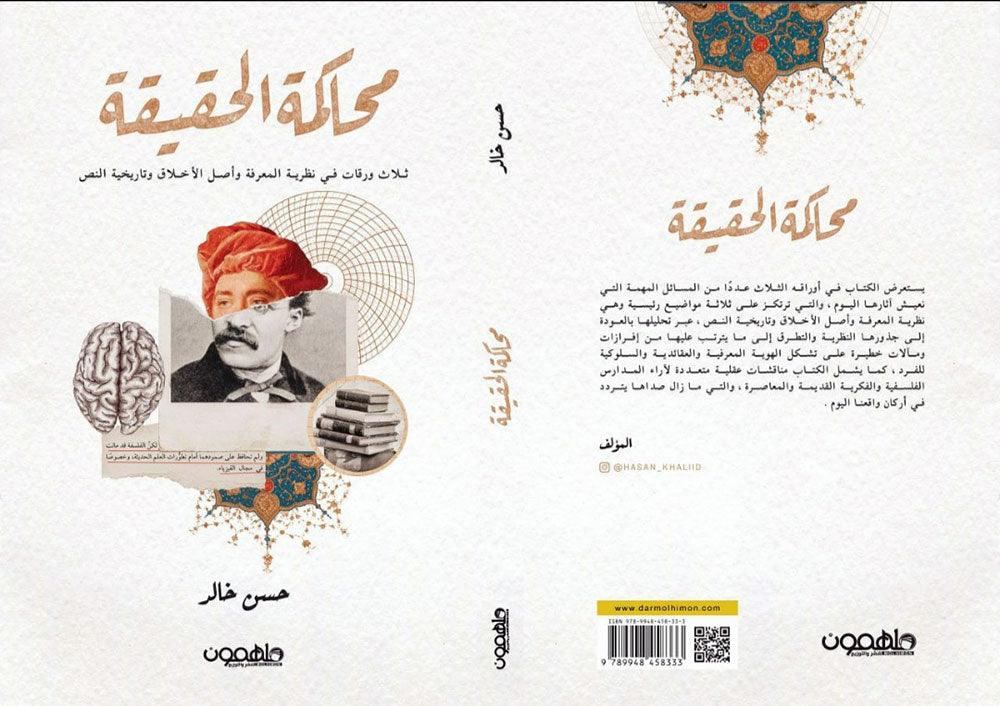
Three papers on the theory of knowledge, the origin of ethics, and the historicity of the text
A new book in the Arab philosophical library, it addresses three important philosophical issues: the theory of knowledge, the origin of ethics, and finally the historicity of texts.
The first paper of the book addresses the epistemological theory of knowledge, entitled “Human Thought and the Truth of Knowledge.” It discusses how human knowledge is acquired in the mind, based on the rules of human thought and the structural foundations of epistemology. It also examines the reasons why philosophy is at the top of the cognitive sciences and the aspects of separation between it and natural sciences such as physics. It also discusses epistemological doctrines such as empiricism, pragmatic relativism, and existentialism, and provides an independent critical reading of the projects of the Scottish philosopher David Hume and the German philosopher Immanuel Kant, as they are the most important projects of modern philosophy and the most present in contemporary public intellectual consciousness.
The second paper, titled "Is the Source of Morality Natural or Metaphysical?", examines the origin of morality by returning to the common origins of naturalism and metaphysics. It discusses contemporary doctrines such as social contract theory, pragmatism, Marxism, and existentialism, while offering a critical perspective on contemporary claims from modernism and postmodernism, and the implications that make these ideas widely accepted in our current reality.
The last paper, entitled: The Historicity of the Text, deals with the theory of historicism proposed by the modernist Mohammed Arkoun in the middle of the last century from a philosophical linguistic perspective. It presents in detail the doctrine of modernism in historicizing the text and what results from framing the text within a purely historical framework, in addition to analyzing the doctrines of textual historicism such as Marxism, deconstruction, the theory of the death of the author, and the theory of multiple readings, in addition to the dangerous consequences of the historicity of the text such as entering into the labyrinths of cognitive relativism.

Best Selling

Majnun Layla's Diwan
Majnun Layla's Diwan Author's name: Qais Ibn Al-Mulawwah Qays ibn al-Mulawwah, nicknamed Majnun Layla (24 AH / 645 AD - 68 AH / 688 AD), was an Arab love poet, one of the madmen, from the people of Najd. He lived during the caliphate...
- Dhs. 60.00
- Dhs. 60.00
- Unit price
- per
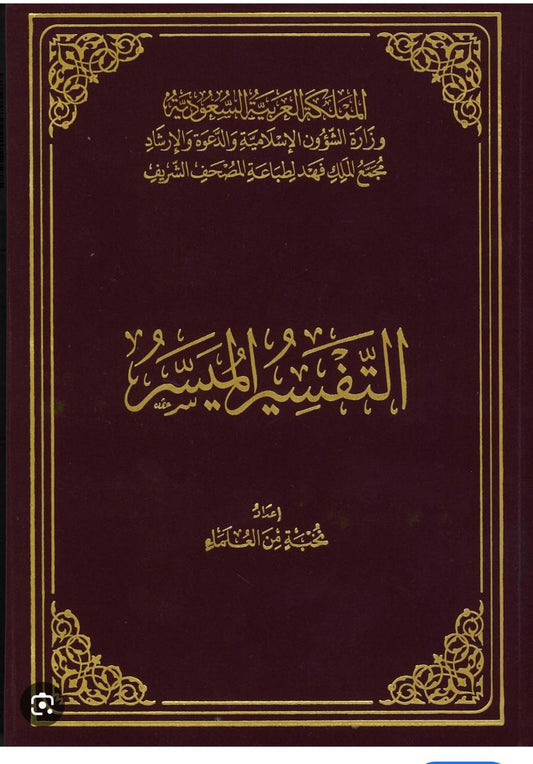

The Simplified Interpretation, King Fahd Complex Edition
Simplified Interpretation, King Fahd Complex Edition
Prepared by a select group of scholars
- from Dhs. 67.00
- from Dhs. 67.00
- Unit price
- per


Summary of the beginning and the end 1-2
Summary of the beginning and the end Author's name: Ismail ibn Katheer al-Dimashqi It is a presentation of history from the beginning of creation to its end, beginning with the creation of the heavens, the earth, and the angels until the creation of Adam....
- Dhs. 89.00
- Dhs. 89.00
- Unit price
- per

baron
baron Part Three Author's name: Shahd Qurban Ruby thought that meeting him again would be a new beginning, and that love alone was enough to achieve the impossible, but she was wrong. Marcel was still the same person, the man who refused to change,...
- Dhs. 70.00
- Dhs. 70.00
- Unit price
- per


Alize Yarn - Burcum Batik 100% Acrylic 100g 230yd
Alize Burcum Batik Multicolored knitting and crochet yarn, made from 100% acrylic, dyed in brilliant colors. Soft and comfortable to use. Ideal for sweaters, cardigans, blouses, and accessories. It does not fray after washing, and the stitches remain even. Mixing: 100% acrylic Ball weight:...
- from Dhs. 12.00
- from Dhs. 12.00
- Unit price
- per

I loved him, so everything loved me back.
I loved him so everything loved me Author's name: Raghad Al Saleh A profound, beautiful book with diverse presentations, ideas, and titles full of benefit and stories taken from the righteous predecessors and their hidden worship and how we get closer to God. I...
- Dhs. 49.00
- Dhs. 49.00
- Unit price
- per


Al-Qaida Al-Nooraniya, medium size 14 x 20 cm
Al-Qaida Al-Nooraniya, medium size 14 x 20 cm Al-Qa'ida Al-Nooraniyyah is one of the most beneficial and easiest methods for teaching beginners and young people how to read and memorize the Book of Allah - the Almighty - with minimal effort and in the...
- Dhs. 9.00
- Dhs. 9.00
- Unit price
- per
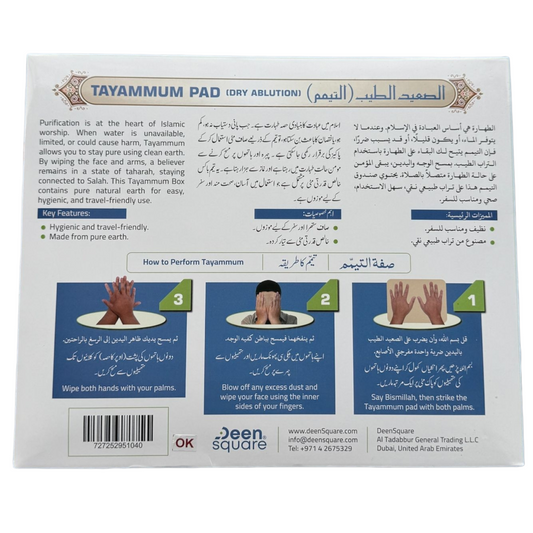

The good soil of ablution
Good soil, the dust of dry ablution Please share this with the sick, the elderly, and those unable to perform ablution. May God reward you abundantly. Purity is a fundamental pillar of Islam and is linked to prayer. This tayammum box is used for...
- Dhs. 36.00
- Dhs. 36.00
- Unit price
- per
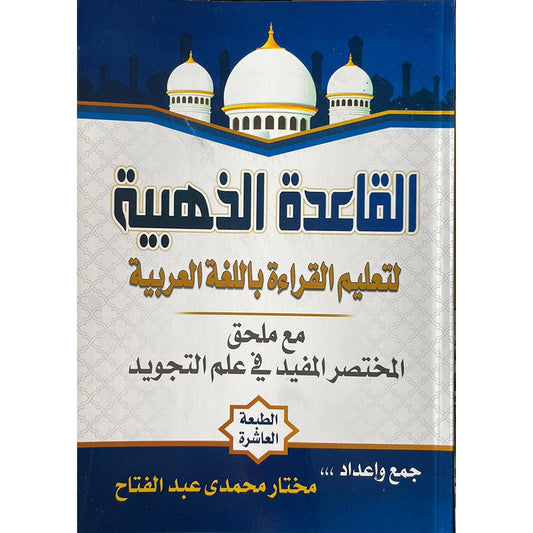
The golden rule for teaching reading in Arabic
The golden rule for teaching reading in Arabic
- Dhs. 20.00
- Dhs. 20.00
- Unit price
- per

Sophie the Wonderful
Sophie the Wonderful Author's name: Georgette Heyer When Sophie, the bold and outspoken daughter of Sir Horace, is sent to live with her aunt in the Berkeley countryside, no one expects her to bring a wind of change. But Sophie is not the ordinary...
- Dhs. 55.00
- Dhs. 55.00
- Unit price
- per
- Choosing a selection results in a full page refresh.