
Customer service: 00971581607579 📞


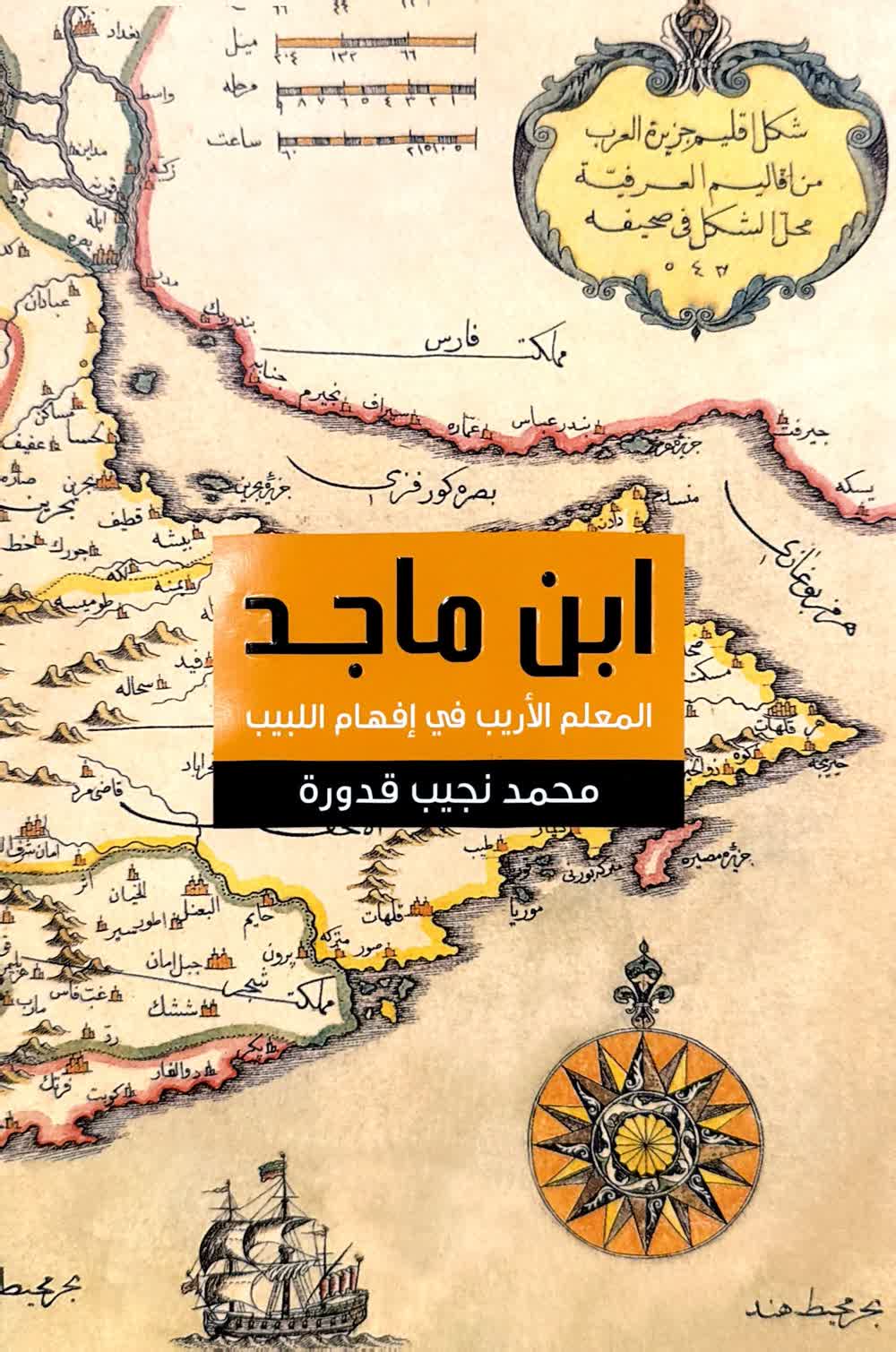
Ibn Majid, the astute teacher in understanding the intelligent
The book consists of an introduction and five chapters: (Personal Awareness), (Religious Awareness), (Scientific Awareness), (Literary Awareness), and (Behavioral Awareness). The author wrote on the book's cover: (His Highness Sheikh Dr. Sultan bin Muhammad Al Qasimi, in his book "A Statement for the Illustrious Historians Regarding Ibn Majid's Innocence," on page 20, included a translation from "Vasco da Gama's" diaries about his guide to the shores of India. He wrote, quoting "Da Gama": "On the following Sunday, April 22nd, the King's secretary ascended from the triumphant ship to the deck. Since no one had approached our ships for the previous two days, the captain arrested him and sent a request to the King, asking him to send the guides he had promised to send. As soon as the King received the message, he sent him a Christian guide. The captain then released the nobleman he had detained on his ship. We were very pleased with the Christian guide the King sent us." Then, His Highness the Ruler of Sharjah briefly declared "Ibn Majid's" innocence, stating: (Thus, "Vasco da Gama's" guide on his journey from the African coast to India was a Christian.) Ibn Majid is the pioneering, self-made genius, who was accustomed to giving more than he took. He discovered a science that had no precedent, invented the compass, determining the Qibla for Muslims, and established the science of navigation and marine meteorology. He also founded a behavioral school in education for future generations to follow his approach. He was an immortal Arab meteor, a working scholar, whose concern was guiding people, developing minds, refining behavior, and offering conscious, sound, ambitious, optimistic opinions, playing on the pulse of hearts with poetic talent that deserves appreciation."
According to its author, the book is merely an attempt to get to know Ahmed ibn Majid, the teacher and educator, through his works, presenting them to the Arab reader in a style that seeks conscious truth, keeping in mind that necessity is the mother of invention, striving to reconcile the historical and artistic approaches, as the author tracked Ahmed ibn Majid's biography within his observations of his poetry.
In the introduction of his book, the author examines the nature of awareness and issues within the perspective of educational awareness, and pauses at the issue of writing history, citing Ibn Khaldun's famous introduction: "Historians, commentators, and imams of transmission have often fallen into fallacies in stories and events due to their reliance solely on transmitted information, whether good or bad, without subjecting it to its principles, comparing it to its similar cases, or examining it with the criterion of wisdom, understanding the nature of beings, and applying critical thought and insight to reports, thus deviating from the truth and getting lost in the wilderness of illusion and error."
In the first chapter, Muhammad Qadura discusses the issue of personal awareness in Ibn Majid through four axes: upbringing and definition, features of Ibn Majid's personality, manifestations of personal awareness, and the conscious vision of Ibn Majid's personality.
Among the features of Ibn Majid's personality, it is mentioned that he was "the ambitious lion," and he described himself as the fourth of the lions or the lion of the sea, and so on, with impressive titles. These descriptions were because he realized his true self; he was an ambitious, inventive scholar who was not an imitator, narrator, or transmitter, but rather an ambitious innovator with knowledge and awareness of what he advised and experimented with.
In the third chapter, Muhammad Qadura discusses several aspects of scientific awareness in Ibn Majid, such as: his scientific titles, his objective experimental scientific methodology, conscious thinking, critical spirit, as well as his advice and teachings, and Ibn Majid's classifications and inventions.
In the fourth chapter, the author of the book addresses titles related to Ibn Majid's literary awareness; he was the poet of scholars, characterized by clear poetic signs and indications, and also by his refined scientific style.
Among the signs of his poetic prowess is that the people of his time and those who came after them gave him a unique title (the organizer of the two Qiblas) Mecca and Jerusalem, and titles do not come from a vacuum because they are an allegiance to the emirate of poetry in his era, with the distinction that he was a genius scholar. In reality, Ibn Majid was a poet despite his own admission of shortcomings in poetry in terms of poetic performance or neglecting artistry and pleasure due to his pursuit of his ideas.
In the fifth chapter, Muhammad Qadura studies the features of behavioral awareness in Ibn Majid. The author believes that Ibn Majid excelled in his scientific and emotional formation and set behavioral goals that he strongly called for adherence to, indicating the depth of his faith and authenticity in what he says and does, and drawing attention to his intellectual awareness in the highest meanings of his valuable knowledge, which established principles and explanations aiming at achievable goals.

Best Selling
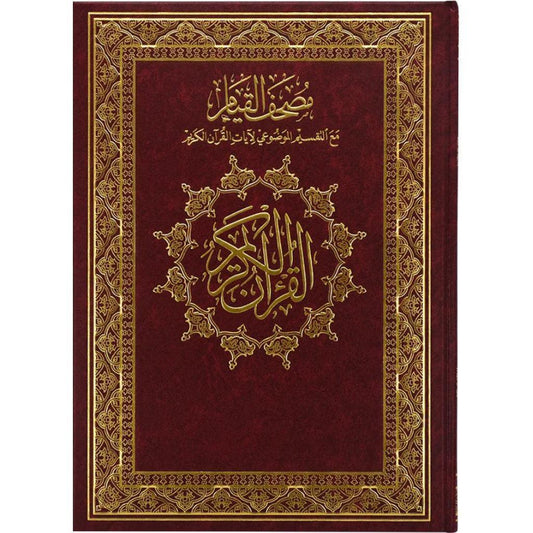

The Qiyam Mushaf with thematic division of the verses of the Holy Quran, comprehensive, white paper, size 25 x 35 cm
The Qiyam Quran with thematic division of the verses of the Holy Quran, a comprehensive edition, white paper, size 25 x 35 cm Each page of this Quran contains five pages of the memorization Quran, and each part of the Holy Quran is divided...
- Dhs. 45.00
Dhs. 68.00- Dhs. 45.00
- Unit price
- per

All blue sky
All the Sky is Blue Author Name: Melissa da Costa Emile, a 26-year-old, has been diagnosed with early-onset Alzheimer's. Doctors estimate his memory won't last more than two years. Emile decides to embark on one last journey, fleeing the hospital and the...
- Dhs. 75.00
- Dhs. 75.00
- Unit price
- per


Tajweed Holy Quran, 30 parts, with an Arabic leather bag, size 17 x 24 cm
Tajweed Quran, 30 parts, with leather case - Arabic Size 24*17 cm This deluxe Tajweed Quran is a paperback divided into thirty separate parts, all presented in a beautiful, sturdy black leather case, perfectly designed to protect the parts from loss or damage. It...
- Dhs. 94.00
- Dhs. 94.00
- Unit price
- per

A story for each surah
A story for each surah Author's name: Dr. Muhammad Jihad Al-Suwait The book compiles a story for each chapter of the Holy Quran in an easy-to-understand and accessible style that helps the reader to reflect and grasp the profound message without unnecessary complexity or...
- Dhs. 65.00
- Dhs. 65.00
- Unit price
- per


Fregoli syndrome
Fregoli syndrome Author's name: Manal Maashi Nader, a psychologist, is forced by life circumstances to take on the case of a teenager suffering from the rarest and strangest psychological disorder (Fregoli Syndrome), in his first job, assuming the identity of another psychiatrist. On his...
- Dhs. 80.00
- Dhs. 80.00
- Unit price
- per

A thousand shining suns
A thousand shining suns Author's name: Khaled Hosseini A Thousand Splendid Suns (Persian: دو صد خورشیدرو) is a 2007 novel by Afghan author Khaled Hosseini, the follow-up to his debut novel, The Kite Runner (2003), which also became a bestseller. The book was released...
- Dhs. 57.00
- Dhs. 57.00
- Unit price
- per

The best version of you
The best version of you Author's name: Moudi Abdel Rabbo On the journey of self-discovery and personal growth, this book takes us deep into human experiences, making us realize that change is not just a choice but an absolute necessity. Here, where courage meets...
- Dhs. 40.00
- Dhs. 40.00
- Unit price
- per


Fregoli Syndrome 2 - Apple Field
Fregoli syndrome 2 apple field Author's name: Manal Maashi (Nader Abdel Majeed), a psychotherapist with the stigma of a criminal, returns after an absence of ten years to his old home in his village, the village of Al-Sanabel, taking with him a teenager suffering...
- Dhs. 75.00
- Dhs. 75.00
- Unit price
- per


This is how you recover
Healing can begin in an instant, often in the form of a sudden loss that shakes our expectations for the future and changes the course of our lives. But the essence of true healing lies not in that moment alone, but in our ability...
- Dhs. 57.00
- Dhs. 57.00
- Unit price
- per
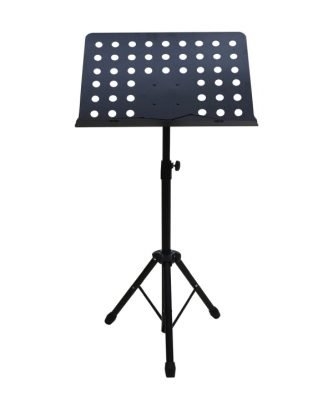

Adjustable Quran holder
Adjustable Quran holder
Lightweight metal stand, easy to assemble and fold
It carries easily anywhere
- Dhs. 89.00
- Dhs. 89.00
- Unit price
- per
- Choosing a selection results in a full page refresh.