
Customer service: 00971581607579 📞


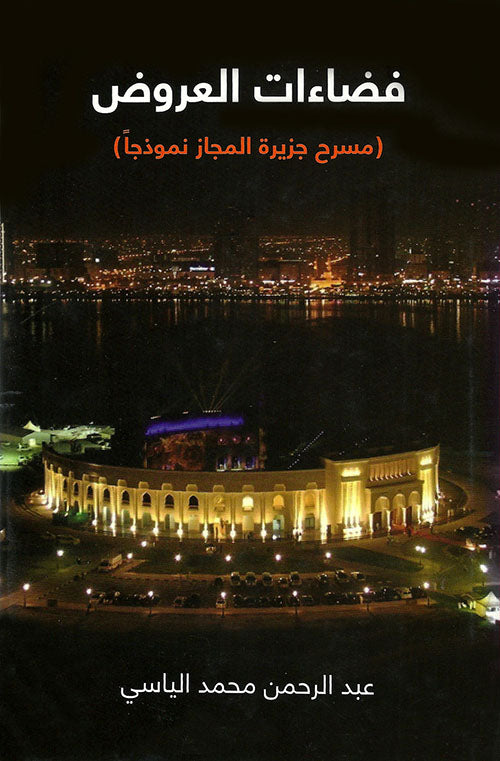
Performance Spaces
In his book, researcher Mohammed Abdul Rahman Al-Yasi studies the architectural structure of Al Majaz Amphitheatre and its aesthetics, linking it to its artistic function as a space for theatrical performances within a long history of spaces that have hosted theatre performances, both Arab and global, and what these spaces have contributed to conveying the meanings of these performances. The book includes an introduction, three chapters, and a conclusion. It was originally a master's thesis in Cultural Studies at the University of Tunis, Higher Institute for Youth and Cultural Animation, in 2014. In his introduction, Al-Yasi points out that the Arab spectacle scene has been a research preoccupation for historians, theatre theorists, practitioners, and social researchers throughout our modern history. Some studies have focused on the beginnings of this art and how it was established in Arab culture as a product of acculturation, as well as its organizational mechanisms, acceptance patterns, periods of prosperity and decline, its relationship to lived reality and the current historical moment, and its involvement in the issues of our Arab societies. These questions have become fundamental and central today for a culture that seeks to be an effective element in comprehensive development. Dealing with these arts today, and the extent to which they are presented appropriately to attract spectators and contribute to the content of performances, is one of the important creative manifestations in the world of theatre, if not the most important. Based on an awareness of this importance, Al-Yasi undertook a study of Al Majaz Amphitheatre, after being moved by the stunning performance that inaugurated this theatre in 2014 at the opening of Sharjah's celebration as the Capital of Islamic Culture. This was the operetta "Clusters of Light," which drew its themes from Arab-Islamic history, thus integrating the image of the performance with the venue that hosted it, completing the scene to create the aesthetic that the spectator seeks.
Al-Yasi states that the construction of Al Majaz Amphitheatre was not arbitrary, but rather resulted from meticulous planning and insightful vision inspired by the vision of His Highness the Ruler of Sharjah, in acculturation and civilizational accumulation that revives the aesthetics of Islamic architecture, blending it with Greek and Roman engineering styles in theatre construction. This method succeeded in presenting a modern model for the convergence of cultures and the blending of artistic styles.
In the first chapter of the book, the researcher presents the "conceptual and methodological framework" of his subject, reviewing the different definitions of theatre and its types, especially dramatic and epic theatre. He then defines terms such as "festival, culture, cultural policy." In the methodological framework, the researcher chose to combine descriptive and analytical methods to present the studied phenomenon in its external context and then in its deep components, leading to the required conclusions.
In the second chapter, he discusses "Performance Spaces and Their Development," stating at the outset that theatre is a child of the city, which was its first established space. This led to several types of performance spaces, including theatres built specifically for performances, open squares where festivals and open-air performances are held, sports halls, markets, and warehouses that are transformed into performance spaces, and the street. Regarding the engineering of performance spaces, he discusses the specific characteristics of each space individually. In Greece, the theatre consisted of "a stage for presenting the performance, and stands for the audience." Roman theatre was not far from this, and in the West during the Renaissance, the Roman model was inspired, in what is known as the Italian box, which assumes a stage for acting, curtains for separation, and an audience hall. The researcher also stopped at the modernist trends in the creation of performance spaces, whose proponents sought to transcend the Italian box and transform non-dedicated performance spaces into performance venues, such as warehouses and home halls, and to use multi-purpose halls such as sports halls, without strict separation between the audience and the actors, in response to the needs of the audience, and so that theatre does not remain exclusive to one class, namely, those capable of paying expensive ticket prices, and so that every popular space can be theatricalized.
In the third chapter, "Al Majaz Amphitheatre: Between the Reasons for Establishment and the Experience," he begins with citations and excerpts from the sayings of His Highness the Ruler of Sharjah, indicating his love for theatre and his conviction in it as a means of cultivating awareness and a tool to defeat ignorance and darkness in the world, and his constant endeavor to find an attractive way for this theatre capable of attracting audiences and instilling awareness in them. The author enumerates the reasons that led to the establishment of Al Majaz Amphitheatre, stressing that it came within the framework of the changes witnessed by the place and the preparations made to host and celebrate that major event, which was the celebration of Sharjah as the Capital of Islamic Culture 2014. The focus was on establishing an open-air theatre that combines architectural beauty and artistic function. The author traces the planning and implementation stages, all of which indicate the importance given to this theatrical space so that it would become a landmark of Sharjah city, especially since it is located within Al Majaz Lagoon on the waterfront of the city's heart.
The launch of Al Majaz Amphitheatre was linked to the "Clusters of Light" performance, which inaugurated the celebration. It is a visual and musical biography narrating the life of the Prophet, peace be upon him, combining theatre, music, and cinema, and attempting to evoke that era by relying on decorations and scenography. It was based on a poetic text divided into nine scenes. The first scene was dedicated to the city of Sharjah, and seven other scenes were about the life of the Prophet (the birth of guidance, the Isra and Mi'raj, the emigration, Medina, the Battle of Badr, Mecca on the day of conquest, the death of the Prophet), and the concluding scene which opens up the horizons of that journey towards the city of Sharjah, the Capital of Islamic Culture. The performance seeks to highlight the tolerance of Islam and its role in consolidating peace and understanding among peoples, and to guide the audience to cherish its values and be proud of belonging to a great civilization that positively influenced the course of humanity and instilled countless virtues.]

Best Selling
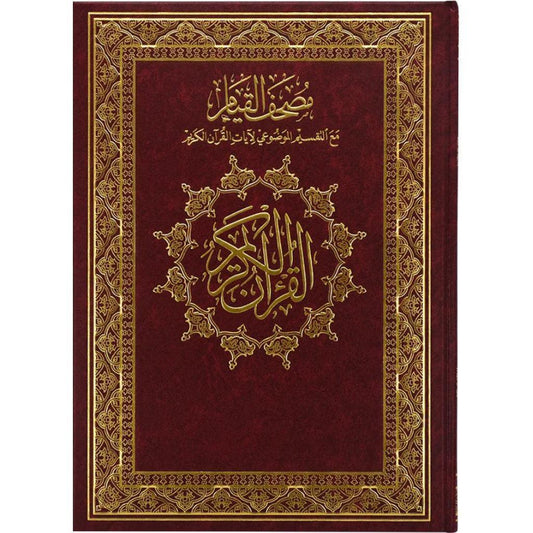

The Qiyam Mushaf with thematic division of the verses of the Holy Quran, comprehensive, white paper, size 25 x 35 cm
The Qiyam Quran with thematic division of the verses of the Holy Quran, a comprehensive edition, white paper, size 25 x 35 cm Each page of this Quran contains five pages of the memorization Quran, and each part of the Holy Quran is divided...
- Dhs. 45.00
Dhs. 68.00- Dhs. 45.00
- Unit price
- per


The disease and the cure or the sufficient answer for those who ask about the healing medicine
Disease and cure Known as the sufficient answer for those who ask about the healing medicine Author's name: Ibn al-Qayyim al-Jawziyya In this book, Ibn al-Qayyim addresses the issues of the human soul and its roles, and outlines ways to reform and purify it....
- Dhs. 38.00
- Dhs. 38.00
- Unit price
- per


Tajweed Holy Quran, 30 parts, with an Arabic leather bag, size 17 x 24 cm
Tajweed Quran, 30 parts, with leather case - Arabic Size 24*17 cm This deluxe Tajweed Quran is a paperback divided into thirty separate parts, all presented in a beautiful, sturdy black leather case, perfectly designed to protect the parts from loss or damage. It...
- Dhs. 94.00
- Dhs. 94.00
- Unit price
- per


The Sealed Nectar - Safi al-Rahman al-Mubarakpuri
The Sealed Nectar Research in the biography of the Prophet Written by His Eminence Sheikh: Safi al-Rahman al-Mubarakfuri This book deals with a detailed study of the Prophet's biography during the Meccan and Medinan periods, in a concise, modern style. This book won first...
- Dhs. 42.00
- Dhs. 42.00
- Unit price
- per


Healing souls and refining morals
Healing souls and refining morals Ethics and conduct Author's name: Ali ibn Ahmad ibn Hazm al-Andalusi al-Qurtubi This book is the essence of a unique genius that filled the world and occupied the people of its era and those that followed. In it,...
- Dhs. 65.00
- Dhs. 65.00
- Unit price
- per

Atomic Habits
Atomic Habits Author's Name: James Clear Whatever your goals, "Atomic Habits" provides a framework for developing your skills every day. James Clear, one of the world's foremost experts in habit formation, explains in this book practical strategies for building good habits, eliminating old, negative...
- Dhs. 48.00
- Dhs. 48.00
- Unit price
- per
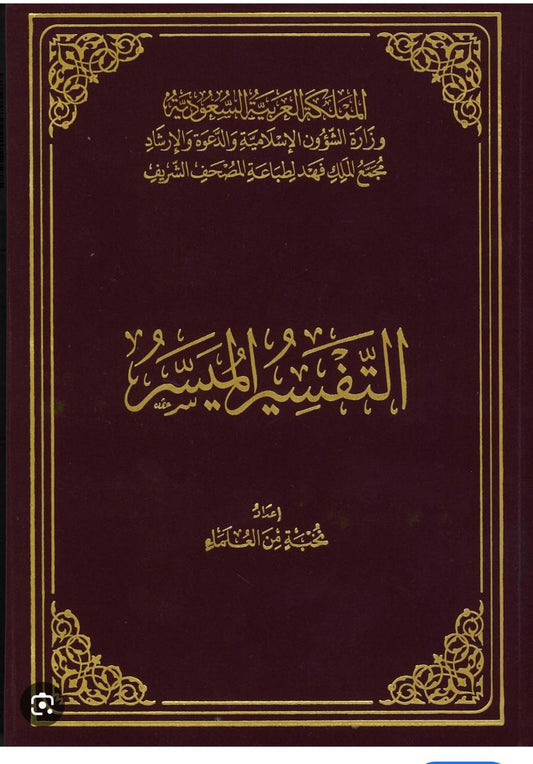

The Simplified Interpretation, King Fahd Complex Edition
Simplified Interpretation, King Fahd Complex Edition
Prepared by a select group of scholars
- from Dhs. 67.00
- from Dhs. 67.00
- Unit price
- per
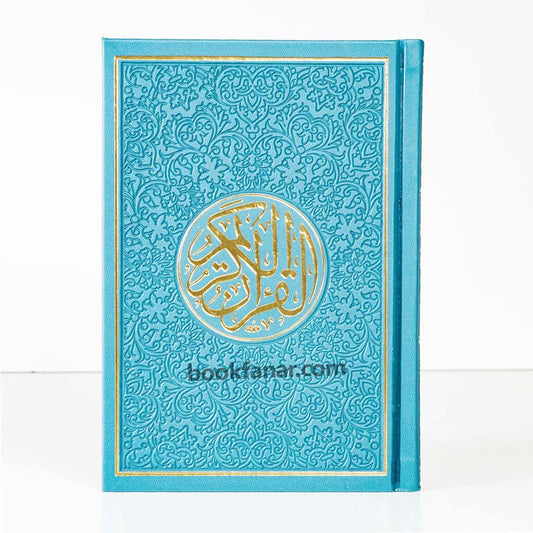

Colored edges of the Holy Qur’an, size 14 x 20 cm
Colored-edged Quran, 14 x 20 cm
The Quran in Ottoman script with very bright and beautiful colors
The most beautiful gift for your loved ones
- from Dhs. 30.00
- from Dhs. 30.00
- Unit price
- per
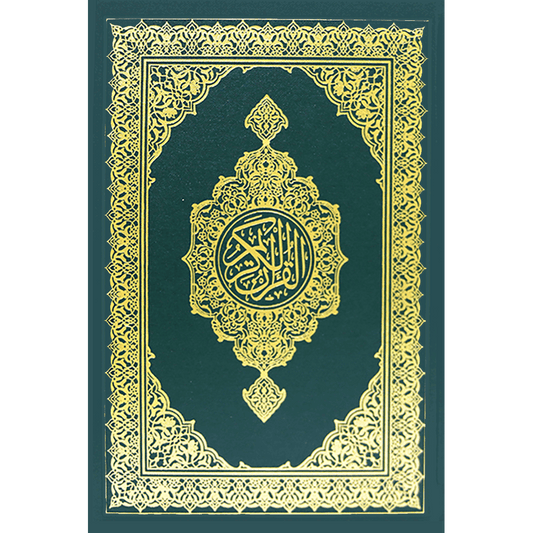

Mushaf Al Madinah, King Fahd Complex, green quarter size, 14*20 cm
-King Fahd Complex Medina Mushaf, Green Quarter Size size: A5 14x20 cm The Medina Mushaf is displayed with the Hafs narration. The Quran is distinguished by a number of unique features despite its simplicity, making it easy to use and suitable for a wide...
- Dhs. 63.00
- Dhs. 63.00
- Unit price
- per
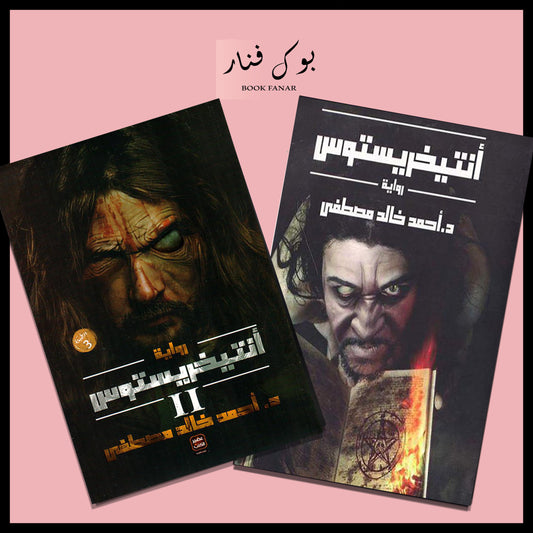

Antichrist Part 1 and Part 2 - Ahmed Khaled Mustafa
Antichrist Part One and Two Author's name: Dr. Ahmed Khaled Mustafa Part One We are finally alone, just you and me. Finally alone with you I own you and your eyes every time you look at my words and read my lines This will...
- Dhs. 95.00
Dhs. 104.00- Dhs. 95.00
- Unit price
- per
- Choosing a selection results in a full page refresh.