
The book is divided into three chapters. The first chapter focuses on the thresholds of autobiographical writing, starting from the "title threshold" as the first threshold directly received by the reader, which somehow arranges their reading horizon towards a detailed text that unfolds from the space of the title threshold. It then moves to the "introduction threshold," which the author Al-Qasimi procedurally described as the "preface," as the author deliberately placed it in this manner to indicate a network of intertwined national and personal autobiographical joints. Parallel to this is also the "conclusion threshold" which occupied the back cover of the book under the title "This Book." The first chapter concluded by researching a very important issue covered in the book "Self-Narration," which is what was called the "document threshold: pictures and maps." The book was rich with these in an exciting manner, with clear intentionality and necessity, as they added much to the credibility of the autobiographical event and its image, and the effectiveness of its performance in terms of both visual and mental reception. This is in addition to the historical importance that the author fully comprehends based on his interest, specialization, and scientific and practical involvement in this field, which is as full of documents as it is of words, if not more, and with the sensitivity of viewing that the presentation of pictures, documents, and maps provides, which is not devoid of dramatic value. The second chapter of the book is titled "The Space of Autobiographical Vision" and began its discussions with "Narrating Place and Enhancing Self-Vision," where the element of place appears as a parallel activity with wide and deep dominance over the activity of the self, within an "autobiographical" synergy that dissolves the place on the one hand and humanizes it, feeding it with the scent and spirit of the "autobiographical" event as an authentic witness, and arming the self with an intense spatial energy that is manifested in all details, vision, state, and sign, so that the place transforms into a support for the narrator, helping them in the process of identifying with the narrated, and facilitating their progress in this path to the farthest possible point. The third chapter, titled "The Formative and Expressive Space," sought in another research context to examine "the stylistic of autobiographical expression: simplicity and linguistic conciseness," to reveal the sensitivity of writing and specialization in the field of history, in a creative, cultural, and intellectual manner centered around a creative and authentic space where elements synergize, unite, interact, and produce. This gives him the opportunity to form deep and intense experience in this field that helps him in creating a stylistic transfer between the different aspects of writing he practices, so that it positively reflects on the richness of language and the aesthetic of expression and stylistic formation.

Customer service: 00971581607579 📞

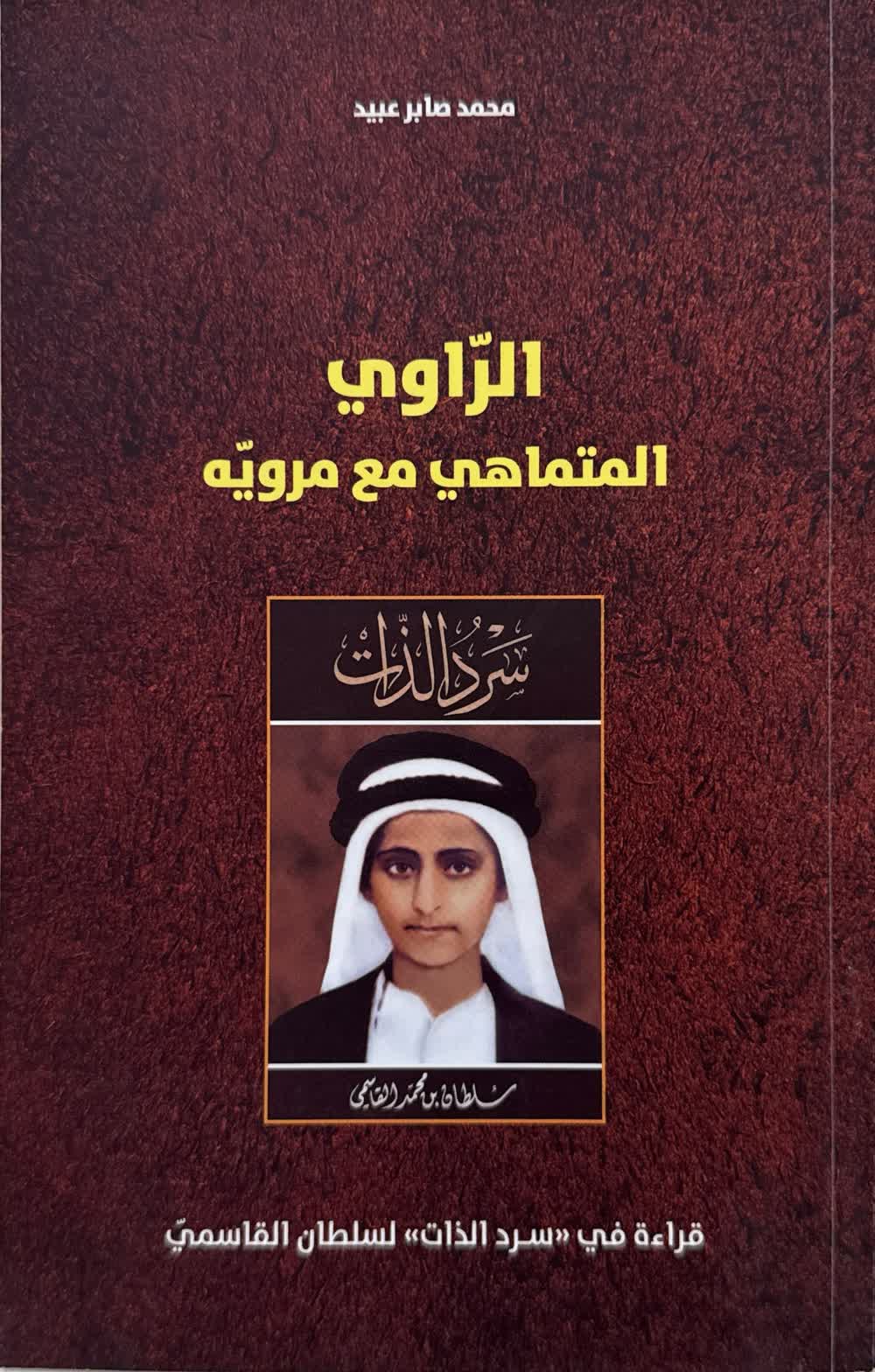
The Narrator Who Identifies with Their Narrative

Best Selling


The Qiyam Mushaf with thematic division of the verses of the Holy Quran, comprehensive, white paper, size 25 x 35 cm
The Qiyam Quran with thematic division of the verses of the Holy Quran, a comprehensive edition, white paper, size 25 x 35 cm Each page of this Quran contains five pages of the memorization Quran, and each part of the Holy Quran is divided...
- Dhs. 45.00
Dhs. 68.00- Dhs. 45.00
- Unit price
- per

All blue sky
All the Sky is Blue Author Name: Melissa da Costa Emile, a 26-year-old, has been diagnosed with early-onset Alzheimer's. Doctors estimate his memory won't last more than two years. Emile decides to embark on one last journey, fleeing the hospital and the...
- Dhs. 75.00
- Dhs. 75.00
- Unit price
- per

A story for each surah
A story for each surah Author's name: Dr. Muhammad Jihad Al-Suwait The book compiles a story for each chapter of the Holy Quran in an easy-to-understand and accessible style that helps the reader to reflect and grasp the profound message without unnecessary complexity or...
- Dhs. 65.00
- Dhs. 65.00
- Unit price
- per


Fregoli syndrome
Fregoli syndrome Author's name: Manal Maashi Nader, a psychologist, is forced by life circumstances to take on the case of a teenager suffering from the rarest and strangest psychological disorder (Fregoli Syndrome), in his first job, assuming the identity of another psychiatrist. On his...
- Dhs. 80.00
- Dhs. 80.00
- Unit price
- per

A thousand shining suns
A thousand shining suns Author's name: Khaled Hosseini A Thousand Splendid Suns (Persian: دو صد خورشیدرو) is a 2007 novel by Afghan author Khaled Hosseini, the follow-up to his debut novel, The Kite Runner (2003), which also became a bestseller. The book was released...
- Dhs. 57.00
- Dhs. 57.00
- Unit price
- per

The best version of you
The best version of you Author's name: Moudi Abdel Rabbo On the journey of self-discovery and personal growth, this book takes us deep into human experiences, making us realize that change is not just a choice but an absolute necessity. Here, where courage meets...
- Dhs. 40.00
- Dhs. 40.00
- Unit price
- per


Fregoli Syndrome 2 - Apple Field
Fregoli syndrome 2 apple field Author's name: Manal Maashi (Nader Abdel Majeed), a psychotherapist with the stigma of a criminal, returns after an absence of ten years to his old home in his village, the village of Al-Sanabel, taking with him a teenager suffering...
- Dhs. 75.00
- Dhs. 75.00
- Unit price
- per


Interpretation of the Meanings of the Holy Quran in Amharic
Interpretation of the meanings of the Holy Quran in the Amharic language
- Dhs. 65.00
- Dhs. 65.00
- Unit price
- per


Simplified interpretation
Simplified interpretation
Prepared by an elite group of scholars
- from Dhs. 32.00
- from Dhs. 32.00
- Unit price
- per
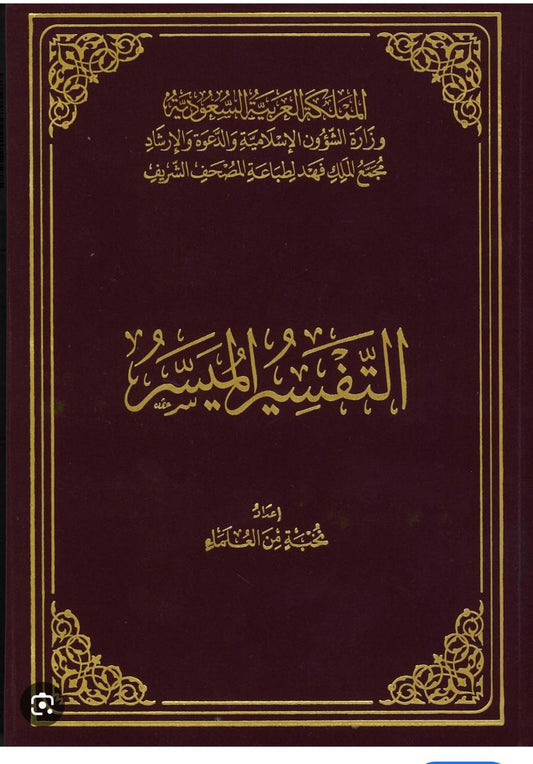

The Simplified Interpretation, King Fahd Complex Edition
Simplified Interpretation, King Fahd Complex Edition
Prepared by a select group of scholars
- from Dhs. 67.00
- from Dhs. 67.00
- Unit price
- per
- Choosing a selection results in a full page refresh.