
Customer service: 00971581607579 📞


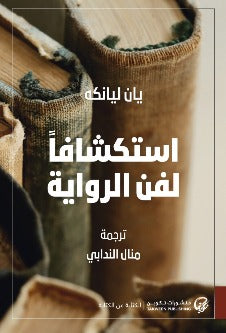
Tolstoy recalls that when he was writing the part where the heroine throws herself in front of a train in Anna Karenina, he hunched over his desk and burst into tears. Anna Karenina's death made it impossible for him to control his emotions. Tolstoy says that he did not want Anna Karenina to die, but her destiny and character inevitably led her to throw herself in front of the train. This is the case with all the great realist writers of the nineteenth century, who found themselves in an experience where they were unable to control the fates of their characters, but were also led by the inevitable destinies of these characters. All great realist writers consider themselves merely speakers through the mouths of their characters, and they feel that their fictional characters take their place in terms of importance and significance. We can say that it is as if when Nora decided to leave the house, Henrik Ibsen could not stop her from doing so in any way. The writer is merely a narrator behind the scenes, possessing neither the authority nor the ability to control the destinies of his characters. The less control the writer has over the fate of his character, the more vibrant and lively that character appears, and vice versa. If the writer has a hand in the direction of the story and the fate of the character, that character appears rigid and weak. The same applies in realist literature: the less authority and status the writer has regarding the fate of his character, the better. In other words, the best thing a writer can do is disappear.
***
In this important work, Yan Lianke delves into different dimensions of literature, attempting to explore the depths of writing and realism and his assumptions about them, revealing the most important works that inspired him and shaped his experience and literary consciousness, bringing together the most important names in the history of literature and the novel, and giving us a close look at the history and conditions of modern and contemporary novel.
Publisher
Excerpts from Yan Lianke's "Exploring the Art of the Novel"
A writer who does not respect the creativity of another writer lives in a kind of ignorance, just as a writer who does not question the writers who preceded him is useless.
Realist novels belong to the readers, while the act of writing them belongs to the writers.
Just as humans need water, air, and clothing, no national literature can escape the influence of realism.
Several institutions, such as China's propaganda system and the Chinese Writers' Association, have succeeded, through literary efforts, in building and consolidating a structured system of realism. Their method of doing so is to create an imagined reality in literature aimed at making the structure impressive.

Best Selling


Easy Memorization Quran
Easy Memorization Quran
An innovative method to facilitate memorization of the Holy Quran using verbal and conceptual links.
Mohamed Elsayed Madi, Ahmed Issa Elmasrawi
- from Dhs. 45.00
- from Dhs. 45.00
- Unit price
- per

Explanation of the Three Fundamentals, followed by an explanation of the Four Rules, by Sheikh Saleh Al-Fawzan
Explanation of the Three Principles Followed by an explanation of the four rules. Author's name: Imam Muhammad ibn Abd al-Wahhab Dr. Saleh bin Fawzan bin Abdullah Al-Fawzan Edited and printed by: Dr. Salman Jaber Othman Al-Mujalham Al-Suwailem The book Explanation of the Three Fundamentals,...
- Dhs. 65.00
- Dhs. 65.00
- Unit price
- per

The Power of Your Subconscious Mind Dr. Joseph Murphy
The power of your subconscious mind By Dr. Joseph Murphy This book is one of the best-selling self-help books of all time. This edition explains mental focus techniques that can remove subconscious obstacles that prevent us from achieving the success we desire, in a...
- Dhs. 62.00
Dhs. 73.00- Dhs. 62.00
- Unit price
- per

Because You are Allah: A Journey to the Seventh Heaven - Part One
Because You Are God: A Journey to the Seventh Heaven - Part One Author's name: Ali Jaber Al-Fifi The writer was able to take us through his creations on a deep journey to learn something about some of His names, such that no name...
- Dhs. 33.00
- Dhs. 33.00
- Unit price
- per

The courage to be unloved
The courage to be unpopular Author's Name: Ichiro Kishimi - Fumitake Koga "It is not what we are given at birth that matters, but how we use that provision." "Your suffering in life cannot be attributed to your past or your environment. Nor is...
- Dhs. 57.00
- Dhs. 57.00
- Unit price
- per

رسائل أيقظت رجلا
رسائل أيقظت رجلاً للكاتبة الإماراتية منيرة النعيمي في أبوظبي، يعيش سيف بين مسؤوليات الأبوة وذكريات لا تفارقه، محاولًا أن يصنع لأطفاله حياةً آمنة بعد أن غيّب الموت شريكة عمره. أربعة أطفال هم عالمه، وبيتٌ امتلأ يومًا بالحب، ثم تعلّم كيف يتعايش مع غياب من...
- Dhs. 65.00
- Dhs. 65.00
- Unit price
- per


One-Page Marketing Plan
The 1-Page Marketing Plan Author: Allan Dib To build a successful business, you must stop random marketing activities and start following a reliable plan for rapid growth. Creating a practical marketing plan used to be difficult and time-consuming, which is why it often...
- Dhs. 79.00
- Dhs. 79.00
- Unit price
- per

Icadoli
Icadoli Author's name: Hanan Lashin Palm fronds shaded the horizon in the distance like green clouds. A strange cry deafened his ears, then he suddenly felt talons grabbing his shoulders. He looked up and saw a giant bird spreading its wings, shadowing him over...
- Dhs. 48.00
- Dhs. 48.00
- Unit price
- per

The Frozen River
The Frozen River
Author: Arbuthnot Lauson
A translated historical novel set in the late 18th century in the state of Maine, USA, blending mystery, investigation, and social and historical aspects.
- Dhs. 68.00
- Dhs. 68.00
- Unit price
- per

Small shop overlooking the sea
Small shop overlooking the sea
Author's name: Sonoko Machida
- Dhs. 68.00
- Dhs. 68.00
- Unit price
- per
- Choosing a selection results in a full page refresh.