
Customer service: 00971581607579 📞


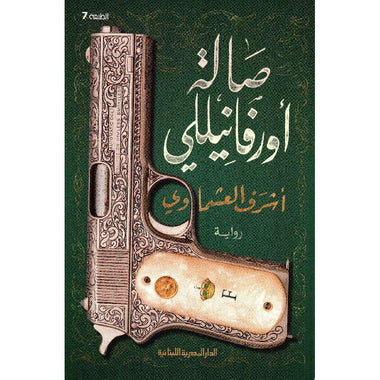
Orfanelli Hall
Author's name: Ashraf Al-Ashmawy
Telling the history of Egypt in an auction hall * The time: Royal Egypt under the rule of King Fouad. The place: The heart of Khedivial Cairo, the center of attention and the epicenter of a society of money, power, conspiracies... and crime. A strange coincidence leads "Orfanelli," a young Egyptian Jew of Italian descent, to participate with his friend "Mansour Al-Turki" in an auction hall, where a curse turns their lives upside down, and their destinies are changed forever with a breathless pace of events and transformations, before a third character appears to link the two names, leaving us with three main characters who are the sides of the triangle of Ashraf Al-Ashmawy's anticipated novel "Orfanelli's Hall." A series of successive mysterious crimes, strange letters, an unknown perpetrator, and a complex interweaving of the backstages of the auction hall and the social and political scene in Egypt, all the way to the secrets behind the scenes of the government itself over five eras of power, encompassing a vast narrative spanning from the early twentieth century to the 1970s, the era of Sadat's rule. In his new novel, Ashraf El-Ashmawy embarks on a unique narrative adventure, perhaps the most ambitious of his career, to excavate a folded page of Egyptian history, revealing what was unspoken through an unexpected, thorny story embedded in an unconventional narrative structure. This time, El-Ashmawy returns once again to the historical novel, his cherished passion, which he has translated into a number of his most prominent novels, such as "A Single Ticket to Cairo" and "The Lady of Zamalek," but in a new context, with unprecedented questions, and most importantly, with an innovative artistic approach. Al-Ashmawy presents a profound historical novel in a thrilling detective format, skillfully combining historical investigation with the dazzling use of crime fiction in an unconventional narrative structure that makes "Orfanelli Hall" unique in its construction and the way the story is shaped. Three main characters narrate their stories, with the author of "Beit Al-Qebtiya" once again excelling in presenting a novel of vibrant voices that doesn't rely on a single narrator, but rather presents facts from different perspectives, giving the reader a panoramic view of events and incidents. The three characters don't just narrate the story, but each of them overturns what we've assumed to be the truth time and again, presenting a new truth and unveiling a hidden detail that forces us to rearrange events every time we think they've settled and can no longer bear denial or doubt. It's as if we're witnessing the events as they unfold and writing the novel alongside its heroes. In addition to the main characters, there are many characters who cannot be described as secondary, playing active and decisive roles in driving the conflict and shaping the events, enabling them to remain forever in the reader's memory. In "Orfanelli Hall," relationships become intertwined and complex to the point that the reader feels they are impossible to untangle. We are surprised by a thin thread connecting them at the end of each part of the novel, gently pulled by the author each time, and we find ourselves faced with new, confusing dramatic transformations and rapidly unfolding, deeply mysterious events. These fluidly swirl through the text, exposing the behavior of a society where some members approach their human relationships in the same way they would bid on an expensive piece of art. But no one always loses, and there is no ultimate winner. By reading this novel, you will learn the secrets of auctions, this mysterious world dominated by Egyptian Jews from the beginning of the last century until after the July Revolution. You will read as if you are witnessing all the tricks and methods of deception, the types of customers and their emotions, to discover a side of the truth about the faces buried behind the masks. In the midst of this narrative entanglement, Ashmawy will not fail to analyze the questions of reality, the world, and the human soul, and to extract profound ideas from the soil of the event, so that the result is a highly lively novel inhabited by contemplation. "Orfanelli Hall" is not only a novel of history, not only a hint at the past, or a questioning of it, or even a new trial of a number of its events, but rather, at its core, it is a novel of the present, and an open question like a wound on the future, where the contradictions of our moment are reflected in the mirrors of all that has passed.

Best Selling
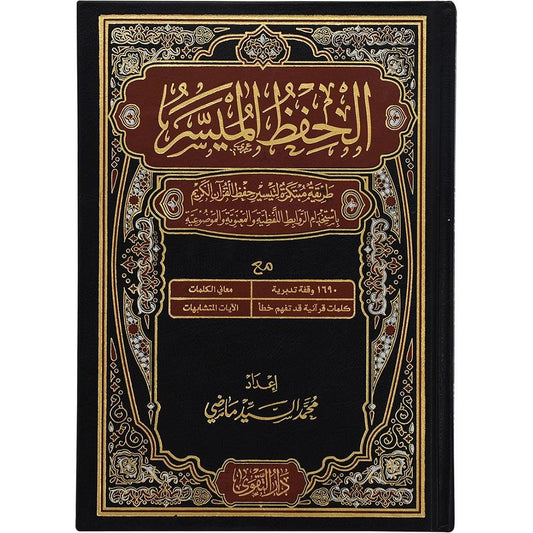

Easy Memorization Quran
Easy Memorization Quran
An innovative method to facilitate memorization of the Holy Quran using verbal and conceptual links.
Mohamed Elsayed Madi, Ahmed Issa Elmasrawi
- from Dhs. 45.00
- from Dhs. 45.00
- Unit price
- per
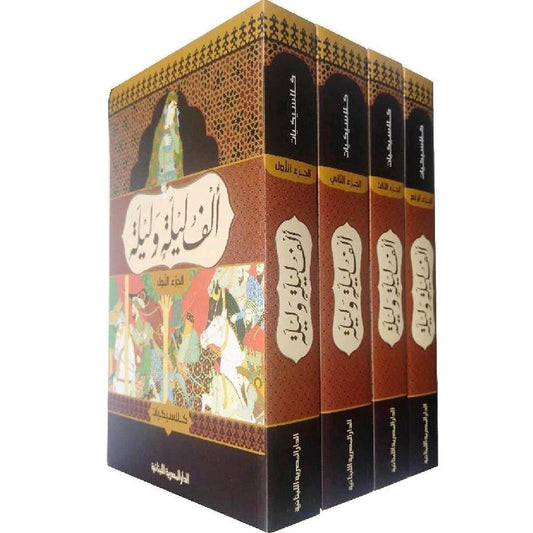

One Thousand and One Nights 4 parts
One Thousand and One Nights - 4 Parts Author Name: Abdullah Ibn al-Muqaffa One Thousand and One Nights is a collection of stories from West and South Asia, along with folk tales that were compiled and translated into Arabic during the Islamic...
- Dhs. 110.00
Dhs. 135.00- Dhs. 110.00
- Unit price
- per

Explanation of the Three Fundamentals, followed by an explanation of the Four Rules, by Sheikh Saleh Al-Fawzan
Explanation of the Three Principles Followed by an explanation of the four rules. Author's name: Imam Muhammad ibn Abd al-Wahhab Dr. Saleh bin Fawzan bin Abdullah Al-Fawzan Edited and printed by: Dr. Salman Jaber Othman Al-Mujalham Al-Suwailem The book Explanation of the Three Fundamentals,...
- Dhs. 65.00
- Dhs. 65.00
- Unit price
- per

The Power of Your Subconscious Mind Dr. Joseph Murphy
The power of your subconscious mind By Dr. Joseph Murphy This book is one of the best-selling self-help books of all time. This edition explains mental focus techniques that can remove subconscious obstacles that prevent us from achieving the success we desire, in a...
- Dhs. 62.00
Dhs. 73.00- Dhs. 62.00
- Unit price
- per

The courage to be unloved
The courage to be unpopular Author's Name: Ichiro Kishimi - Fumitake Koga "It is not what we are given at birth that matters, but how we use that provision." "Your suffering in life cannot be attributed to your past or your environment. Nor is...
- Dhs. 57.00
- Dhs. 57.00
- Unit price
- per

Because You are Allah: A Journey to the Seventh Heaven - Part One
Because You Are God: A Journey to the Seventh Heaven - Part One Author's name: Ali Jaber Al-Fifi The writer was able to take us through his creations on a deep journey to learn something about some of His names, such that no name...
- Dhs. 33.00
- Dhs. 33.00
- Unit price
- per

رسائل أيقظت رجلا
رسائل أيقظت رجلاً للكاتبة الإماراتية منيرة النعيمي في أبوظبي، يعيش سيف بين مسؤوليات الأبوة وذكريات لا تفارقه، محاولًا أن يصنع لأطفاله حياةً آمنة بعد أن غيّب الموت شريكة عمره. أربعة أطفال هم عالمه، وبيتٌ امتلأ يومًا بالحب، ثم تعلّم كيف يتعايش مع غياب من...
- Dhs. 65.00
- Dhs. 65.00
- Unit price
- per


One-Page Marketing Plan
The 1-Page Marketing Plan Author: Allan Dib To build a successful business, you must stop random marketing activities and start following a reliable plan for rapid growth. Creating a practical marketing plan used to be difficult and time-consuming, which is why it often...
- Dhs. 79.00
- Dhs. 79.00
- Unit price
- per

The Frozen River
The Frozen River
Author: Arbuthnot Lauson
A translated historical novel set in the late 18th century in the state of Maine, USA, blending mystery, investigation, and social and historical aspects.
- Dhs. 68.00
- Dhs. 68.00
- Unit price
- per
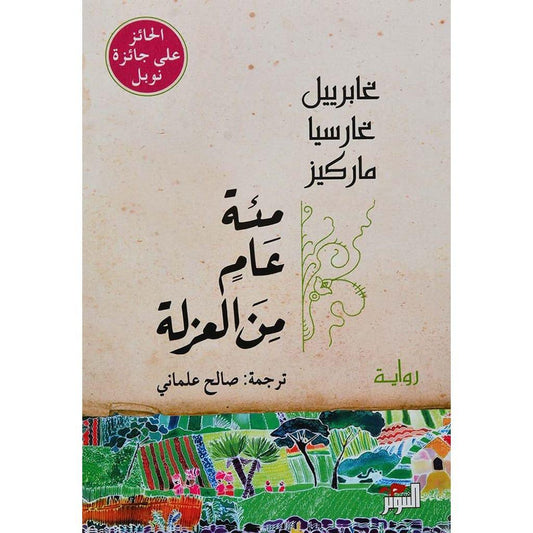

One Hundred Years of Solitude
One Hundred Years of Solitude Author's name: Gabriel García Márquez Translator: Saleh Almani One Hundred Years of Solitude is one of the most recommended books, as it is one of the best books that discusses the subject in a brilliant way, and it is...
- Dhs. 68.00
- Dhs. 68.00
- Unit price
- per
- Choosing a selection results in a full page refresh.