
Customer service: 00971581607579 📞


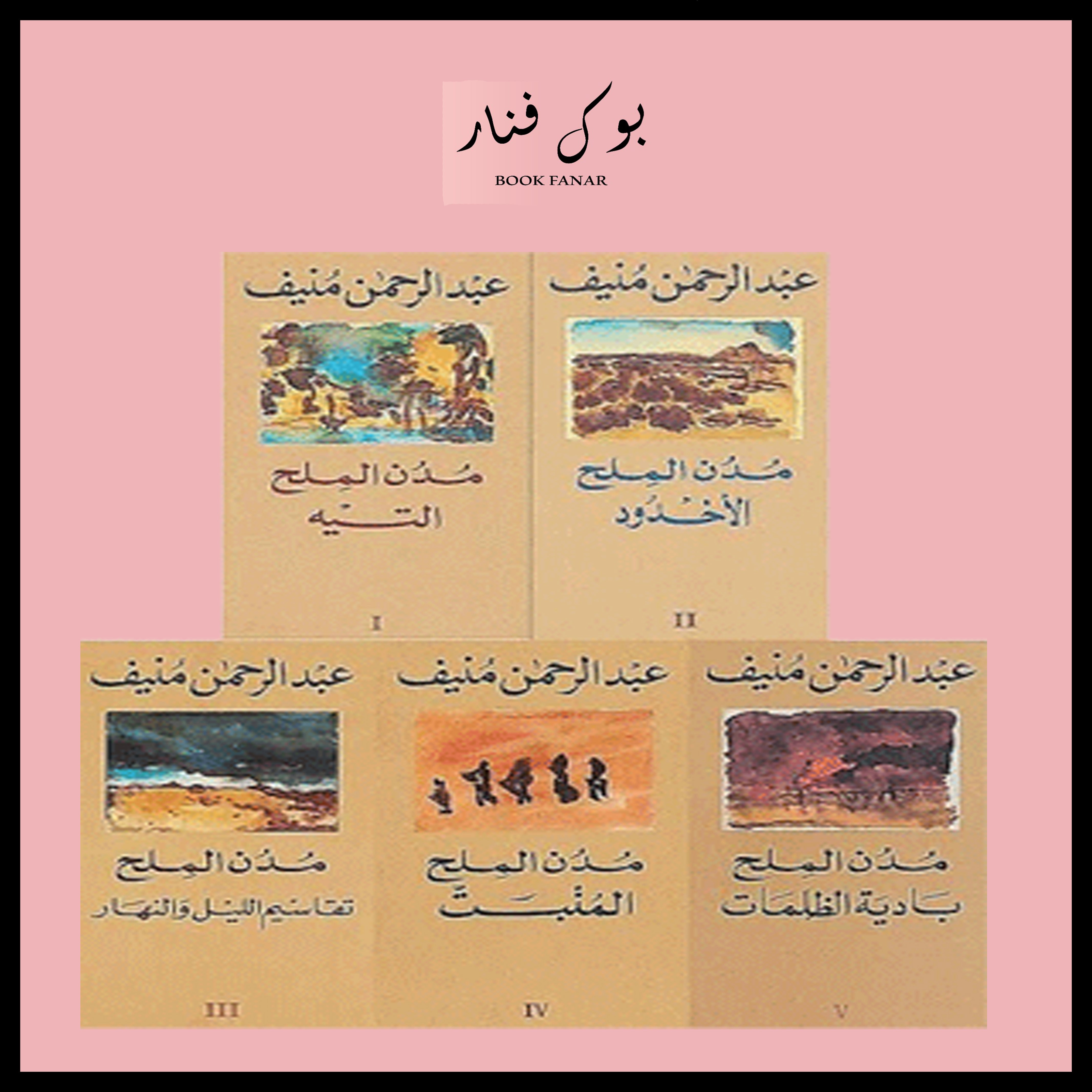



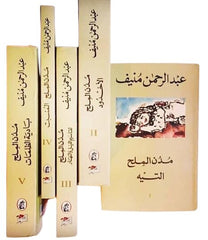
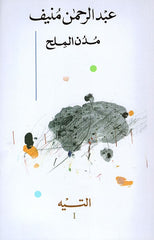
Cities of Salt 5 parts
The wilderness - The trench - The divisions of night and day - The place of origin - The desert of darkness
Author's name: Abdul Rahman Al-Munif
Cities of Salt is an Arabic novel by the Saudi novelist Abdul Rahman Munif. It is considered one of the most famous Arabic novels and consists of five parts. The novel depicts life at the beginning of the discovery of oil and the rapid transformations that befell the cities and villages of the Arabian Peninsula as a result of the discovery of oil. It represents a qualitative shift in historical narrative and personal history of an era that many of the new generation find incomplete, lost by describing what came after that period or the present in a rosy but also incomplete way. Cities of Salt is an important document that talks about and chronicles the civilizational winds that blew on Bedouin life, which undoubtedly influenced Bedouin life. The author accurately monitored Bedouin life and expressed what was raging in the souls of many Bedouins and their transformation into sudden wealth and the resulting effects. The Cities of Salt quintet is one of the novels that gained great fame on the Arab and international levels, so much so that it was translated into several languages. This quintet was written by the Saudi novelist Abdul Rahman Munif, and this novel consists of five parts, hence its name. Cities of Salt refers to the changes that befell villages and cities after the discovery of oil, which led to their transformation into huge cities. It depicted life in a country known as "Moran", which is an imaginary country. The first part is titled "The Maze", and the other parts are, in order, "The Trench", "Divisions of Night and Day", "The Source", and "The Desert of Darkness". In this article, we will discuss the five parts of Cities of Salt. Parts of the Cities of Salt Pentagon: As previously mentioned, the novel Cities of Salt consists of five parts. A brief overview of each part is provided below: Part One: The Wilderness This part describes the beginning of the discovery of oil in the villages and cities of the Arabian Peninsula, the establishment of new cities, and the subsequent changes that affected the regions and their populations, which the author portrayed as stormy and harsh. Harran is mentioned as an example of these cities. One of the heroes of this part is Mutab Al-Hathal, a character who rejects and expresses the position of the landowners, which led the authorities to resort to repressive and violent methods. Part Two: The Trench In this part, the author describes the transformations that took place in the desert, transforming it into an oil field. Among the characters in this novel are Sultan Kharbit and his son Khazal, who took over the reins of power from his father and granted the Americans everything they needed to implement their plans. One of the main characters in this section is Subhi al-Mahmalaji, nicknamed "the Wise," the sultan's advisor of Lebanese origin, who expanded his influence and attained the highest positions. He first arrived in Harran as a physician and later moved to Moran, the capital. In this section, the author describes the transformations and changes characterized by their intensity, speed, and rapid pace. At the end of the section, the author depicts the moment when Fener launched a coup against his brother Khazal. Part Three: The Divisions of Night and Day: In this section, Kharbit is crowned ruler of the region after years of tribal conflict. The author also depicts the Western invasion of the desert as a result of the alliance between them and the ruler Kharbit, which brought him immense wealth. This section explores the sultan's exploitation of Kharbit's alliance with the West as a means to achieve his goals of dominating everything within his reach. The author recounts the upbringing of Fener and Khazal. Part Four: The Origin: In this section, the author focuses on Khazal's life and death in exile. The book documents Fener's coup and the negative changes that occurred in the region, including his attempt to establish supportive agencies in the desert to support him, rid himself of the remaining policies of his brother and father, and end American influence in the region. Part Five: The Desert of Darkness This part documents the state of stability that Fener achieves and depicts the transformations that occurred among the people, as they altered their customs, affiliations, and even their identity. In this part, the name of the state changes to the Hudaybiyya State, and Fener becomes a legendary figure and is exposed to assassination, thus ending his life. About the life of the author of the Cities of Salt quintet: The writer Abdul Rahman Munif was born in the Jordanian capital, Amman, in May 1933. He was educated in Jordan, completing his secondary education there. He then enrolled in the Faculty of Law in the Iraqi capital, Baghdad, until his political activity led to his expulsion, which forced him to continue his university education in Cairo. He obtained a doctorate in oil economics in Belgrade. His famous literary works include the Cities of Salt Quintet, When We Left the Bridge, Eastern Mediterranean, in addition to The Anguish of Absence, Iraq: Margins of History and Resistance, and other literary works. The writer won several awards, most notably the Sultan Al Owais Award and the Cairo Award for Creative Fiction. He died in 2004 on January 24th. Quotes from the Cities of Salt Quintet Memory is the curse of man's desire and his dangerous game. As much as it allows him to constantly travel towards freedom, it also becomes his prison, and in this constant travel, he reshapes the world, his desires, and his illusions. Many beautiful things, or things that a person desires, come too late. It is strange that a person does not see things that are close by. He must be far enough away from them, or for a considerable amount of time, to see them clearly. The value of a person lies in knowledge and in serving others, and the individual must not stop for a single moment from learning and helping people, because they are the only source of human continuity on earth. Is there something in every human being that fades but never dies, and that continues to move and push him from one place to another until he returns to its sources? Quotes: “Friends are a burden on a person, and the wise person is the one who depends on himself and does not need others.” “If you see a man who does not have a woman in his heart, then be sure that what you see is not a man, he is a corpse seeking a grave.” “How can people and places change to the point that they lose touch with what they were, and can a person adapt to new things and new places without losing a part of himself?”

Best Selling
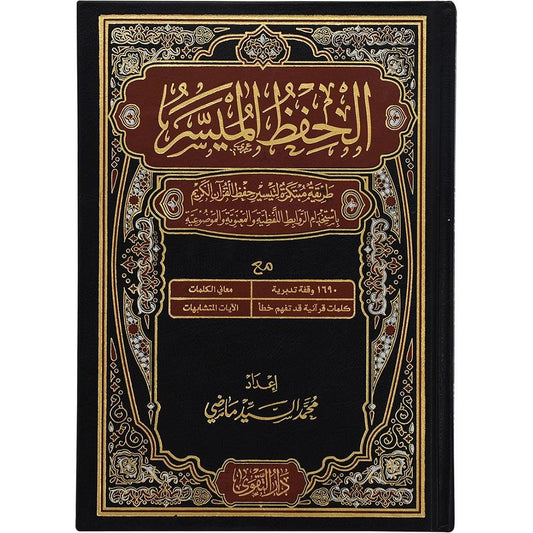

Easy Memorization Quran
Easy Memorization Quran
An innovative method to facilitate memorization of the Holy Quran using verbal and conceptual links.
Mohamed Elsayed Madi, Ahmed Issa Elmasrawi
- from Dhs. 45.00
- from Dhs. 45.00
- Unit price
- per


The disease and the cure or the sufficient answer for those who ask about the healing medicine
Disease and cure Known as the sufficient answer for those who ask about the healing medicine Author's name: Ibn al-Qayyim al-Jawziyya In this book, Ibn al-Qayyim addresses the issues of the human soul and its roles, and outlines ways to reform and purify it....
- Dhs. 38.00
- Dhs. 38.00
- Unit price
- per


The disease and the cure known as the sufficient answer for those who ask about the healing medicine
The disease and the cure known as the sufficient answer for those who ask about the healing medicine Author's name: Ibn al-Qayyim al-Jawziyya In this book, Ibn al-Qayyim addresses the issues of the human soul and its roles, and outlines ways to reform and...
- Dhs. 75.00
- Dhs. 75.00
- Unit price
- per


Taysir Al-Karim Al-Rahman in interpreting the words of Al-Mannan, Al-Saadi’s interpretation
Taysir al-Karim al-Rahman fi Tafsir Kalam al-Mannan (The Facilitation of the Most Gracious, Most Merciful in the Interpretation of the Words of the Beneficent) - Tafsir al-Sa'di Author's name: Sheikh Abdul Rahman bin Nasser Al-Saadi Al-Sa'di's interpretation is one that focuses on clarifying the...
- Dhs. 73.00
- Dhs. 73.00
- Unit price
- per
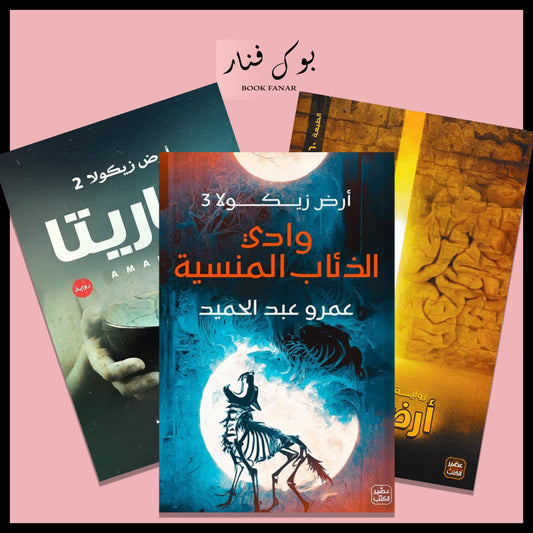

Zikola Land Series 3 Parts - Amr Abdel Hamid
Zikola Land Valley of the Forgotten Wolves Amarita Zikola Land 1 Author's name: Amr Abdel Hamid Valley of the Forgotten Wolves In a land ruled by the Sky Witness, humans, wolves, and the gods lived in peace for thousands of years before a terrible...
- Dhs. 135.00
- Dhs. 135.00
- Unit price
- per


Hidden intentions are secret secrets deep within personality types.
hidden intentions Secret secrets deep within personality types Author's name: Ibtihaj Al-Qurashi William Marston invented a systolic blood pressure test, which was used in an attempt to detect lies. This discovery resulted in the modern lie detector. It seems to me that this book...
- Dhs. 49.00
- Dhs. 49.00
- Unit price
- per


The Sealed Nectar - Safi al-Rahman al-Mubarakpuri
The Sealed Nectar Research in the biography of the Prophet Written by His Eminence Sheikh: Safi al-Rahman al-Mubarakfuri This book deals with a detailed study of the Prophet's biography during the Meccan and Medinan periods, in a concise, modern style. This book won first...
- Dhs. 67.00
- Dhs. 67.00
- Unit price
- per
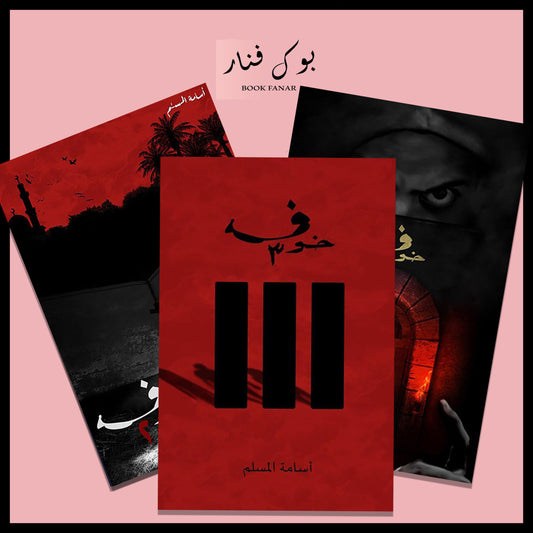

Fear Series, Part 1, Part 2, Part 3, Osama Al-Muslim
Fear Series, Parts One, Two and Three
Osama Al-Muslim
- Dhs. 169.00
- Dhs. 169.00
- Unit price
- per

Because God knows
Because God knows Author's name: Mishari Budrid It did not come out to be a passing novel, She came out to sit with you for a long time, To remind you on every page God is closer than you think. Not just letters But...
- Dhs. 60.00
Dhs. 75.00- Dhs. 60.00
- Unit price
- per
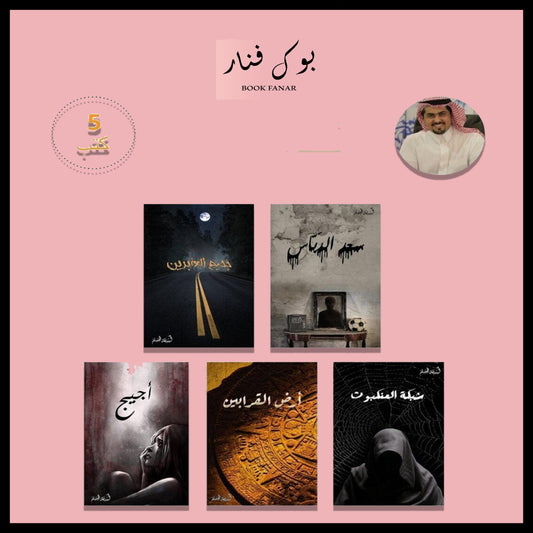

The Five-Part Book Series - Osama Al-Muslim
The Five-Part Book Series
Author's name: Osama Al-Muslim
A collection of short stories
By the novelist Osama Al-Muslim
Saad Al Dabbas - Hell of the Passersby - Spider's Web - Land of Sacrifices - Ajeeb
- Dhs. 139.00
Dhs. 175.00- Dhs. 139.00
- Unit price
- per
- Choosing a selection results in a full page refresh.