
Customer service: 00971581607579 📞


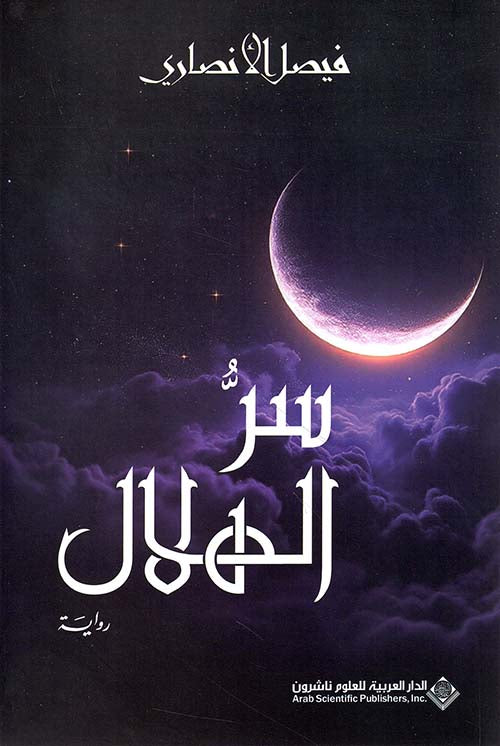

The Secret of the Crescent Moon
Author: Faisal Al-Ansari
The novel "The Secret of the Crescent Moon" by Qatari writer Faisal Al-Ansari (Arab Scientific Publishers, 2026) testifies to the beginnings of the conflict between religious and secular sciences in the 9th century AD. For this purpose, it delves into the biography of the astronomer Al-Battani (born 854 AD), who was Muhammad ibn Jabir ibn Sinan, one of the scientific prodigies of the Abbasid era and one of the first Muslim scholars in astronomy and mathematics. The novel recounts the slander he faced from pseudo-scientists who threatened to burn his book (Al-Zij Al-Sabi'), which was considered the most important Arab Islamic astronomical book. In it, its author documented the movements of celestial bodies and methods of predicting eclipses and lunar eclipses in a way unsurpassed by any of his contemporaries.
In the same vein, the novel bears witness to prominent stages in the history of the Persian state during the Qajar dynasty's rule and its conflict with the Ottoman Empire, and the accompanying political, economic, and social transformations that reflected on the inhabitants of the Arabian Gulf coasts. Through these landmarks, "The Secret of the Crescent Moon" reveals its owner, the poor orphan boy who sought knowledge on the shores of the Gulf and later became the Qadi of Al Khor and northern Qatar, and became its jurist, notable, and renowned astronomer. He is (the Guardian of the Crescent Moon) Sheikh Abdullah bin Ibrahim Al-Ansari, who was instrumental in establishing the Religious Institute in 1954 in Qatar, in addition to issuing the first Qatari calendar in 1951, which includes prayer times and the commencements of Hijri months, and contains hadiths, wisdom, and benefits that strengthen the servant's connection with his Lord and increase good in this world and the hereafter.
The crescent moon understands that the divine laws that shape its phases are the same ones that will one day awaken its nation. It hopes to glimpse the dawn of the first ray of light from the edge of its profound darkness. The crescent moon watches... and continues to watch.
From the atmosphere of the novel, we read: "The sky tonight is extremely strange, pitch black; even the stars have abandoned their positions. I turn my eyes in vain, walking barefoot, my feet striving to change my location, hoping to see something that restores my inner peace. Cold breezes stir the edges of my clothes, other souls breathe in that place... souls, but I have not yet seen them... A glow has just begun to form... an old man in light-colored clothes and a white turban tightened over a radiant face with comforting features, maintaining a distance between us. He looked at me for a few seconds then pointed towards the east; a slender, beautifully curved, bright white crescent moon making its way upwards from the eastern horizon... It soon appears in full detail and takes its place in the sky in all its splendor. I look back at the dignified sheikh, who addresses me in a resonant voice: - Come, Ibrahim... your turn is about to begin... prepare to be (the Guardian of the Crescent Moon)."

Best Selling
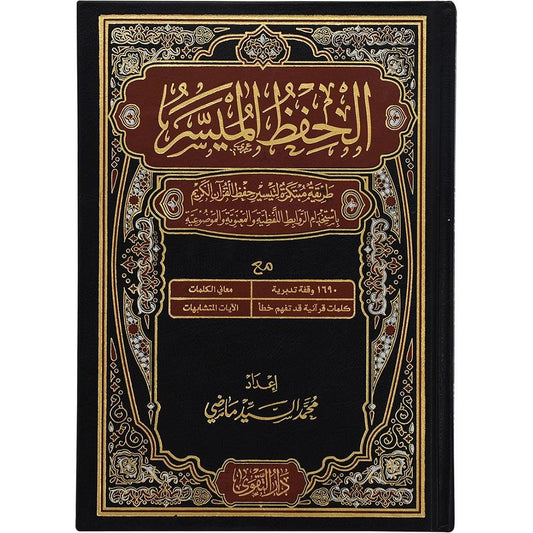

Easy Memorization Quran
Easy Memorization Quran
An innovative method to facilitate memorization of the Holy Quran using verbal and conceptual links.
Mohamed Elsayed Madi, Ahmed Issa Elmasrawi
- from Dhs. 45.00
- from Dhs. 45.00
- Unit price
- per


Tajweed Holy Quran, 30 parts, with an Arabic leather bag, size 17 x 24 cm
Tajweed Quran, 30 parts, with leather case - Arabic Size 24*17 cm This deluxe Tajweed Quran is a paperback divided into thirty separate parts, all presented in a beautiful, sturdy black leather case, perfectly designed to protect the parts from loss or damage. It...
- Dhs. 94.00
- Dhs. 94.00
- Unit price
- per


Taysir Al-Karim Al-Rahman in interpreting the words of Al-Mannan, Al-Saadi’s interpretation
Taysir al-Karim al-Rahman fi Tafsir Kalam al-Mannan (The Facilitation of the Most Gracious, Most Merciful in the Interpretation of the Words of the Beneficent) - Tafsir al-Sa'di Author's name: Sheikh Abdul Rahman bin Nasser Al-Saadi Al-Sa'di's interpretation is one that focuses on clarifying the...
- Dhs. 73.00
- Dhs. 73.00
- Unit price
- per
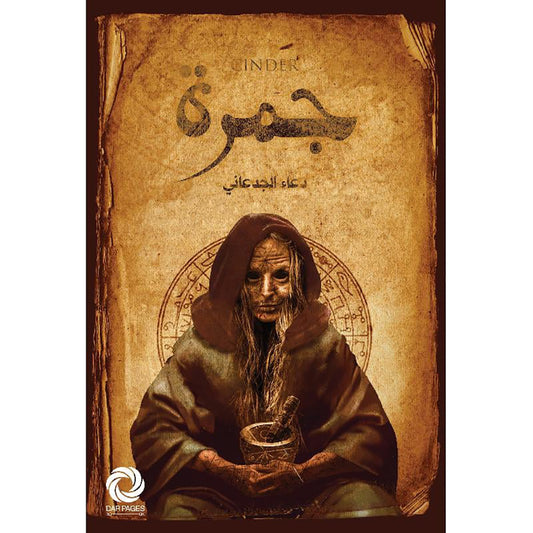

Ember - Duaa Al-Jadaani
cinder
Author's name: Duaa Al-Jadaani
They are cowards, cowards who are good at creating illusions.
- Dhs. 72.00
- Dhs. 72.00
- Unit price
- per


Take your belief from the Qur’an and the authentic Sunnah
Take your belief from the Qur’an and the authentic Sunnah Author's name: Muhammad ibn Jamil Zeno A message from Sheikh Muhammad Jamil Zeno in which he explains the doctrine of the Sunnis and the community on various doctrinal issues: monotheism, polytheism, tyranny, following the...
- Dhs. 15.00
- Dhs. 15.00
- Unit price
- per

Granada Trilogy
Granada Trilogy Author: Radwa Ashour The Granada Trilogy is a series of three novels by the Egyptian author Radwa Ashour, consisting of Granada Mariam Departure The events take place in the Kingdom of Granada after the fall of all Islamic kingdoms in Al-Andalus. The...
- Dhs. 55.00
- Dhs. 55.00
- Unit price
- per


The Qiyam Mushaf with thematic division of the verses of the Holy Quran, white paper, size 24 x 17 cm
The Qiyam Quran with thematic division of the verses of the Holy Quran, white paper, size 24 x 17 cm With Q barcode This Quran is distinguished by having a code on each of its pages. When reading the code using a barcode reader...
- Dhs. 35.00
- Dhs. 35.00
- Unit price
- per

I loved him, so everything loved me back.
I loved him so everything loved me Author's name: Raghad Al Saleh A profound, beautiful book with diverse presentations, ideas, and titles full of benefit and stories taken from the righteous predecessors and their hidden worship and how we get closer to God. I...
- Dhs. 49.00
- Dhs. 49.00
- Unit price
- per
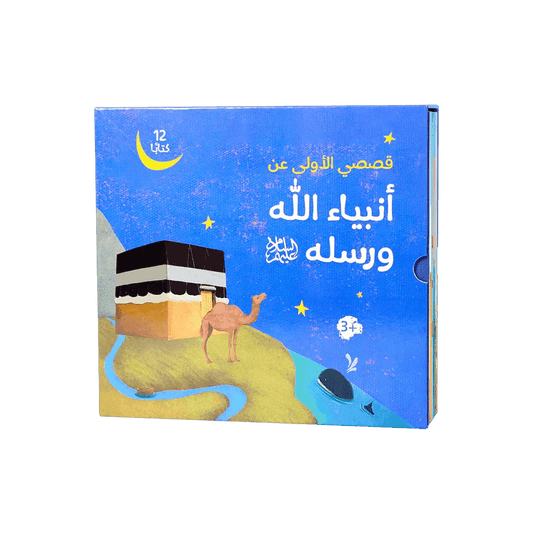

My first stories about God's prophets and messengers
My first stories about God's prophets and messengers A series of stories for children in early childhood education, featuring the prophets and messengers of God Almighty in a simple, enjoyable, and engaging style. The aim is to present lessons and morals drawn from their...
- Dhs. 165.00
Dhs. 185.00- Dhs. 165.00
- Unit price
- per
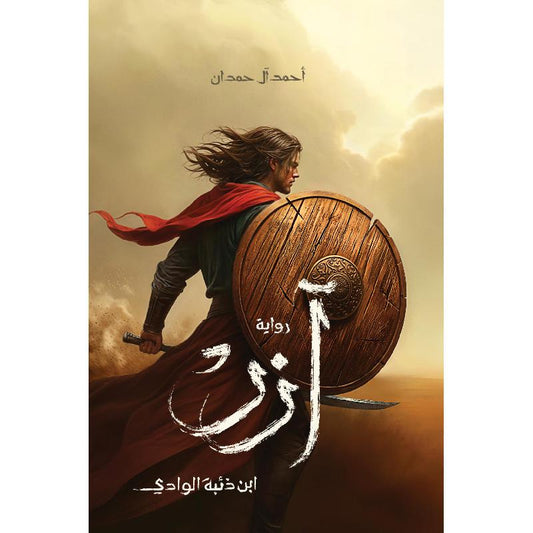

Azar, son of the Wolf of the Valley
AZAR
Son of the Valley She-wolf
Author: Ahmed Al Hamdan
I dreamt that I gave birth to a moon ascending to the sky, illuminating the Arabian Peninsula with its light.
- Dhs. 79.00
- Dhs. 79.00
- Unit price
- per
- Choosing a selection results in a full page refresh.