
Customer service: 00971581607579 📞


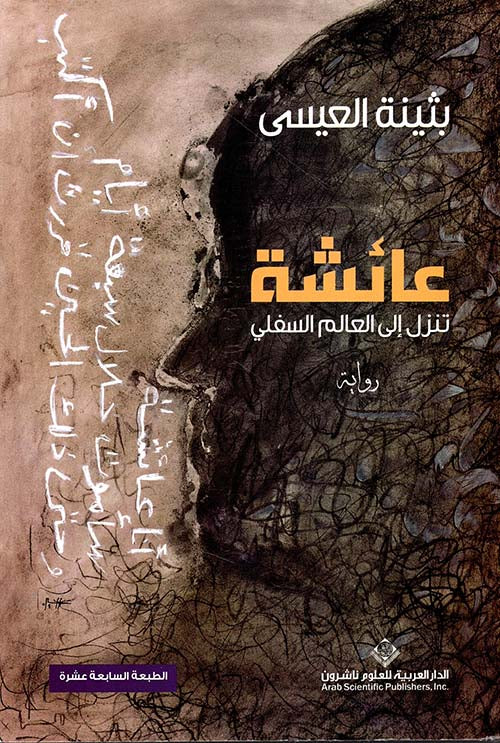
Aisha descends to the underworld
Author's name: Buthaina Al-Essa
In "Aisha Descends to the Underworld," Buthaina Al-Essa's philosophical work highlights the interconnectedness between life and death, the worldly and the afterlife, offering a different perspective on time. It's the story of a mother who lost her son and wanted to keep his memory alive after his tragic death. There's nothing more painful than losing a loved one, and nothing more horrific than the gradual fading of his memory, especially when death comes by drowning right in front of her eyes. After her child's tragic death, the mother refuses to accept the idea of life after him, so she decides to descend into the underworld through writing. On her way to the underworld, she must pass through seven gates, and now she's crossing the seventh gate, on the final threshold of departure. She sees nothingness glittering, radiating, and absorbing her soul. However, there is a condition for entering this world: she must shed her raw wound—her son and his memory. Can a mother exist outside of this wound? "O Aisha (the laws of the netherworld were carefully and completely formulated, so do not discuss the rituals of the netherworld, O Aisha), your child is your pain, your pain is you. The wound now has your face, your name, and your panting breath. The one looking at you does not know where your wound begins and where your scream ends. You cling to the ropes of your tears as if they were your salvation. You are clothed in your eternal sorrow and you hurt the world with your pain. The universe cannot be your victim, O Aisha. Remove your wound, kiss it between the eyes and release it, free it, the precious ghost of it, and allow it to depart. All the relationships you left behind in the six previous gates were to prepare you for this. None of them compare to this in weight and density. Salvation will not be written for you except by transcending yourself. Be filled with love, O Aisha, and set its spirit free. What are you now? A pure spirit." And now Aisha confesses that for the first time in her life, “...for the first time in my life I have been able to be myself, without being a wife, a mother, or a daughter, without being anything other than what I am, a pure spirit. My sense of my spiritual truth is so strong, I don’t need to die to feel that... So let me stop writing and go experience the world...” And after “Aisha Descends into the Underworld,” a novelistic work that entails a great effort on the level of language, discourse, techniques, and connotations, and perhaps it is greater than the story requires, which in turn requires an effort in reading

Best Selling
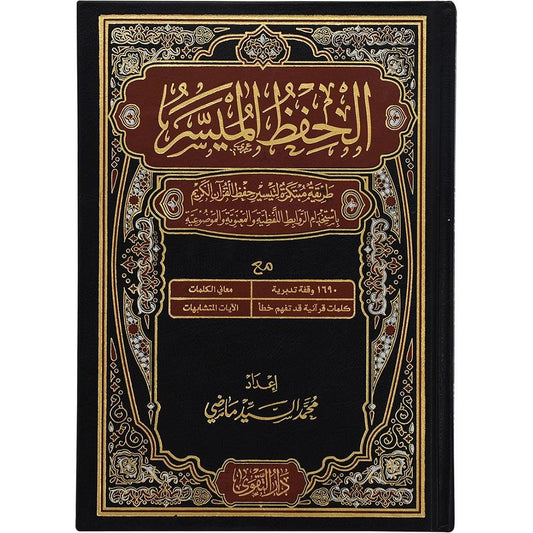

Easy Memorization Quran
Easy Memorization Quran
An innovative method to facilitate memorization of the Holy Quran using verbal and conceptual links.
Mohamed Elsayed Madi, Ahmed Issa Elmasrawi
- from Dhs. 45.00
- from Dhs. 45.00
- Unit price
- per
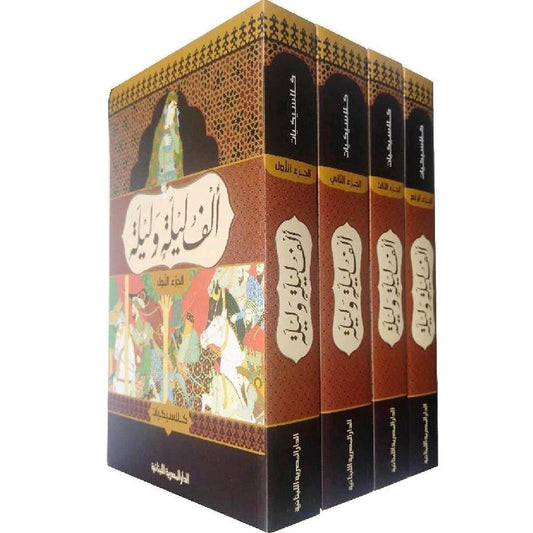

One Thousand and One Nights 4 parts
One Thousand and One Nights - 4 Parts Author Name: Abdullah Ibn al-Muqaffa One Thousand and One Nights is a collection of stories from West and South Asia, along with folk tales that were compiled and translated into Arabic during the Islamic...
- Dhs. 110.00
Dhs. 135.00- Dhs. 110.00
- Unit price
- per

Explanation of the Three Fundamentals, followed by an explanation of the Four Rules, by Sheikh Saleh Al-Fawzan
Explanation of the Three Principles Followed by an explanation of the four rules. Author's name: Imam Muhammad ibn Abd al-Wahhab Dr. Saleh bin Fawzan bin Abdullah Al-Fawzan Edited and printed by: Dr. Salman Jaber Othman Al-Mujalham Al-Suwailem The book Explanation of the Three Fundamentals,...
- Dhs. 65.00
- Dhs. 65.00
- Unit price
- per

The Power of Your Subconscious Mind Dr. Joseph Murphy
The power of your subconscious mind By Dr. Joseph Murphy This book is one of the best-selling self-help books of all time. This edition explains mental focus techniques that can remove subconscious obstacles that prevent us from achieving the success we desire, in a...
- Dhs. 62.00
Dhs. 73.00- Dhs. 62.00
- Unit price
- per

The courage to be unloved
The courage to be unpopular Author's Name: Ichiro Kishimi - Fumitake Koga "It is not what we are given at birth that matters, but how we use that provision." "Your suffering in life cannot be attributed to your past or your environment. Nor is...
- Dhs. 57.00
- Dhs. 57.00
- Unit price
- per

Because You are Allah: A Journey to the Seventh Heaven - Part One
Because You Are God: A Journey to the Seventh Heaven - Part One Author's name: Ali Jaber Al-Fifi The writer was able to take us through his creations on a deep journey to learn something about some of His names, such that no name...
- Dhs. 33.00
- Dhs. 33.00
- Unit price
- per

رسائل أيقظت رجلا
رسائل أيقظت رجلاً للكاتبة الإماراتية منيرة النعيمي في أبوظبي، يعيش سيف بين مسؤوليات الأبوة وذكريات لا تفارقه، محاولًا أن يصنع لأطفاله حياةً آمنة بعد أن غيّب الموت شريكة عمره. أربعة أطفال هم عالمه، وبيتٌ امتلأ يومًا بالحب، ثم تعلّم كيف يتعايش مع غياب من...
- Dhs. 65.00
- Dhs. 65.00
- Unit price
- per


One-Page Marketing Plan
The 1-Page Marketing Plan Author: Allan Dib To build a successful business, you must stop random marketing activities and start following a reliable plan for rapid growth. Creating a practical marketing plan used to be difficult and time-consuming, which is why it often...
- Dhs. 79.00
- Dhs. 79.00
- Unit price
- per

The Frozen River
The Frozen River
Author: Arbuthnot Lauson
A translated historical novel set in the late 18th century in the state of Maine, USA, blending mystery, investigation, and social and historical aspects.
- Dhs. 68.00
- Dhs. 68.00
- Unit price
- per
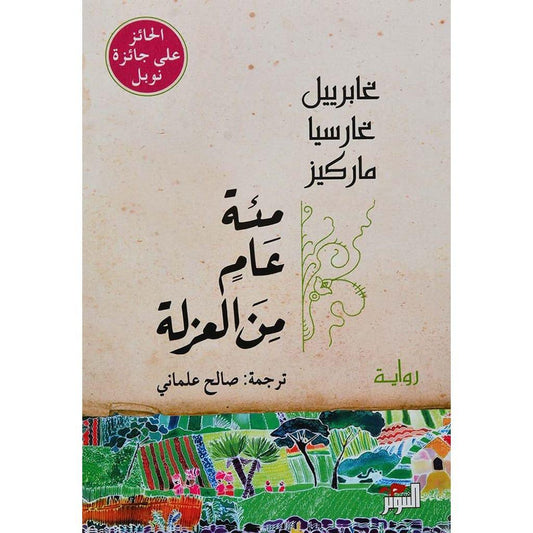

One Hundred Years of Solitude
One Hundred Years of Solitude Author's name: Gabriel García Márquez Translator: Saleh Almani One Hundred Years of Solitude is one of the most recommended books, as it is one of the best books that discusses the subject in a brilliant way, and it is...
- Dhs. 68.00
- Dhs. 68.00
- Unit price
- per
- Choosing a selection results in a full page refresh.