
Customer service: 00971581607579 📞


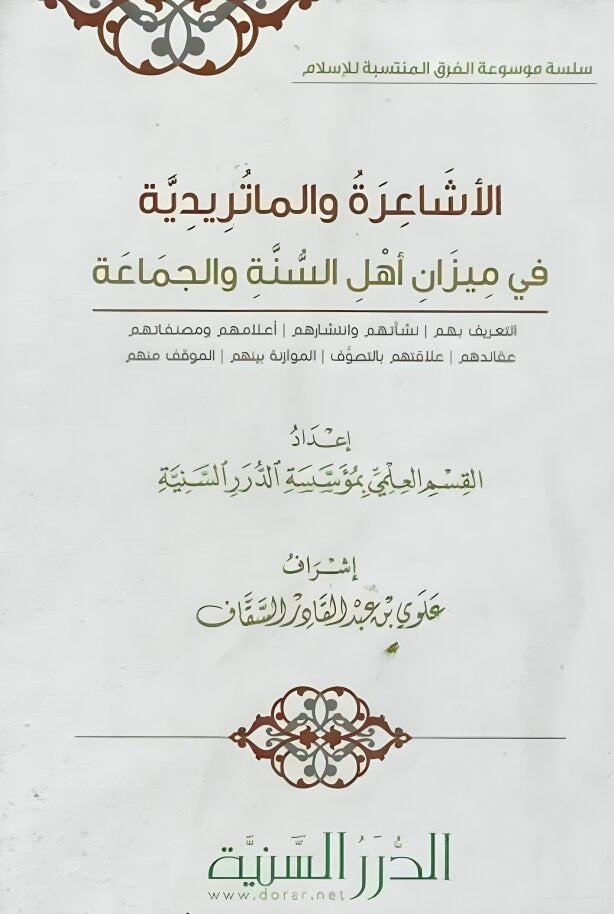
Ash'ari and Maturidi
In the balance of the Sunnis and the community
Author's Name: Scientific Department of Al-Durar Al-Sunniyah Foundation
supervision: Alawi bin Abdul Qadir Al-Saqqaf
God Almighty has commanded Muslims to hold fast to His religion and to unite, and He has forbidden division and disagreement. He said in His definitive revelation: {And hold fast to the rope of God all together and do not become divided} [Al Imran: 103]. And it came in the hadith narrated by Muslim (1715) on the authority of Abu Hurayrah, may God be pleased with him: ((God is pleased with three things for you and dislikes three things for you. He is pleased with you that you worship Him and do not associate anything with Him, and that you hold fast to the rope of God all together and do not become divided...)).
The Prophet, may God bless him and grant him peace, said - as in the good hadith narrated by Abu Dawud (4596) and others - that his nation will split into various sects. He said: “The Jews split into seventy-one or seventy-two sects, the Christians split into seventy-one or seventy-two sects, and my nation will split into seventy-three sects.”
There is no doubt that the happiest people to enter under the umbrella of the saved sect are his companions, may God be pleased with them, and those who followed them from among the noble predecessors. The most distant people are those who disagreed with them, followed a path other than theirs, and adhered to the opinions of the philosophers and the people of deviant whims.
This book in your hands, dear reader - entitled: “The Ash’aris and Maturidis in the Balance of the People of the Sunnah and the Community” - was published for three reasons:
The first reason: People are deceived by these two groups, and they think that the disagreement with them is limited to the attributes of God Almighty only. In reality, the disagreement with the Ash'aris and Maturidis is over more than ten of the most important issues of belief.
The second reason: Their claim in every gathering and occasion that they are the people of the Sunnah and the Community, and people are deceived by this. The book reveals how far this claim is from the truth.
The third reason: their spread and increased activity in recent years.
The book has several features, the most important of which are the following:
1- Extensive quotation from the books approved by the Ash'aris and Maturidis, and documentation of this with parts and pages, in all the chapters of belief in which they made mistakes, so there is no room for doubt about their attribution to them. It was not sufficient to justify the responses of their opponents from among the people of the Sunnah and the Community to them.
2- Citing statements by scholars of the Sunnis before Ibn Taymiyyah in response to them and their beliefs. Those in charge of this work intended to dispel a widespread misconception today, namely that the contemporary Salafi approach is the approach of Ibn Taymiyyah, and not the approach of the Salaf!
3- Explaining the emergence and development of the relationship between Ash'aris and Sufism and Sufism throughout history, such that you can hardly find an Ash'ari or Maturidi who is not a Sufi, except in rare cases.
4- Explaining the vast difference between the Ash'ari theologians, such as Ibn Furak, Al-Qushayri, Al-Juwayni, Al-Ghazali, Al-Razi, Al-Amidi, Al-Iji, and their likes, who are the pillars of the Ash'ari school, and the eminent scholars among them who did not engage in theological discussions, such as Al-Bayhaqi, Al-Nawawi, Al-Shatibi, and Ibn Hajar Al-Asqalani.
The book contains an introduction and three chapters. Under each chapter is a group of chapters, from which branch off topics, demands, and branches.
After the introduction came the preface, from which three topics branched out, which are:
The first section: Definition of Kalam.
The second section: The emergence of the science of theology.
The third section: The sayings of scholars in the science of theology.
Then after that the first chapter: (The Ash'aris).
Under this section there are nine chapters:
Chapter One: Introduction to Ash'ariyya and its founder.
Chapter Two: The emergence and development of the Ash'ari school.
Chapter Three: The reasons for the spread of the Ash'ari school of thought, its most prominent figures, the varying influence of the Jahmites on them, and their most famous books.
Chapter Four: The foundations and rules of establishing the Ash'ari creed.
Chapter Five: The Origin of the Ash'ari Misguidance in the Chapter of Attributes.
Chapter Six: The confusion and contradiction of the Ash'ari approach to the unification of names and attributes.
Chapter Seven: The Ash'ari Creed.
Chapter Eight: The scholars’ statements regarding the Ash’aris’ opposition to the Salaf, explaining their opposition to their imams, and the denunciation of them by the jurists of the schools of thought.
Chapter Nine: The differences among the Ash'aris in their adherence to innovation and their distance from the Sunnah.
Then followed by the second chapter on (Maturidiyyah).
It has five chapters:
Chapter One: Introduction to Maturidism and its founder.
Chapter Two: The emergence of Maturidism, the reasons for its spread, and its most prominent figures.
Chapter Three: The foundations and rules for establishing the Maturidi creed.
Chapter Four: The Maturidi Creed.
Chapter Five: The Maturidis’ opposition to their Imam, Abu Hanifa al-Nu’man.
Then it was followed by the third chapter entitled: (A comparison between the Ash'aris and Maturidis, their attacks and excommunication of those who disagree with them, and their contemporary reality).
It contains three chapters:
Chapter One: Comparison between the Ash'ari and Maturidi schools.
Chapter Two: The Ash'ari and Maturidi attacks on the scholars of Ahl al-Sunnah wal-Jama'ah, slandering them, and declaring them infidels.
Chapter Three: The contemporary reality of the Ash'ari and Maturidi schools.
This chapter touches upon Ash'ari and Maturidi academic and advocacy institutions and centers in the world, Ash'ari and Maturidi activity on satellite channels and the Internet, and publishing houses interested in printing their books. It then lists some of their publications in recent years.
The book concludes with an important conclusion, in which a summary of what was written therein was mentioned, in clear points that contain the core and essence of this book.
What was mentioned in the summary is the following:
The reason many Muslims adhere to the Ash'ari or Maturidi school of thought is their belief that the school they follow is the school of thought of Ahl al-Sunnah wa'l-Jama'ah (the Sunnis and the community) to the exclusion of all other schools of thought. This is despite the fact that this school of thought was not known among the Companions, the Successors, or their followers. None of the imams of the righteous predecessors are known to have held this view, which emerged after the third century AH.
Most of the later Ash'aris disagree with Abu al-Hasan al-Ash'ari regarding the divine attributes he affirmed in the book "Al-Ibanah," which is a book that is undoubtedly confirmed by him according to fair-minded scholars.
The people of theology control the evidence of the Qur’an through interpretation, and the evidence of the Sunnah through interpretation, refutation, and doubt. They delve into issues that the righteous predecessors refrained from discussing!
The Imams of Islam agreed to condemn the newly invented science of theology, condemn its practitioners, and dismiss them as ignorant. The Ash'arites, however, held it in high esteem and delved into it under the pretext of proving Islamic beliefs with rational evidence.
The first adherents to the Ash'ari school were people of knowledge, virtue, and religion. In their time, the Ash'ari school had not been mixed with theology, philosophy, and Sufism.
Some of the Ash'ari school's scholars made great efforts and had significant impacts on its development, and some of them returned to the Salaf school after its confusion and contradiction.
Among the foundations and rules for establishing the Ash'ari creed are: giving precedence to rational evidence over transmitted evidence when there is an assumption of conflict, and delegating the texts of the attributes and their interpretation.
The issues of attributes are among the most important issues in which the Ash'aris differed from the Sunnis and the community.
The early Ash'arites affirmed many essential and actual attributes - although some of them affirmed them while delegating their meanings - while the later ones among them relied upon to affirm seven attributes which they called the attributes of meanings.
The relationship between Ash'arites and Sufism is ancient. In the last four centuries, Sufism spread to an unprecedented extent, especially during the Ottoman Empire, which sponsored it. In the last two centuries, Sufism merged with Ash'arism and Maturidism into a single school, and the Ash'arites gathered in Sufi centers. You can hardly find a Sufi who is not an Ash'arite or Maturidi in belief. All Sufi institutions and centers around the world teach the Ash'arite or Maturidi doctrine.
Contemporary Ash'arites claim that the first to denounce the Ash'arites and their creed as heretical was Ibn Taymiyyah, followed by his students and those who followed his example! This is a deception and a deception of the common people; indeed, there are many scholars who have openly declared that the Ash'arite creed contradicts the doctrine of the righteous predecessors!
- A distinction must be made between the early Ash'arites, such as Abu al-Hasan al-Ash'ari and al-Baqillani, and the later Ash'arites who developed the Ash'arite school of thought until they distanced it from the school of thought of the Salaf and brought it closer to the schools of thought of the Mu'tazilites and the Jahmiyya. A distinction must also be made between the Ash'arite theologians and their most eminent scholars who did not engage in the science of theology.
A number of Ash'aris and Maturidis have slandered the scholars of Ahl al-Sunnah wal-Jama'ah, describing them with the most abhorrent descriptions, and have declared as infidels those scholars who do not follow their school of thought.
The Ash'aris have recently become active in writing and composing, giving lessons and lectures, and increasing their presence on the Internet and satellite channels.
- Although it has been determined through research with conclusive evidence that the Ash'aris and Maturidis differed from the early Muslims of Ahl al-Sunnah wal-Jama'ah in a number of matters of belief, there are among them people of knowledge, benevolence, and jihad through whom Allah has benefited the Ummah. Some of them may have had sincere positions and good worship. However, this is one thing, and being guided to the truth by following the path of the Messenger of Allah (peace and blessings of Allah be upon him), the Companions, and the early Muslims of this Ummah is another matter. Not everyone who desires goodness attains it.
- Emphasizing that those mentioned in this book, whether individuals, centers, or organizations, undoubtedly have sincere intentions and a genuine desire to support the faith that they believe will bring them closer to God Almighty. However, they sought to support Islam and its faith through the mentalities and philosophy of the Greeks, and the fallacies of the science of theology.
- Emphasizing the call to treat them with kindness and deal with them kindly, while offering sincere advice and warning them of any deviation from the doctrine of the Salaf.

Best Selling
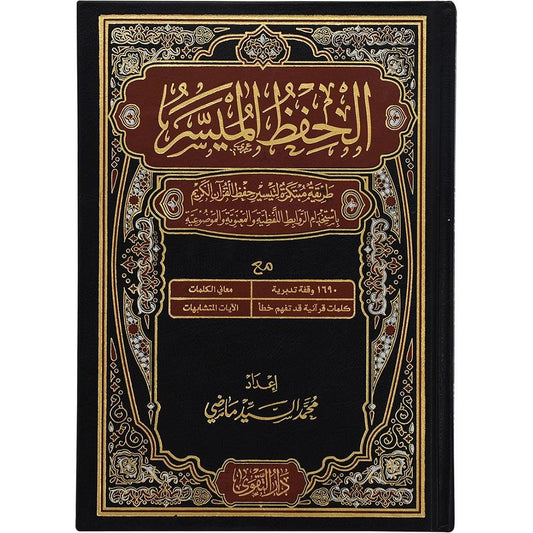

Easy Memorization Quran
Easy Memorization Quran
An innovative method to facilitate memorization of the Holy Quran using verbal and conceptual links.
Mohamed Elsayed Madi, Ahmed Issa Elmasrawi
- from Dhs. 45.00
- from Dhs. 45.00
- Unit price
- per


Tajweed Holy Quran, 30 parts, with an Arabic leather bag, size 17 x 24 cm
Tajweed Quran, 30 parts, with leather case - Arabic Size 24*17 cm This deluxe Tajweed Quran is a paperback divided into thirty separate parts, all presented in a beautiful, sturdy black leather case, perfectly designed to protect the parts from loss or damage. It...
- Dhs. 94.00
- Dhs. 94.00
- Unit price
- per


Taysir Al-Karim Al-Rahman in interpreting the words of Al-Mannan, Al-Saadi’s interpretation
Taysir al-Karim al-Rahman fi Tafsir Kalam al-Mannan (The Facilitation of the Most Gracious, Most Merciful in the Interpretation of the Words of the Beneficent) - Tafsir al-Sa'di Author's name: Sheikh Abdul Rahman bin Nasser Al-Saadi Al-Sa'di's interpretation is one that focuses on clarifying the...
- Dhs. 73.00
- Dhs. 73.00
- Unit price
- per
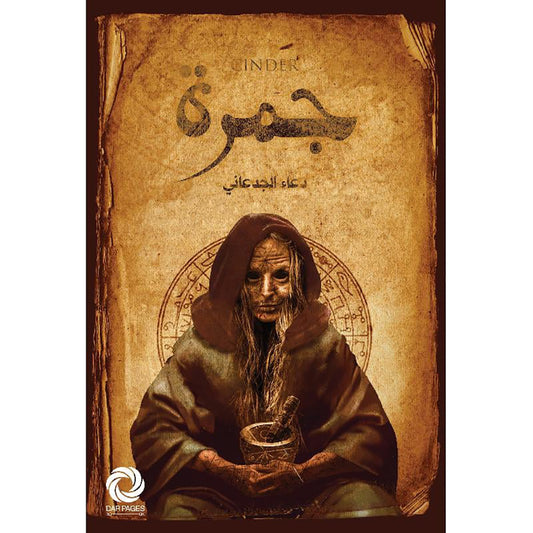

Ember - Duaa Al-Jadaani
cinder
Author's name: Duaa Al-Jadaani
They are cowards, cowards who are good at creating illusions.
- Dhs. 72.00
- Dhs. 72.00
- Unit price
- per


Take your belief from the Qur’an and the authentic Sunnah
Take your belief from the Qur’an and the authentic Sunnah Author's name: Muhammad ibn Jamil Zeno A message from Sheikh Muhammad Jamil Zeno in which he explains the doctrine of the Sunnis and the community on various doctrinal issues: monotheism, polytheism, tyranny, following the...
- Dhs. 15.00
- Dhs. 15.00
- Unit price
- per

Granada Trilogy
Granada Trilogy Author: Radwa Ashour The Granada Trilogy is a series of three novels by the Egyptian author Radwa Ashour, consisting of Granada Mariam Departure The events take place in the Kingdom of Granada after the fall of all Islamic kingdoms in Al-Andalus. The...
- Dhs. 55.00
- Dhs. 55.00
- Unit price
- per


The Qiyam Mushaf with thematic division of the verses of the Holy Quran, white paper, size 24 x 17 cm
The Qiyam Quran with thematic division of the verses of the Holy Quran, white paper, size 24 x 17 cm With Q barcode This Quran is distinguished by having a code on each of its pages. When reading the code using a barcode reader...
- Dhs. 35.00
- Dhs. 35.00
- Unit price
- per

I loved him, so everything loved me back.
I loved him so everything loved me Author's name: Raghad Al Saleh A profound, beautiful book with diverse presentations, ideas, and titles full of benefit and stories taken from the righteous predecessors and their hidden worship and how we get closer to God. I...
- Dhs. 49.00
- Dhs. 49.00
- Unit price
- per
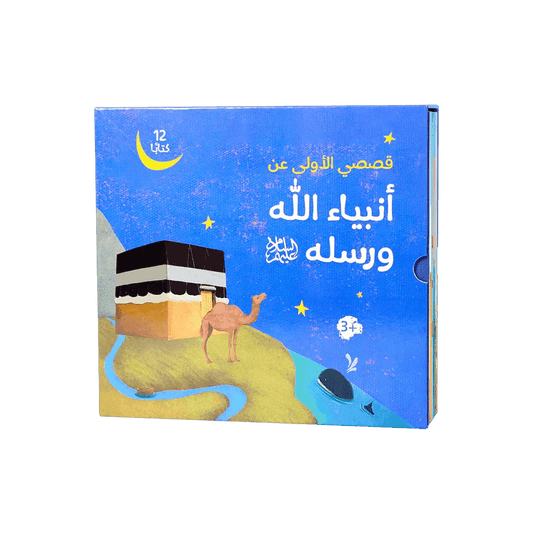

My first stories about God's prophets and messengers
My first stories about God's prophets and messengers A series of stories for children in early childhood education, featuring the prophets and messengers of God Almighty in a simple, enjoyable, and engaging style. The aim is to present lessons and morals drawn from their...
- Dhs. 165.00
Dhs. 185.00- Dhs. 165.00
- Unit price
- per
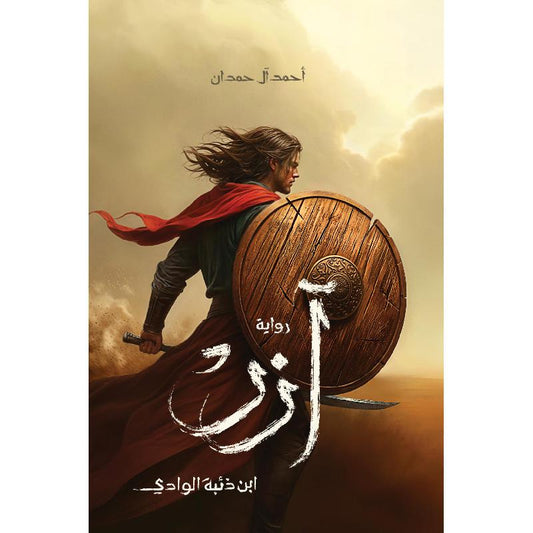

Azar, son of the Wolf of the Valley
AZAR
Son of the Valley She-wolf
Author: Ahmed Al Hamdan
I dreamt that I gave birth to a moon ascending to the sky, illuminating the Arabian Peninsula with its light.
- Dhs. 79.00
- Dhs. 79.00
- Unit price
- per
- Choosing a selection results in a full page refresh.