
Customer service: 00971581607579 📞


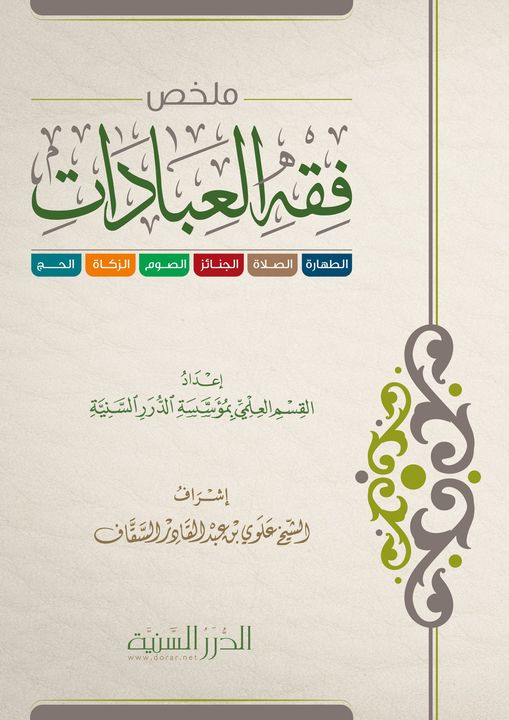


Summary of the jurisprudence of worship
Purification, Prayer, Funerals, Fasting, Zakat, Hajj
Author's Name: Scientific Department of Al-Durar Al-Sunniyah Foundation
supervision: Alawi bin Abdul Qadir Al-Saqqaf
There is no doubt that the science of jurisprudence is one of the greatest and most honorable sciences, and it should be given special attention. Through it, one learns how to worship Allah, the Almighty, and through it, one attains knowledge of what is lawful and what is unlawful. Therefore, people's need for it is greater than their need for food and drink, as through it, their religious and worldly affairs are set right, and they are blessed in this life and the next. It is the duty of the believer to gain a thorough understanding of Allah's religion and to turn towards it. Whoever turns away from it and neglects it, this is evidence that Allah, the Almighty, does not intend good for him. The Prophet (peace and blessings be upon him) said: "Whoever Allah intends good for, He grants him understanding of the religion." Agreed upon. Based on this, Al-Durar Al-Sunniyyah Foundation began working on preparing a comprehensive encyclopedia of jurisprudence, publishing its completed works sequentially through its website, to facilitate access to Sharia rulings and knowledge of the most valid opinions, especially with the abundance of disagreement on jurisprudential issues and the diversity of scholarly opinions and views. The Foundation has completed the section on acts of worship in this encyclopedia, and has abridged and printed it. It has been divided into seven parts: (Purification - Prayer - Funerals - Fasting - Zakat - Hajj - Umrah). These printed summaries were then summarized and combined into one volume, so that the reader can review and recall its issues in a short time, and so that it can be easily acquired and carried around while traveling. This summary was limited - after review and scrutiny - to the image of the issue, its ruling, and those who say it, and everything else was deleted. So whoever wants to know the evidence, justifications, documentation, and the graduation of hadiths and athars;

Best Selling
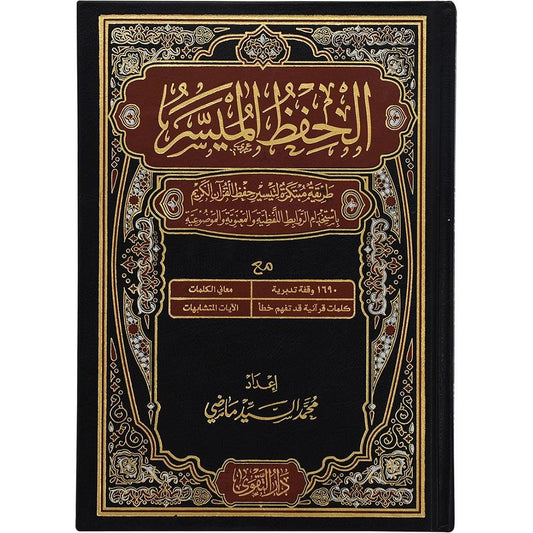

Easy Memorization Quran
Easy Memorization Quran
An innovative method to facilitate memorization of the Holy Quran using verbal and conceptual links.
Mohamed Elsayed Madi, Ahmed Issa Elmasrawi
- from Dhs. 45.00
- from Dhs. 45.00
- Unit price
- per


Tajweed Holy Quran, 30 parts, with an Arabic leather bag, size 17 x 24 cm
Tajweed Quran, 30 parts, with leather case - Arabic Size 24*17 cm This deluxe Tajweed Quran is a paperback divided into thirty separate parts, all presented in a beautiful, sturdy black leather case, perfectly designed to protect the parts from loss or damage. It...
- Dhs. 94.00
- Dhs. 94.00
- Unit price
- per


Taysir Al-Karim Al-Rahman in interpreting the words of Al-Mannan, Al-Saadi’s interpretation
Taysir al-Karim al-Rahman fi Tafsir Kalam al-Mannan (The Facilitation of the Most Gracious, Most Merciful in the Interpretation of the Words of the Beneficent) - Tafsir al-Sa'di Author's name: Sheikh Abdul Rahman bin Nasser Al-Saadi Al-Sa'di's interpretation is one that focuses on clarifying the...
- Dhs. 73.00
- Dhs. 73.00
- Unit price
- per
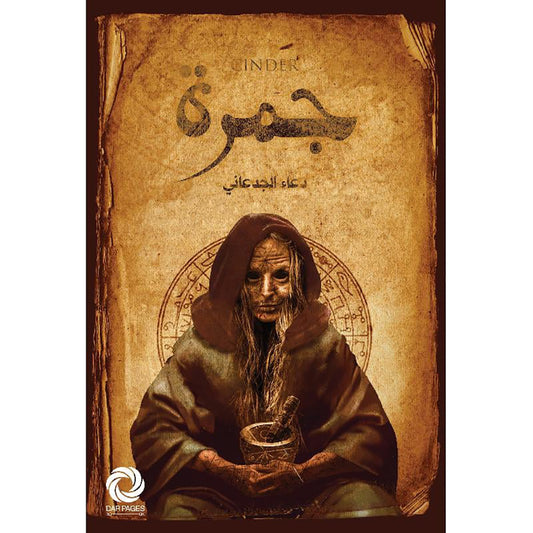

Ember - Duaa Al-Jadaani
cinder
Author's name: Duaa Al-Jadaani
They are cowards, cowards who are good at creating illusions.
- Dhs. 72.00
- Dhs. 72.00
- Unit price
- per


Take your belief from the Qur’an and the authentic Sunnah
Take your belief from the Qur’an and the authentic Sunnah Author's name: Muhammad ibn Jamil Zeno A message from Sheikh Muhammad Jamil Zeno in which he explains the doctrine of the Sunnis and the community on various doctrinal issues: monotheism, polytheism, tyranny, following the...
- Dhs. 15.00
- Dhs. 15.00
- Unit price
- per

Granada Trilogy
Granada Trilogy Author: Radwa Ashour The Granada Trilogy is a series of three novels by the Egyptian author Radwa Ashour, consisting of Granada Mariam Departure The events take place in the Kingdom of Granada after the fall of all Islamic kingdoms in Al-Andalus. The...
- Dhs. 55.00
- Dhs. 55.00
- Unit price
- per

I loved him, so everything loved me back.
I loved him so everything loved me Author's name: Raghad Al Saleh A profound, beautiful book with diverse presentations, ideas, and titles full of benefit and stories taken from the righteous predecessors and their hidden worship and how we get closer to God. I...
- Dhs. 49.00
- Dhs. 49.00
- Unit price
- per
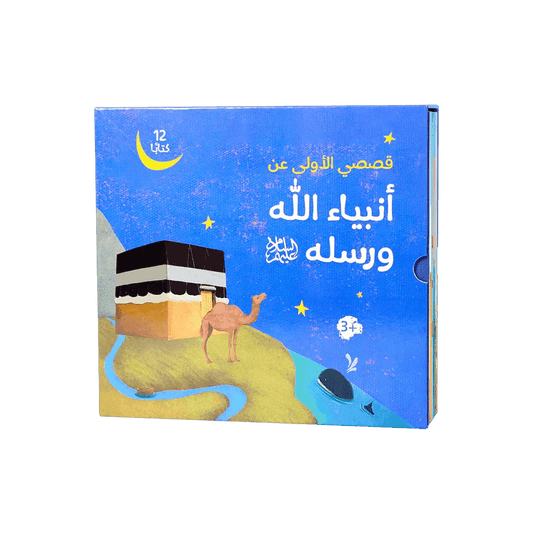

My first stories about God's prophets and messengers
My first stories about God's prophets and messengers A series of stories for children in early childhood education, featuring the prophets and messengers of God Almighty in a simple, enjoyable, and engaging style. The aim is to present lessons and morals drawn from their...
- Dhs. 165.00
Dhs. 185.00- Dhs. 165.00
- Unit price
- per
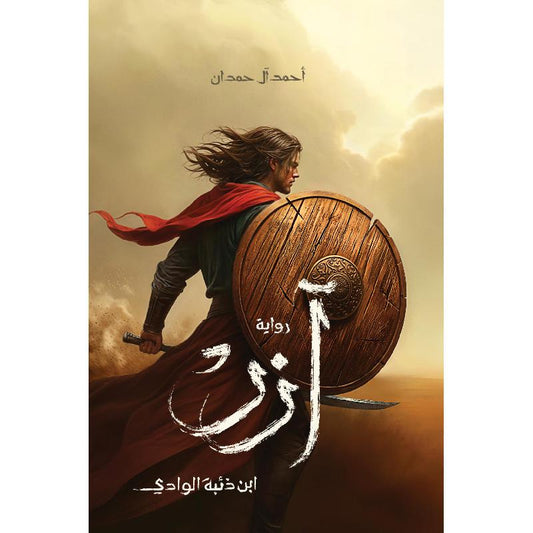

Azar, son of the Wolf of the Valley
AZAR
Son of the Valley She-wolf
Author: Ahmed Al Hamdan
I dreamt that I gave birth to a moon ascending to the sky, illuminating the Arabian Peninsula with its light.
- Dhs. 79.00
- Dhs. 79.00
- Unit price
- per
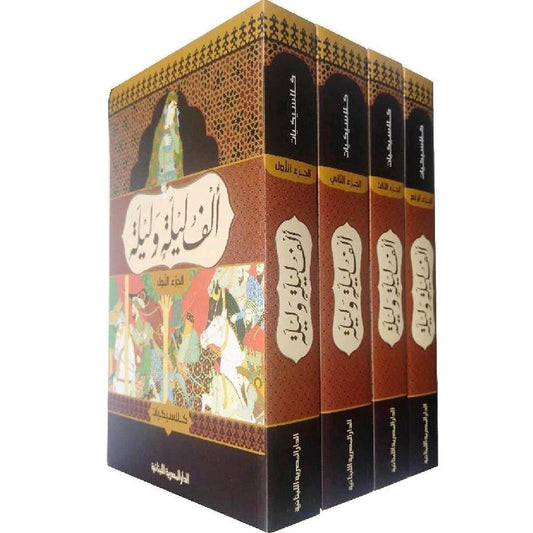

One Thousand and One Nights 4 parts
One Thousand and One Nights - 4 Parts Author Name: Abdullah Ibn al-Muqaffa One Thousand and One Nights is a collection of stories from West and South Asia, along with folk tales that were compiled and translated into Arabic during the Islamic...
- Dhs. 110.00
Dhs. 135.00- Dhs. 110.00
- Unit price
- per
- Choosing a selection results in a full page refresh.