
Customer service: 00971581607579 📞


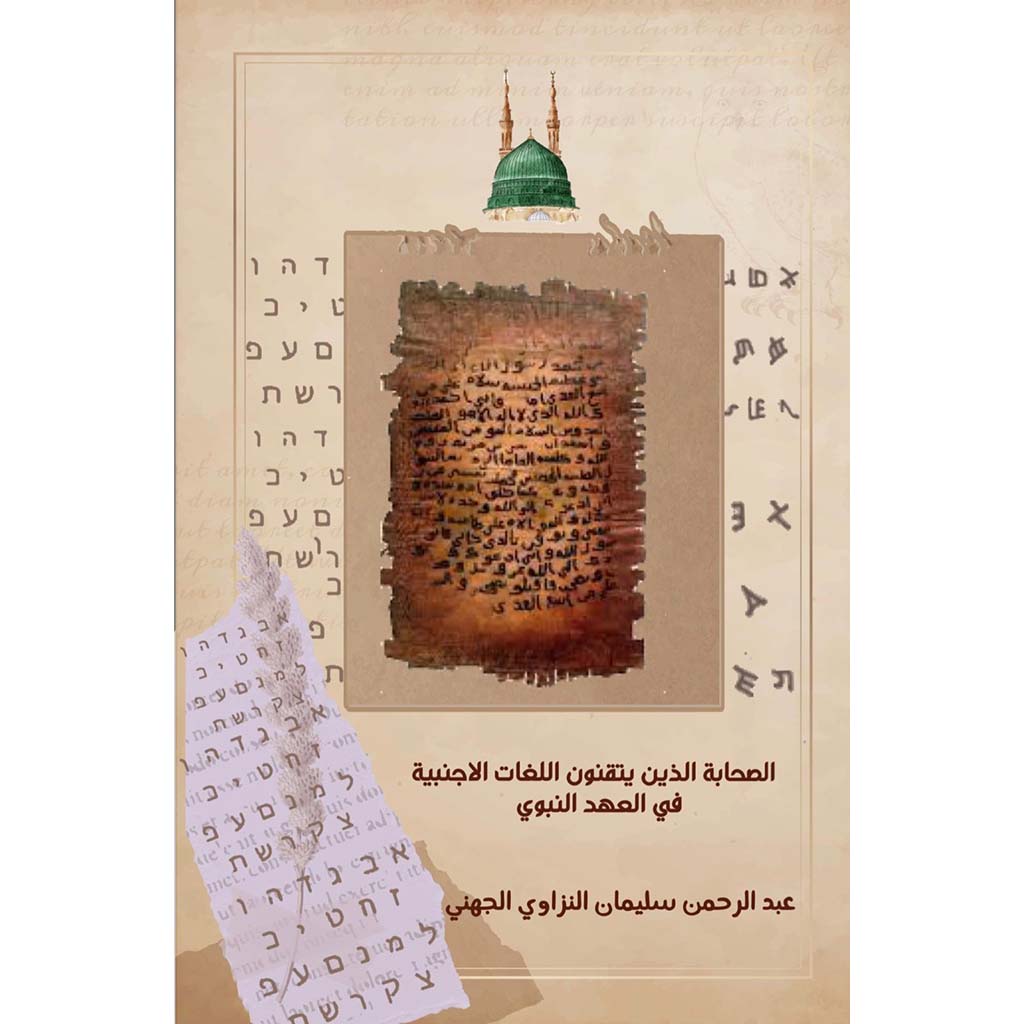

Companions who were proficient in foreign languages during the Prophet's era
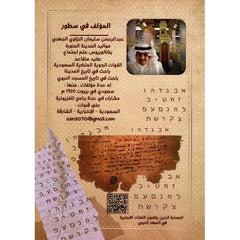
Author's name: Abdulrahman Sulaiman Al-Nazzawi Al-Juhani
The book addresses prominent topics, including: the reasons for the entry of foreign languages into the Arabian Peninsula, especially during the Prophetic era, from several axes, the most important of which are: the definition of language, the Prophetic mission, the conversion of many Arabs and non-Arabs to Islam, the settlement of some non-Arabs in the Arabian Peninsula as tribes and individuals, the presence of slaves and freed slaves, maternal and maternal kinship and non-Arab descent, treaties and education, pilgrimage in the pre-Islamic era and Islam, the winter and summer journey and the Arab markets, the Prophet’s command, may God bless him and grant him peace, to learn languages, represented by his interpreter Zayd bin Thabit, may God be pleased with him, in addition to a description of the city, starting from the noble arrival, passing through the construction of the Quba Mosque and the Prophet’s Mosque, and ending with a description of the construction of residences, houses and markets, reviewing the roads of the city, its alleys and farms, and touching on the social condition, clothing, food, crafts and professions practiced by the Companions, may God be pleased with them.
The author also reviewed the role of women in Islam during the conquests, professions and crafts, the demographic composition and the internal policy of the Noble Prophet, represented by the Constitution of Medina and treaties with neighboring Arab tribes, and the external policy of sending messengers to the kings of the earth, and the approximate number of the population of Medina in the Prophetic era, in addition to aspects of the noble biography of the Noble Prophet and its unique presentation, his attributes, his wives, his children, his freed slaves and his wealth until the day of his death, may God’s prayers and peace be upon him.

Best Selling

All blue sky
All the Sky is Blue Author Name: Melissa da Costa Emile, a 26-year-old, has been diagnosed with early-onset Alzheimer's. Doctors estimate his memory won't last more than two years. Emile decides to embark on one last journey, fleeing the hospital and the...
- Dhs. 75.00
- Dhs. 75.00
- Unit price
- per

The disease and the cure known as the sufficient answer for those who ask about the healing medicine
The disease and the cure known as the sufficient answer for those who ask about the healing medicine Author's name: Ibn al-Qayyim al-Jawziyya In this book, Ibn al-Qayyim addresses the issues of the human soul and its roles, and outlines ways to reform and...
- Dhs. 49.00
- Dhs. 49.00
- Unit price
- per


I loved and tomorrow I will recover from toxic relationships
I Loved a Scoundrel Recovering from Abusive Relationships Author Name: Dr. Emad Rashad Othman We always wait for someone. We think that with their arrival, all our pains will vanish. We delude ourselves into believing that with their light shining on the...
- Dhs. 35.00
- Dhs. 35.00
- Unit price
- per

The Book of the Soul - Ibn al-Qayyim al-Jawziyya
the spirit Author's name: Ibn al-Qayyim al-Jawziyya The Book of the Soul by Ibn Qayyim al-Jawziyya, who died in the year 751 AH, is one of the most important and beneficial books. It is an answer to questions about the conditions of the intermediate...
- Dhs. 35.00
- Dhs. 35.00
- Unit price
- per


Texts of the student of knowledge
Texts of the Student of Knowledge | Abdul Mohsen bin Muhammad Al-Qasim Scientific texts verified based on 120 manuscripts Level One: The Nullifiers of Islam, the Four Principles, the Forty-Three Fundamentals, and the Forty-Three Hadiths of Nawawi Level Two: The Beqouni System, The Children’s...
- Dhs. 42.00
- Dhs. 42.00
- Unit price
- per

A thousand shining suns
A thousand shining suns Author's name: Khaled Hosseini A Thousand Splendid Suns (Persian: دو صد خورشیدرو) is a 2007 novel by Afghan author Khaled Hosseini, the follow-up to his debut novel, The Kite Runner (2003), which also became a bestseller. The book was released...
- Dhs. 57.00
- Dhs. 57.00
- Unit price
- per


Tajweed Quran, translation of the meanings of the Quran into English with Roman script, size 17*24 cm
Tajweed Quran with English translation of the meanings of the Quran and Roman script The Tajweed Quran with English meanings and Roman numeral translation, along with a subject index. The English translation is by Abdullah Yusuf Ali, and the audio translation is by Subhi...
- Dhs. 155.00
- Dhs. 155.00
- Unit price
- per

005 | شهد قربان
005 Author's name: Shahd Qurban The novel delves into the world of crime and gangs, where a hired killer is assigned On a mission to eliminate an innocent woman who does not know who asked to kill her, then she is dragged from her...
- Dhs. 65.00
- Dhs. 65.00
- Unit price
- per
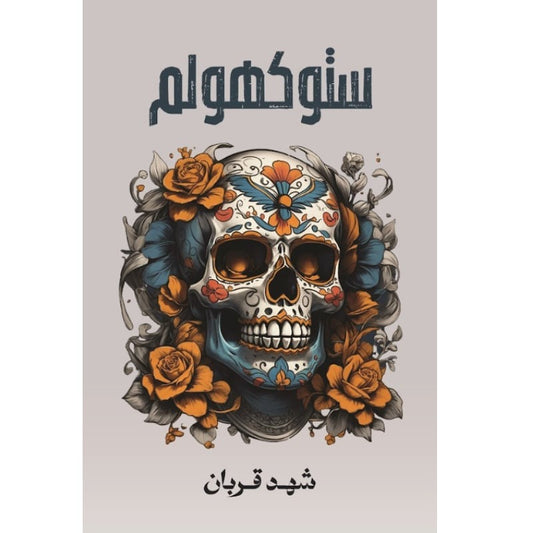

Stockholm
Stockholm
Author's name: Shahd Qurban
They say all great stories begin in Mexico...and that's what you hope.
Ruby Smith, after witnessing death several times... what will happen, I wonder?
- Dhs. 47.00
- Dhs. 47.00
- Unit price
- per
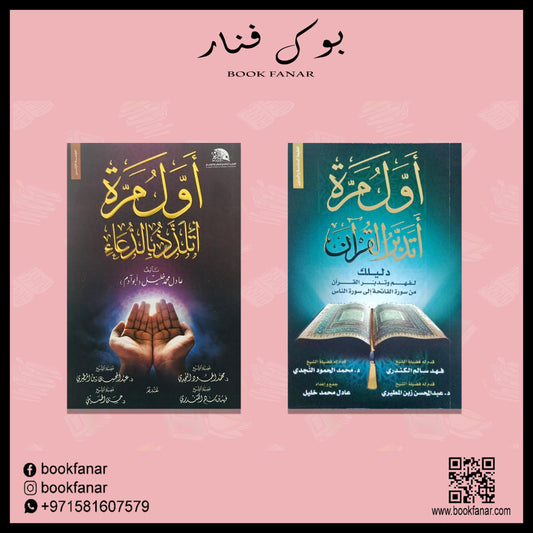

The first time I contemplated the Qur’an - The first time I enjoyed supplication
Islamic Group - Gifts and Distributions First time I reflect on the Quran This is the first time I've truly enjoyed praying. Presented by: Abdulmohsen Zain Al-Mutairi, Fahad Salem Al-Kandari, Mohammed Al-Hamoud Al-Najdi Prepared by: Adel Mohamed Khalil Your guide to understanding and reflecting...
- Dhs. 75.00
Dhs. 95.00- Dhs. 75.00
- Unit price
- per
- Choosing a selection results in a full page refresh.