
Customer service: 00971581607579 📞




Team Management Secrets
Secrets told by experts
Author Name: Ross Slater
When you manage a team, your work is likely to be judged by both your boss and the team members you manage. You are judged based on achieving goals and your success as a manager, both for each individual and for the team as a whole. Therefore, managing teams is a significant challenge, but it is also a highly rewarding career path.
I first became a team manager in the 1970s, and in my early days, I made every mistake imaginable! In the 1980s, I was properly trained in team management and leadership and achieved much greater success. Since then, I've managed formal and informal work teams, teams of volunteers and employees, remote teams, and cross-functional teams.
In the 1990s, I began designing and delivering team management training courses for public and private sector organizations. This gave me insight beyond my direct experience into the pitfalls, opportunities, and capabilities of team management.
This book is a summary of what I've learned over the years about team management. It contains 50 secrets for successful team management that, if followed, will save you and your team from many problems. The secrets are divided into seven chapters, as follows:
Is this a team? You need to make sure you have a team, not just a group of people! This is the foundation of implementing what you want correctly.
Build your team. Teams don't happen by chance. You have to work to build a team. This means understanding everything about teams, not just people.
Lead your team. If you're going to be a team manager, you need to lead its members on a regular, daily basis. You can't just sit back and give directions.
Communicate with your team. Most complaints from team managers relate to communication. It's a two-way street, and you need to get it right to be a successful manager.
Protect and serve your team. You may be the highest-paid person and have a larger office than everyone else, but your job is to protect and serve your team, not the other way around.
Manage team changes. Nothing stays the same for long; teams and business requirements change. Team members look to you to manage and successfully navigate the changes that occur.
Disband your team. When it's time to disband a team, people don't like to leave without saying goodbye. If you manage the disbanding and disbanding process well, future job opportunities will be greater for everyone.
Whether you've been managing teams for a long time or are a new manager, you'll discover that by using these secrets, you'll gain the obedience and approval of your team members much more easily than if you worked without them.

Best Selling
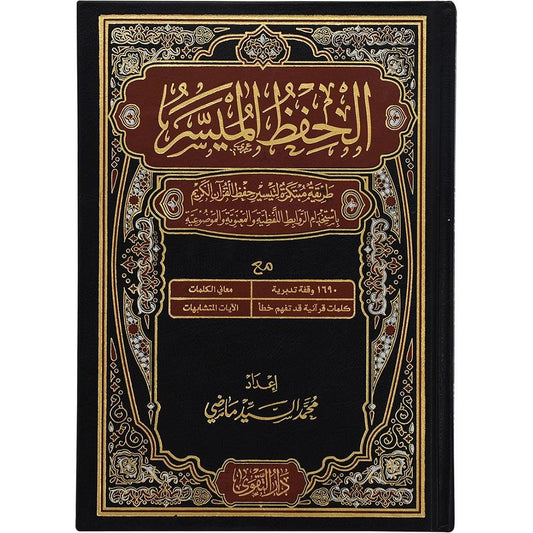

Easy Memorization Quran
Easy Memorization Quran
An innovative method to facilitate memorization of the Holy Quran using verbal and conceptual links.
Mohamed Elsayed Madi, Ahmed Issa Elmasrawi
- from Dhs. 45.00
- from Dhs. 45.00
- Unit price
- per


A carton of 40 copies of the Holy Qur’an for charitable distribution, quarter size 14 x 20 cm
A copy of the Quran for charitable distribution, quarter size, 14 x 20 cm Number: 40 copies in cartons White paper, 2-color printing High quality Copies of the Quran for charitable distribution with the option to print a death notice on them WhatsApp: 0581607579...
- Dhs. 429.00
- Dhs. 429.00
- Unit price
- per


17 x 24 Tajweed Quran divided into 4 parts size
The Tajweed Quran, divided into 4 parts, measuring 17*24 cm According to the narration of Hafs from Asim - in the Uthmani script - and three main colors and with the direct application of 28 rulings This complete Tajweed Quran is divided into four...
- Dhs. 135.00
- Dhs. 135.00
- Unit price
- per


Stockholm
Stockholm
Author's name: Shahd Qurban
They say all great stories begin in Mexico...and that's what you hope.
Ruby Smith, after witnessing death several times... what will happen, I wonder?
- Dhs. 47.00
- Dhs. 47.00
- Unit price
- per


The Sealed Nectar - Safi al-Rahman al-Mubarakpuri
The Sealed Nectar Research in the biography of the Prophet Written by His Eminence Sheikh: Safi al-Rahman al-Mubarakfuri This book deals with a detailed study of the Prophet's biography during the Meccan and Medinan periods, in a concise, modern style. This book won first...
- Dhs. 67.00
- Dhs. 67.00
- Unit price
- per

Because God knows
Because God knows Author's name: Mishari Budrid It did not come out to be a passing novel, She came out to sit with you for a long time, To remind you on every page God is closer than you think. Not just letters But...
- Dhs. 60.00
Dhs. 75.00- Dhs. 60.00
- Unit price
- per

In my heart there is a Hebrew woman
In My Heart, a Hebrew Girl I met Nada, the novel's protagonist, on the pages of an online forum. She recounted her story, which brought tears to my eyes. I left the forum, but the story never left me. After a while, the idea...
- Dhs. 42.00
- Dhs. 42.00
- Unit price
- per


Al-Qaida Al-Nooraniya, large size 20 x 28 cm
Noorani Qaida Large Size 20×28 cm The Noorani Qaida is one of the most beneficial and easiest methods for teaching beginners and young learners to read and memorize the Book of Allah - Almighty and Glorious - with the least effort and in...
- Dhs. 12.00
- Dhs. 12.00
- Unit price
- per


I write so I don't go crazy
Write so I don't go crazy Author's name: Maryam Al-Hissi Madness is not a fate that haunts man. Rather, it is a decision that accompanies the writer because he reaches out to him. Writing is essentially a kind of “hunt” for what is irrational,...
- Dhs. 75.00
- Dhs. 75.00
- Unit price
- per

The executioner is under my skin
The executioner is under my skin Reflections on recovering from perfectionism and self-flagellation Author's name: Dr. Emad Rashad Othman How much we need a respite from our breathless, clamorous minds; a break from the noise of our disruptive inner voices, caught between unattainable ideals,...
- Dhs. 49.00
- Dhs. 49.00
- Unit price
- per
- Choosing a selection results in a full page refresh.