
Customer service: 00971581607579 📞


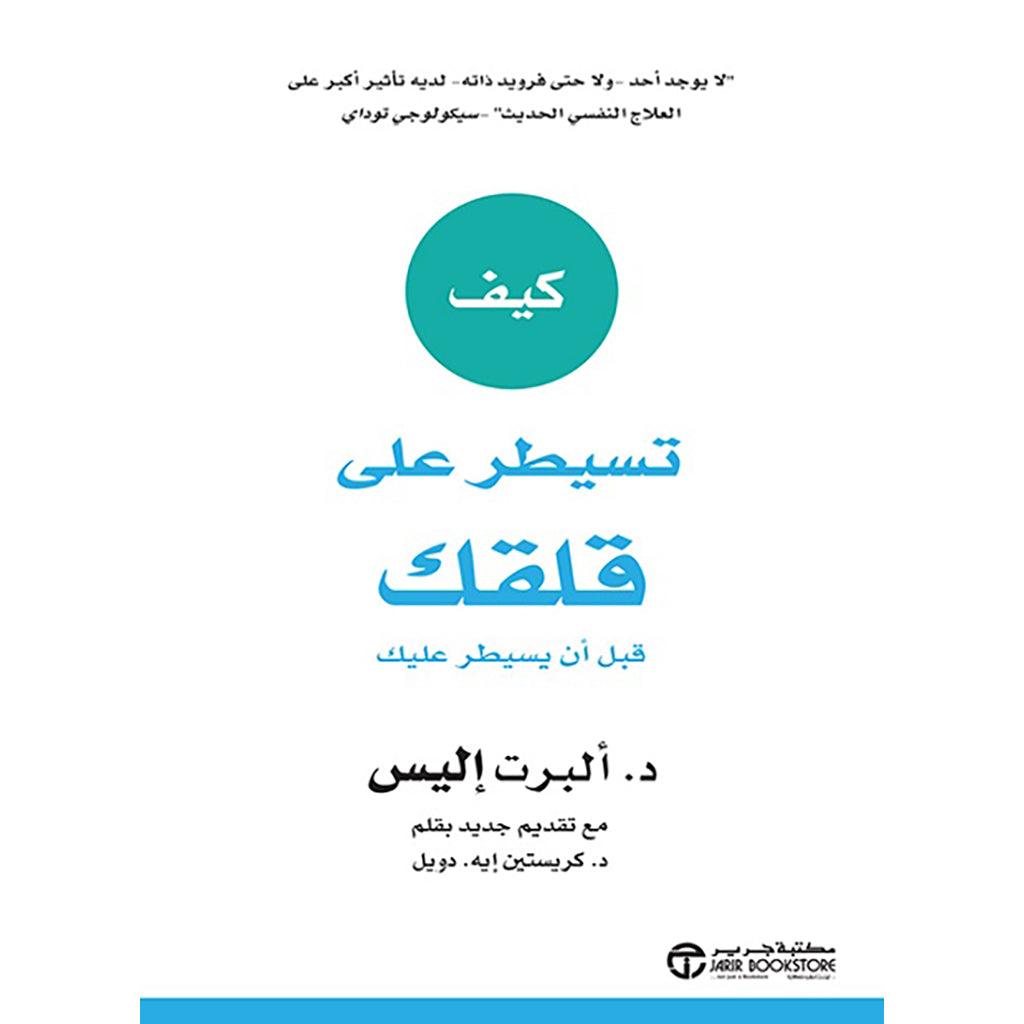
How to control your anxiety before it controls you
Author's name: Albert Ellis
If you're reading this book, chances are good that you or someone you care about suffers from anxiety. Anxiety is one of the most common difficulties people experience at some point in their lives. The good news is that in 1959, Dr. Albert Ellis developed Rational Emotive Behavior Therapy (REBT), the original cognitive behavioral therapy, which has been proven effective for anxiety problems.
This book is in many ways a special tribute to Al himself. As he discusses in his book, as well as in most of the self-help materials he developed during his life, Al was also plagued by anxiety. He drew on the principles of behavioral theory to overcome both his public-speaking anxiety and his social anxiety, particularly related to women. All of Al's books were written with passion and purpose; however, I believe this one in particular was close to Al's heart, as he himself had struggled with anxiety and found ways to overcome it. What better testimony than that Albert Ellis himself conquered his own anxiety by applying the principles and strategies he outlines here?
One of Al's main goals was to ensure that his clients and the general public learned the tools to become their own therapists. Reading this book and the many other self-help books he's written, including How to Control Your Anger Before It Controls You (Jarir Bookstore), How to Stubbornly Refuse to Make Yourself Miserable About Anything—Yes, Anything! (Jarir Bookstore), and How to Stop Sabotaging Your Relationships (Jarir Bookstore), will surely put you on the path to becoming your own therapist.
I had the privilege of being a predoctoral trainee at the Albert Ellis Institute and being mentored by Dr. Ellis. After my training, I remained at the Institute as a full-time employee, traveling across the country with Al to conduct professional trainings and lecture to the public. He has dedicated his life to helping individuals with their emotional and behavioral problems. He has treated thousands of clients with anxiety difficulties, many of whom are featured as case examples in this book. As I co-lead therapy groups with Al, I have watched him use the same strategies he recommends in this book with his clients; I have watched his clients improve.

Best Selling

Easy Memorization Quran
Easy Memorization Quran
An innovative method to facilitate memorization of the Holy Quran using verbal and conceptual links.
Mohamed Elsayed Madi, Ahmed Issa Elmasrawi
- from Dhs. 45.00
- from Dhs. 45.00
- Unit price
- per


The first time I contemplate the Qur’an
First time reflecting on the Quran
Your guide to understanding and reflecting upon the Quran, from Surah Al-Fatihah to Surah An-Nas
Presented by: Abdulmohsen Zain Al-Mutairi, Fahad Salem Al-Kandari, Mohammed Al-Hamoud Al-Najdi
Prepared by: Adel Mohamed Khalil
- Dhs. 40.00
- Dhs. 40.00
- Unit price
- per


17 x 24 Tajweed Quran divided into 4 parts size
The Tajweed Quran, divided into 4 parts, measuring 17*24 cm According to the narration of Hafs from Asim - in the Uthmani script - and three main colors and with the direct application of 28 rulings This complete Tajweed Quran is divided into four...
- Dhs. 135.00
- Dhs. 135.00
- Unit price
- per


The Sealed Nectar - Safi al-Rahman al-Mubarakpuri
The Sealed Nectar Research in the biography of the Prophet Written by His Eminence Sheikh: Safi al-Rahman al-Mubarakfuri This book deals with a detailed study of the Prophet's biography during the Meccan and Medinan periods, in a concise, modern style. This book won first...
- Dhs. 67.00
- Dhs. 67.00
- Unit price
- per

In my heart there is a Hebrew woman
In My Heart, a Hebrew Girl I met Nada, the novel's protagonist, on the pages of an online forum. She recounted her story, which brought tears to my eyes. I left the forum, but the story never left me. After a while, the idea...
- Dhs. 42.00
- Dhs. 42.00
- Unit price
- per


Al-Qaida Al-Nooraniya, large size 20 x 28 cm
Noorani Qaida Large Size 20×28 cm The Noorani Qaida is one of the most beneficial and easiest methods for teaching beginners and young learners to read and memorize the Book of Allah - Almighty and Glorious - with the least effort and in...
- Dhs. 12.00
- Dhs. 12.00
- Unit price
- per
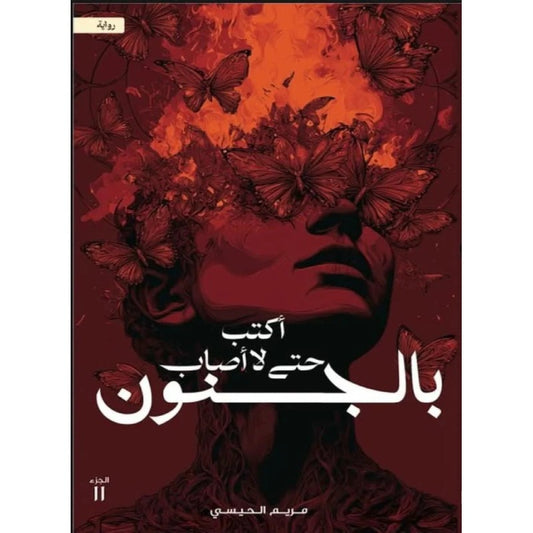

I write so I don't go crazy
Write so I don't go crazy Author's name: Maryam Al-Hissi Madness is not a fate that haunts man. Rather, it is a decision that accompanies the writer because he reaches out to him. Writing is essentially a kind of “hunt” for what is irrational,...
- Dhs. 75.00
- Dhs. 75.00
- Unit price
- per

The executioner is under my skin
The executioner is under my skin Reflections on recovering from perfectionism and self-flagellation Author's name: Dr. Emad Rashad Othman How much we need a respite from our breathless, clamorous minds; a break from the noise of our disruptive inner voices, caught between unattainable ideals,...
- Dhs. 49.00
- Dhs. 49.00
- Unit price
- per

Introductory level: Texts for the student of knowledge: Remembrances and manners, pocket
Introductory level: Texts for the student of knowledge Remembrances and etiquette Author's name: Dr. Abdul Mohsen bin Mohammed Al Qasim Because of the importance of remembrances and etiquette, I have collected hadiths in them, seeking their authenticity, and I have worked hard to classify...
- Dhs. 10.00
- Dhs. 10.00
- Unit price
- per

Rare cases 8
Rare cases 8 Author's name: Abdul Wahab Al-Sayed Al-Rifai Amidst the corridors of daily life and the labyrinth of mystery, Abdulwahab Al-Sayed Al-Rifai opens new doors to the strange psychological worlds of several Kuwaiti girls, each carrying a secret that conceals a story told...
- Dhs. 61.00
- Dhs. 61.00
- Unit price
- per
- Choosing a selection results in a full page refresh.