
Customer service: 00971581607579 📞


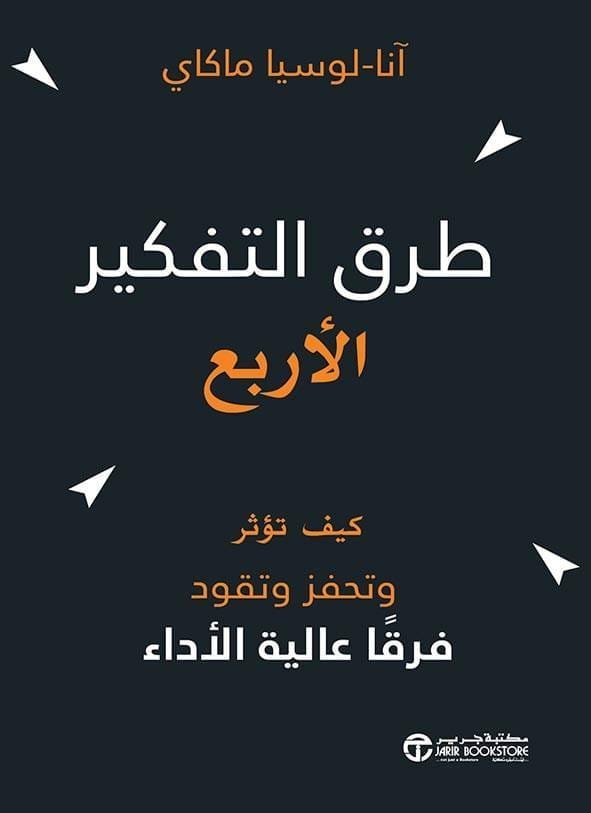
The four ways of thinking
Author's name: Anna Lucia Mackay
Every manager needs to understand the concept of the psychological contract. This unwritten contract has the power to enhance or destroy everything you do. It's all about your employees, and for you as a manager, everything you do should be about your employees! To understand the concept of the psychological contract, let's look at what the word "contract" means. A contract is simply an agreement between two parties. Contracts are usually formal, requiring, and clearly state what needs to be done or agreed upon. For example, an employment contract outlines the goals and expectations of both the employee and the employer because it is a formal, signed document. The psychological contract concerns the goals and expectations between the parties, but it is not specific. It is based on employee perceptions, which are typically related to give-and-take (or informal negotiations) between two parties. These include issues such as what is right and wrong, how employees should work together, fair and unfair procedures, and the concepts of loyalty and trust. The psychological contract is stronger than the employment contract. The employment contract does not unlock potential and high performance, while the psychological contract does. It is based on thoughts, feelings, and emotions, and often a desire to exceed expectations, referred to as discretionary effort. The concept of contract, as coined by Denise Rousseau, is “an implicit concept involving employee beliefs about mutuality in terms of trust, loyalty, and the well-being of all involved.” It is also important to note that the psychological contract is based on the commitment of both parties; it relies on critical human behaviors that can help build or break a relationship in an instant. Psychological contracts typically focus on ensuring mutual understanding between the employee and the organization so that they can work toward shared goals. To achieve this, managers need to understand their teams’ perceptions and ideas of them in terms of their commitment to them, their personal behaviors, how they treat employees and others, and the quality of their work. The key here is for managers to accept that truth in itself is not enough; they must make this clear to their employees and ensure they understand it. For example, some managers may believe that they treat their employees fairly and justly, and this may certainly be the case. However, most managers are not aware of the need for their employees to perceive them as fair, and their ultimate hope is that others perceive them as such. A manager must be aware that the perception of fairness among most employees in the workplace is extremely important. For example, when employees feel that their manager is unfair in their treatment of them, this often leads to a breach of the psychological contract, which in turn kills the employee's desire to do their best at work and exceed expectations. This disrupts the role of discretionary effort, which is most needed to achieve sustainable high performance.

Best Selling
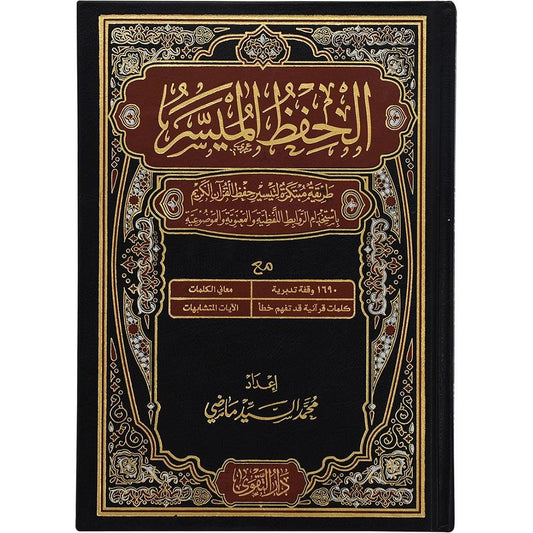

Easy Memorization Quran
Easy Memorization Quran
An innovative method to facilitate memorization of the Holy Quran using verbal and conceptual links.
Mohamed Elsayed Madi, Ahmed Issa Elmasrawi
- from Dhs. 45.00
- from Dhs. 45.00
- Unit price
- per


Tajweed Holy Quran, 30 parts, with an Arabic leather bag, size 17 x 24 cm
Tajweed Quran, 30 parts, with leather case - Arabic Size 24*17 cm This deluxe Tajweed Quran is a paperback divided into thirty separate parts, all presented in a beautiful, sturdy black leather case, perfectly designed to protect the parts from loss or damage. It...
- Dhs. 94.00
- Dhs. 94.00
- Unit price
- per


Taysir Al-Karim Al-Rahman in interpreting the words of Al-Mannan, Al-Saadi’s interpretation
Taysir al-Karim al-Rahman fi Tafsir Kalam al-Mannan (The Facilitation of the Most Gracious, Most Merciful in the Interpretation of the Words of the Beneficent) - Tafsir al-Sa'di Author's name: Sheikh Abdul Rahman bin Nasser Al-Saadi Al-Sa'di's interpretation is one that focuses on clarifying the...
- Dhs. 73.00
- Dhs. 73.00
- Unit price
- per


The Sealed Nectar - Safi al-Rahman al-Mubarakpuri
The Sealed Nectar Research in the biography of the Prophet Written by His Eminence Sheikh: Safi al-Rahman al-Mubarakfuri This book deals with a detailed study of the Prophet's biography during the Meccan and Medinan periods, in a concise, modern style. This book won first...
- Dhs. 42.00
- Dhs. 42.00
- Unit price
- per

Granada Trilogy
Granada Trilogy Author: Radwa Ashour The Granada Trilogy is a series of three novels by the Egyptian author Radwa Ashour, consisting of Granada Mariam Departure The events take place in the Kingdom of Granada after the fall of all Islamic kingdoms in Al-Andalus. The...
- Dhs. 55.00
- Dhs. 55.00
- Unit price
- per


The Qiyam Mushaf with thematic division of the verses of the Holy Quran, white paper, size 24 x 17 cm
The Qiyam Quran with thematic division of the verses of the Holy Quran, white paper, size 24 x 17 cm With Q barcode This Quran is distinguished by having a code on each of its pages. When reading the code using a barcode reader...
- Dhs. 35.00
- Dhs. 35.00
- Unit price
- per


Simplified Jurisprudence in Light of the Qur’an and Sunnah
Simplified Fiqh in Light of the Quran and Sunnah Author: A Group of Scholars The book "Simplified Fiqh in Light of the Quran and Sunnah" is a beneficial work that presents jurisprudential rulings in a clear and easy style, relying on evidence...
- Dhs. 57.00
- Dhs. 57.00
- Unit price
- per


Azar, son of the Wolf of the Valley
AZAR
Son of the Valley She-wolf
Author: Ahmed Al Hamdan
I dreamt that I gave birth to a moon ascending to the sky, illuminating the Arabian Peninsula with its light.
- Dhs. 79.00
- Dhs. 79.00
- Unit price
- per


Messages from God - Cards
Messages from God
cards
They are cards containing verses from the Holy Quran.
After each verse there is a positive message that will awaken the soul from its heedlessness, and urge and encourage it to return to God again.
- Dhs. 47.00
- Dhs. 47.00
- Unit price
- per
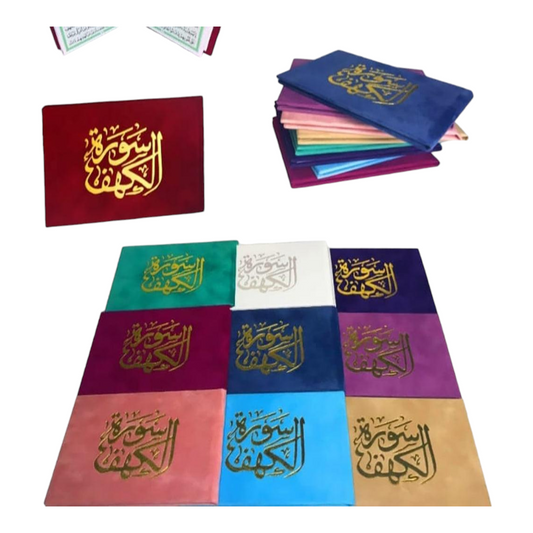

Surah Al-Kahf Velvet 8 x 12 cm
Surah Al-Kahf, velvet, 8 x 12 cm
- Dhs. 10.00
- Dhs. 10.00
- Unit price
- per
- Choosing a selection results in a full page refresh.