
Customer service: 00971581607579 📞


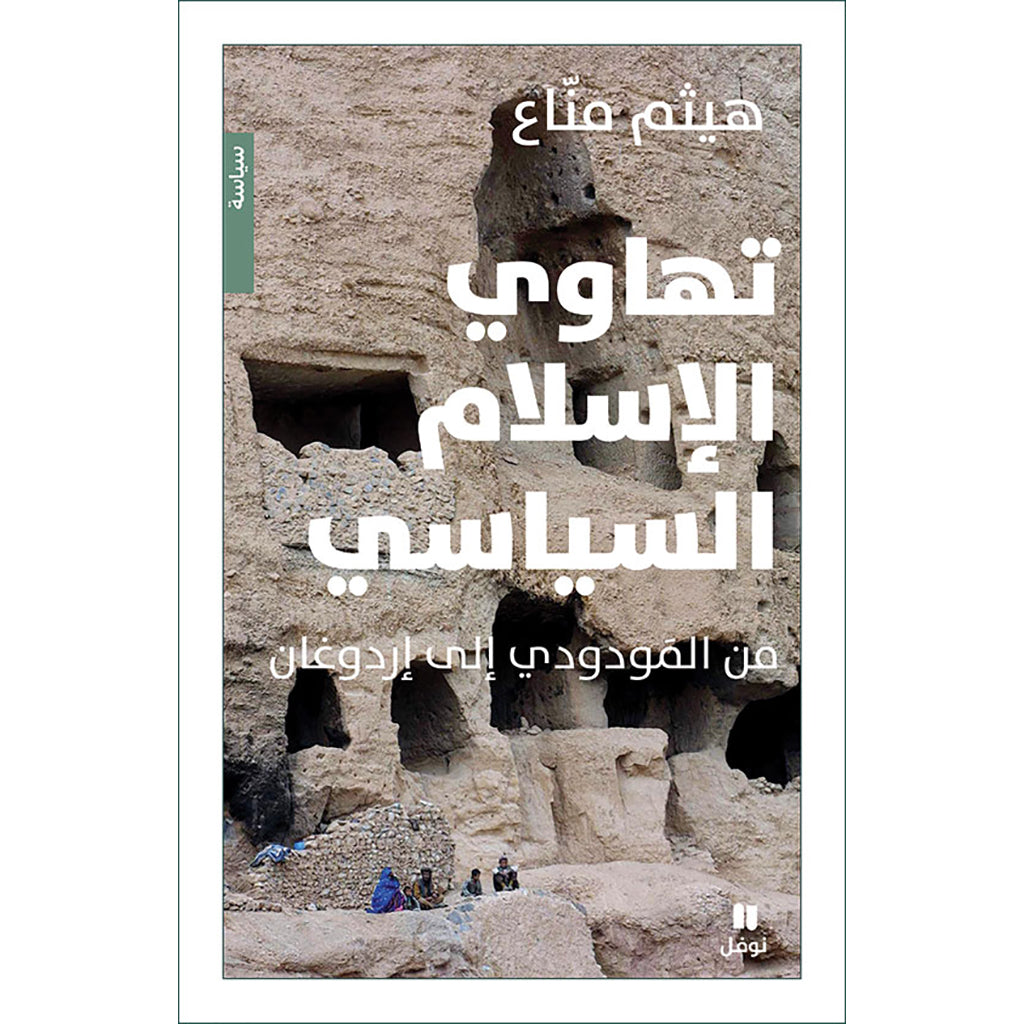

Following the fall of the Ottoman Empire and the establishment of the Turkish Republic in 1928, the terms "political Islamic movements" and "political Islam" entered the lexicon of political life from Lahore to Cairo. Within two decades, the focus shifted to a "political ideology" rather than a purely religious project. In this way, proponents attempt to trace and analyze the construction of a "totalitarian ideology" initiated by pioneers such as Abul A'la Maududi, Hassan al-Banna, and Sayyid Qutb, whose influence continues to this day. This trend, particularly after the defeat in the 1967 war and the rise of Ayatollah Khomeini to power in Tehran, shifted from a stance of "victimhood" to one of "building freedom" within a context of cultural stagnation, emergency ideologies, and "public religiosity."
It was highly popularized in the mainstream, more so than any of the major books that masterfully address political Islam, yet it grapples with the realities of today's latest movement. So, what is "totalitarian Islamic ideology"? Following the fall of the Ottoman Caliphate and the establishment of the Turkish Republic in 1928, the terms "political Islamic movements" and "political Islam" entered the lexicon of political life from Lahore to Cairo. Over the course of two decades, it became possible to discuss "political ideology" as a political project rather than a religious one. In this sense, the author attempts to trace and analyze the construction of a "totalitarian Islamic ideology," initiated by pioneers such as Abul A'la Maududi, Hassan al-Banna, and Sayyid Qutb, a process that continues to this day. This is particularly significant given that, after the defeat in the 1967 war and the rise of Ayatollah Khomeini to power in Tehran, these movements transformed from playing the role of the "oppressed" and "victim" into projects aimed at building strategic power in an environment dominated by cultural stagnation, emergency ideologies, and "public religiosity." The shock of transitioning to decision-making power in states more powerful than any critical works on political Islam has been profound, and perhaps the reality of this struggle is the primary reason for the decline of the political Islam movement today. So what comes after the fall of the "comprehensive Islamic ideology"?

Best Selling

All blue sky
All the Sky is Blue Author Name: Melissa da Costa Emile, a 26-year-old, has been diagnosed with early-onset Alzheimer's. Doctors estimate his memory won't last more than two years. Emile decides to embark on one last journey, fleeing the hospital and the...
- Dhs. 75.00
- Dhs. 75.00
- Unit price
- per

The disease and the cure known as the sufficient answer for those who ask about the healing medicine
The disease and the cure known as the sufficient answer for those who ask about the healing medicine Author's name: Ibn al-Qayyim al-Jawziyya In this book, Ibn al-Qayyim addresses the issues of the human soul and its roles, and outlines ways to reform and...
- Dhs. 49.00
- Dhs. 49.00
- Unit price
- per

The Book of the Soul - Ibn al-Qayyim al-Jawziyya
the spirit Author's name: Ibn al-Qayyim al-Jawziyya The Book of the Soul by Ibn Qayyim al-Jawziyya, who died in the year 751 AH, is one of the most important and beneficial books. It is an answer to questions about the conditions of the intermediate...
- Dhs. 35.00
- Dhs. 35.00
- Unit price
- per


Texts of the student of knowledge
Texts of the Student of Knowledge | Abdul Mohsen bin Muhammad Al-Qasim Scientific texts verified based on 120 manuscripts Level One: The Nullifiers of Islam, the Four Principles, the Forty-Three Fundamentals, and the Forty-Three Hadiths of Nawawi Level Two: The Beqouni System, The Children’s...
- Dhs. 42.00
- Dhs. 42.00
- Unit price
- per

A thousand shining suns
A thousand shining suns Author's name: Khaled Hosseini A Thousand Splendid Suns (Persian: دو صد خورشیدرو) is a 2007 novel by Afghan author Khaled Hosseini, the follow-up to his debut novel, The Kite Runner (2003), which also became a bestseller. The book was released...
- Dhs. 57.00
- Dhs. 57.00
- Unit price
- per


The Qiyam Mushaf with thematic division of the verses of the Holy Quran, white paper, size 20 x 28 cm
The Qiyam Quran with thematic division of the verses of the Holy Quran, white paper, size 20 x 28 cm Each page of this Quran contains five pages of the memorization Quran, and each part of the Holy Quran is divided into four pages,...
- Dhs. 40.00
Dhs. 68.00- Dhs. 40.00
- Unit price
- per

005 | شهد قربان
005 Author's name: Shahd Qurban The novel delves into the world of crime and gangs, where a hired killer is assigned On a mission to eliminate an innocent woman who does not know who asked to kill her, then she is dragged from her...
- Dhs. 65.00
- Dhs. 65.00
- Unit price
- per
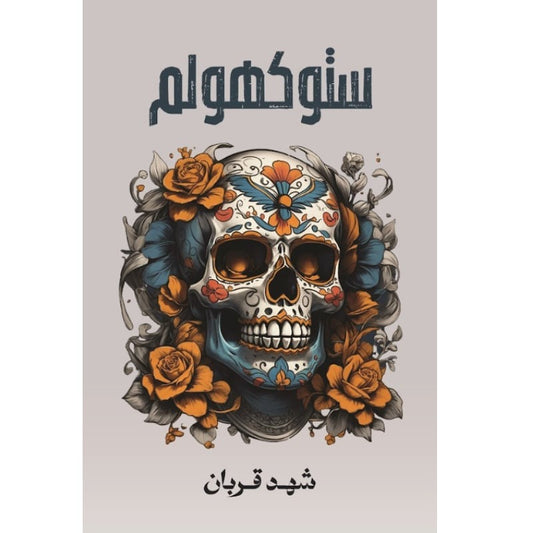

Stockholm
Stockholm
Author's name: Shahd Qurban
They say all great stories begin in Mexico...and that's what you hope.
Ruby Smith, after witnessing death several times... what will happen, I wonder?
- Dhs. 47.00
- Dhs. 47.00
- Unit price
- per
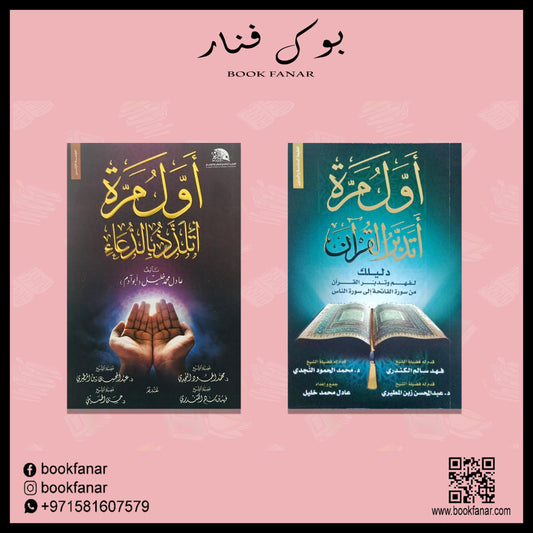

The first time I contemplated the Qur’an - The first time I enjoyed supplication
Islamic Group - Gifts and Distributions First time I reflect on the Quran This is the first time I've truly enjoyed praying. Presented by: Abdulmohsen Zain Al-Mutairi, Fahad Salem Al-Kandari, Mohammed Al-Hamoud Al-Najdi Prepared by: Adel Mohamed Khalil Your guide to understanding and reflecting...
- Dhs. 75.00
Dhs. 95.00- Dhs. 75.00
- Unit price
- per


The Sealed Nectar - Safi al-Rahman al-Mubarakpuri
The Sealed Nectar Research in the biography of the Prophet Written by His Eminence Sheikh: Safi al-Rahman al-Mubarakfuri This book deals with a detailed study of the Prophet's biography during the Meccan and Medinan periods, in a concise, modern style. This book won first...
- Dhs. 67.00
- Dhs. 67.00
- Unit price
- per
- Choosing a selection results in a full page refresh.